SHO-P-H: Preferred Exposure to a Hospitality-Focused REIT
SHO-P-H represents a preferred equity claim on a hospitality-focused real estate investment trust that acquires, owns and manages premium lodging assets and captures returns through rental income, asset appreciation and disciplined capital recycling. The preferred shares monetize a steady coupon-like yield profile tied to the REIT’s capital structure, offering investors seniority over common equity while remaining exposed to the underlying lodging operating cycle and portfolio composition. For investor research and supplier risk due diligence, the supplier footprint and any third-party operational dependencies are as consequential as balance-sheet metrics. Learn more at Null Exposure.
Why this matters to investors: income married to operational risk
Preferred holders prioritize income stability and downside protection. Operational partners — from large-scale commercial laundries to property-level management contractors — translate directly into service continuity and guest experience, which in turn shape cash flow resilience. When you evaluate SHO-P-H you evaluate not only capital structure but the network of suppliers that keep rooms rentable and margins intact. If you conduct deeper supplier analysis, our research tools are available at Null Exposure.
The company in plain language
SHO-P-H stands on a hospitality platform that pursues premium properties in key markets. Management positions the REIT to benefit from sustained leisure and corporate travel demand, extracting value through active asset management, selective acquisitions and operational oversight. Preferred securities extract income from the REIT’s capital structure while transferring operational execution risk to the sponsor and its vendors.
What the supplier data shows: one explicit supplier relationship
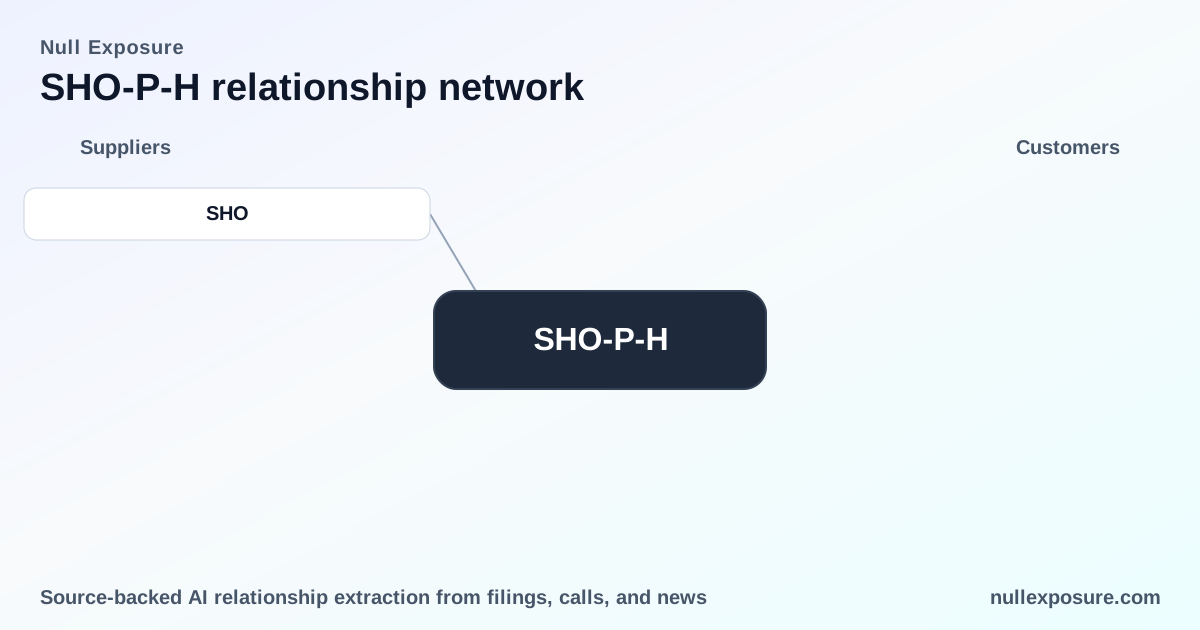
The supplier results returned a single, material mention:
Textile Care Services — the laundry provider tied to historic hotel assets
Textile Care Services handled the daily laundry operations for Mayo Clinic, the four hotels included in the transaction, and other corporate customers; the company was part of the assets referenced in a sale of hotel properties connected to Sunstone Hotel Investors. A Post-Bulletin piece covering the sale of the Kahler Grand and related hotels recounts that the transaction “also included Textile Care Services, one of the largest commercial laundries of its kind in the United States,” and that it performed laundry duties for Mayo Clinic and the hotels (Post-Bulletin, coverage of the 2013 sale). Source: Post-Bulletin article on the Kahler Grand sale (reporting from the 2013 transaction).
How to read this supplier linkage for investors
That single supplier mention is not an exhaustive map of operational partners, but it is meaningful because it ties a specialized facilities supplier to both healthcare and hospitality customers — a combination that signals scale and contractual complexity. Textile Care Services’ role in servicing Mayo Clinic and multiple hotels implies service-level obligations and operational continuity requirements that can affect hotel opening/closing cadence and guest satisfaction if service is interrupted.
- Concentration: The mention suggests pockets of supplier concentration at property clusters (one laundry serving multiple hotels and a major healthcare client), creating single points where an outage would ripple across assets.
- Criticality: Laundry services are critical to daily operations for full-service hotels; disruption reduces room availability and guest satisfaction, which affects revenue per available room (RevPAR).
- Maturity and scale: Being described as “one of the largest commercial laundries” denotes an established supplier capable of institutional contracts rather than a local vendor.
These dynamics matter for preferred investors because income stability depends on predictable property-level cash flows and the supplier networks that sustain them.
Constraints and company-level signals
The records returned no explicit supplier constraints tied to SHO-P-H. That absence is itself a signal: public supplier constraints, contract encumbrances or regulatory supplier limitations are not disclosed in the available search results, which suggests standard public disclosure posture for a REIT’s preferred securities. From a business-model lens this implies:
- Contracting posture: The REIT likely negotiates market-standard vendor contracts rather than highly bespoke, disclosure-heavy arrangements.
- Concentration risk: The single identified mention signals localized supplier concentration at certain property clusters rather than a systemic supplier entanglement across the portfolio.
- Operational maturity: The reference to a large, long-standing laundry provider is consistent with mature vendor relationships rather than nascent outsourcing experiments.
- Disclosure maturity: Absence of constraints in the supplier results indicates supplier risk is documented through transactional reporting rather than continuous regulatory filings.
These are company-level signals drawn from the dataset’s constraint absence, not claims about specific contracts.
Practical investor checklist: what to monitor next
Investors and operators evaluating SHO-P-H should prioritize three practical checks:
- Verify whether strategic properties rely on shared service vendors that cover multiple assets (single-vendor concentration amplifies operational risk).
- Review service-level agreements where accessible, especially for critical guest-facing functions (housekeeping, laundry, food & beverage supply chains).
- Monitor portfolio transitions and property sales/acquisitions for bundled business units (service companies sometimes move with asset sales, as the Post-Bulletin transaction illustrates).
Key takeaway: operational vendor dependencies translate to measurable cash-flow exposure for preferred holders.
For an expanded supplier risk profile and ongoing monitoring tools, visit Null Exposure.
Final read: risk-reward posture for preferred holders
SHO-P-H delivers preferred-like income exposure to a hospitality REIT built on premium assets and active asset management. The single supplier relationship surfaced — Textile Care Services — underscores the importance of property-cluster vendors that serve multiple commercial and institutional clients and therefore create concentration and operational dependency. Absence of broader supplier constraints in the public record suggests standard disclosure behavior rather than hidden encumbrances, but investors should treat supplier diligence as a complement to capital-structure analysis.
For investors who prioritize income resilience and operational transparency, supplier mapping is an essential input before committing to preferred claims. To access deeper supplier mappings and continual monitoring, start your due diligence at Null Exposure.