Steven Madden (SHOO): Supplier finance, concentrated sourcing, and a strategic factoring partner
Steven Madden monetizes a vertically integrated footwear model: it designs and markets owned brands while outsourcing manufacturing through agents and sourcing offices, monetizing via wholesale and direct-to-consumer retail channels and financing working capital through receivables arrangements. The company leverages factoring and receivables-purchase agreements to convert seasonally concentrated receivables into liquidity, while sourcing production from a geographically concentrated network that drives supplier risk and operational leverage. Learn more at https://nullexposure.com/.
How the company runs the supply chain and pays for growth
Steven Madden combines in-house design, brand marketing, wholesale distribution, and e-commerce with outsourced manufacturing. The FY2024 10‑K states the company uses agents and its own sourcing offices to source products from independently owned manufacturers across China, Cambodia, Mexico, Vietnam, Brazil, India, Italy and other countries. This is a global sourcing model with heavy APAC concentration: production sourced from China represented 76.6% of product purchases in 2024. That level of concentration creates a supplier and logistics dependency that is central to cash‑flow timing and credit exposure.
The company finances seasonal inventory and accounts receivable through receivables arrangements with third‑party factors. Factoring shifts near‑term credit exposure and improves working capital metrics but introduces counterparty dependency and fee dilution of margins. The FY2024 filings document both an Amended and Restated Deferred Purchase Factoring Agreement with Rosenthal & Rosenthal and a Credit Approved Receivables Purchasing Agreement (CARPA) involving CIT, indicating a layered receivables financing posture that blends multiple providers for collections and credit assumption.
What the filings say about counterparties and contracts
-
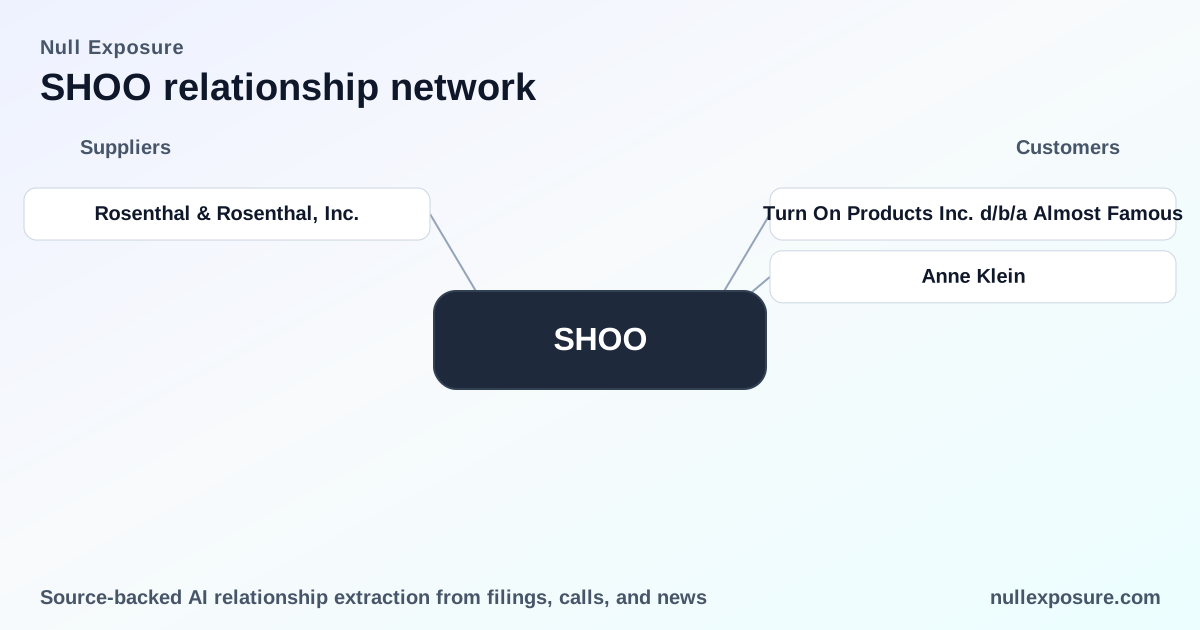
The FY2024 Form 10‑K records an Amended and Restated Deferred Purchase Factoring Agreement with Rosenthal & Rosenthal, Inc., establishing Rosenthal as a structured factoring partner for the Madden Entities. According to the 2024 10‑K disclosure, the agreement is an active, amended factoring relationship that supports receivables liquidity (FY2024 Form 10‑K, Steven Madden Ltd).
-
The same set of disclosures describes a Credit Approved Receivables Purchasing Agreement (CARPA) with CIT Group/Commercial Services, Inc., under which CIT is a non‑exclusive collection agent and assumes credit risk for credit‑approved receivables, in conjunction with the amendment to the credit agreement (FY2024 Form 10‑K). This creates a multi‑party receivables financing structure that spreads collection and credit risk across providers.
These filings make clear the company uses multiple financial counterparties to manage receivables — one (Rosenthal) in a deferred purchase/factoring role and another (CIT) as a receivables purchaser and collection agent. For investor readers focused on supplier finance, that combination is a deliberate working‑capital architecture: liquidity today in exchange for fees and counterparty concentration risk tomorrow. For more analysis and supplier mapping tools, visit https://nullexposure.com/.
The Rosenthal relationship — practical implications for investors
Rosenthal & Rosenthal provides deferred purchase factoring to the Madden Entities under an Amended and Restated Deferred Purchase Factoring Agreement disclosed in the FY2024 10‑K. This makes Rosenthal a critical financial counterparty: factoring accelerates cash conversion but gives Rosenthal contractual rights over receivables and collection flows (FY2024 Form 10‑K, FY2024). Investors should treat Rosenthal as a funding partner whose credit posture and fee schedule materially affect working capital and margin volatility.
Contracting posture, concentration, and maturity explained
-
Contracting posture: Steven Madden operates with formal, written finance agreements for receivables (factoring and CARPA), reflecting a sophisticated, corporate‑grade contracting posture rather than ad hoc vendor credit lines. These are negotiated, amended contracts (as the Rosenthal agreement is amended and restated) that alter legal rights to receivables and collections.
-
Concentration: The company’s supplier base is heavily concentrated in China (76.6% of purchases in 2024), which is a structural commercial risk tied to shipping, tariffs, labor, and geopolitical dynamics (FY2024 10‑K). That concentration increases the criticality of supply continuity and underscores why receivables financing is central to the balance sheet.
-
Criticality: The supplier and financing relationships are mission‑critical. Manufacturing concentration drives the operational importance of sourcing offices and agent relationships; factoring and CARPA arrangements drive the financial continuity of operations.
-
Maturity and stage: The relationships documented are active and evolved — the Rosenthal agreement is an amended and restated facility, and the CARPA arrangement was entered into as part of a 2023 amendment to the credit agreement, indicating a mature, ongoing receivables financing program (FY2024 disclosures).
What this means for premium finance investors and operators
-
Liquidity management: Factoring with Rosenthal and a CARPA with CIT convert blockbuster seasonal receivables into usable cash, reducing the need for costly short‑term bank borrowing; however, financing costs reduce net margin and create dependency on counterparty performance.
-
Counterparty concentration risk: The pairing of Rosenthal and CIT as named finance partners is beneficial for diversification of function (purchasing vs. collection), but investors should monitor the credit and operational health of these providers and the company's fallback options.
-
Operational exposure through sourcing concentration: With over three‑quarters of purchases coming from China, supply‑chain shocks will have outsized impact on inventory flow and receivables timing — directly affecting the effectiveness and cost of the factoring program.
-
Contract sophistication: The use of amended and restated agreements signals experienced commercial negotiation and a willingness to reprice or restructure financing as the business evolves; this is a sign of financial maturity.
Relationship-by-relationship quick reference
- Rosenthal & Rosenthal, Inc.: The FY2024 10‑K discloses an Amended and Restated Deferred Purchase Factoring Agreement between the Madden Entities and Rosenthal, placing Rosenthal as a primary factor for receivables liquidity (FY2024 Form 10‑K). This is an active, material finance relationship that affects working capital and credit exposure.
(That completes the set of supplier‑scope relationships disclosed in the available results; the 10‑K also references a CARPA with CIT in the context of receivables purchasing and collection arrangements.)
Bottom line for investors
Steven Madden runs a capital‑intensive seasonal business supported by a structured receivables finance program and a highly concentrated APAC supply base. The Rosenthal factoring arrangement and the CARPA with CIT are central to working‑capital management and therefore to margin profile and liquidity. For investors and operators evaluating supplier relationships and premium finance exposure, prioritize monitoring counterparties’ credit health, the terms and fees of factoring/CARPA arrangements, and China's manufacturing and logistics resilience. Access deeper supplier relationship intelligence at https://nullexposure.com/.
For a more detailed supplier map and contract‑level insights on SHOO, visit https://nullexposure.com/ and request the full supplier relationships briefing.