Sid (Companhia Siderurgica Nacional ADR) — supplier relationships and what they mean for investors
Companhia Siderurgica Nacional (SID) is an integrated steel producer that monetizes through high-volume commodity steel sales across construction, automotive and industrial supply chains, supplemented by value capture in logistics and energy-linked projects. Revenue is driven by core flat and long steel production, while strategic partnerships and infrastructure acquisitions extend margin control and lower unit costs, particularly in logistics and decarbonization initiatives. For investors evaluating supplier exposures and counterparty risk, the current relationship set highlights a strategic pivot toward decarbonization funding and logistics consolidation that materially affects capital allocation and operational resilience. For a quick company overview and supplier intelligence, visit the NullExposure homepage: https://nullexposure.com/.
How SID operates and where the money comes from
SID is an integrated, capital-intensive manufacturer: it processes iron ore, operates blast and electric-arc furnaces, and sells finished steel across domestic and export channels. The firm’s reported TTM revenue of roughly BRL 45.4 billion (converted reporting shown as USD-equivalent) and EBITDA numbering in the billions demonstrate a cash-flow generating core despite a negative diluted EPS in the trailing period. Operating margin of ~14% reflects meaningful conversion from gross to operating profit, while negative net margin and ROE indicate cyclical earnings pressure and leverage effects in recent reporting. SID’s capital allocation shows two clear drivers: sustaining production capacity and investing in decarbonization and logistics to protect margins over the medium term.
Supplier and partner signals: what the recent items are and why they matter
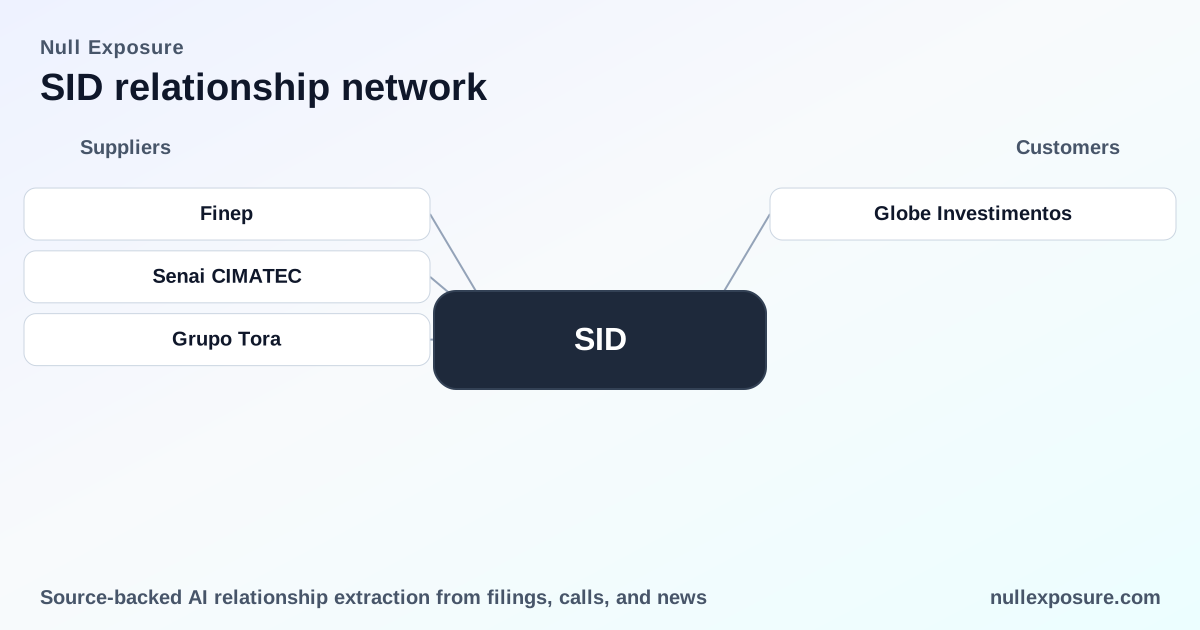
Below are the material supplier/partner relationships surfaced in recent public reports and what each means for SID’s operating profile.
Finep — public innovation credit for green hydrogen
Finep announced a BRL 102.8 million repayable credit line to support CSN’s project to use green hydrogen for industrial decarbonization, signaling public-sector co-financing of SID’s energy transition investments. According to the Finep press release (March 2026), this funding is part of the Finep Mais Inovação program and directly underwrites CSN’s hydrogen initiatives, reducing upfront capex pressure. (Source: Finep.gov.br, March 2026)
Senai CIMATEC — technical collaboration on hydrogen-fired metallurgy
SID is collaborating with Senai CIMATEC on R&D to develop a continuous annealing furnace powered exclusively by green hydrogen, positioning the company to industrialize low-emission steelmaking steps. The Finep announcement (March 2026) referenced the Senai CIMATEC partnership as a technical-commercial vehicle to advance hydrogen-fired furnace technology. (Source: Finep.gov.br, March 2026)
Grupo Tora — logistics acquisition and long-term operational integration
CSN completed the acquisition of Grupo Tora Transportes, a 35-year commercial partner, to accelerate intermodal growth and integrate regional logistics assets into SID’s supply chain footprint. A Times Brasil report (March 2026) described the transaction as strategic consolidation to exploit existing infrastructure and expand CSN’s logistics control across areas of operation. (Source: Times Brasil, March 2026)
What the relationship set reveals about SID’s operating model
The three relationships together paint a consistent operational narrative:
- Contracting posture — hybrid public-private project financing and M&A-driven integration. The Finep credit demonstrates SID’s use of public innovation financing to de-risk technology adoption, while the Grupo Tora deal shows inorganic expansion to internalize logistics and reduce third-party transport exposure.
- Concentration and criticality — domestic infrastructure and partner reliance. Steel production and selling remain core, but logistics integration and hydrogen partnerships are critical enablers to protect margins and meet regulatory and customer decarbonization demands.
- Maturity and strategic direction — incumbent industrial leader transitioning to lower-carbon processes. SID operates at scale with established revenue streams, yet its negative EPS and ROE indicate cyclical and structural pressures that management is addressing through investments and partnerships.
- Capital intensity and funding mix — leveraging innovation credit to preserve balance sheet flexibility. The Finep repayable credit reduces immediate equity or bank financing needs for R&D-heavy projects, improving capital allocation efficiency.
Company-level signal: there are no explicit constraints captured in the supplier-relationship returns, which indicates the available public feed did not surface contractual limitations, exclusivity clauses, or supplier-imposed constraints in the reviewed items. That absence is itself a signal: investors should not assume vendor lock-ins or hard constraints exist unless disclosed elsewhere.
For deeper supplier profiling and counterparty risk assessment visit: https://nullexposure.com/.
Investment implications — risks and opportunity mapping
These relationships produce clear investor takeaways:
- Upside through decarbonization optionality. Publicly backed funding for green hydrogen projects reduces development risk and increases the odds SID can commercialize lower-carbon steel, supporting future premium pricing or regulatory advantage.
- Operational risk reduced via logistics control. The Grupo Tora acquisition transfers transport execution risk from external providers to SID, improving margin stability and supply reliability in a commodity business.
- Execution and cash-flow risk remain. Despite strong EBITDA, negative net profitability and ROE reflect near-term earnings volatility; decarbonization projects are capital-intensive and deliver benefits over multiple years.
- Counterparty risk is mixed but manageable. Partnerships with national innovation agencies and technical institutes are credit-enhancing; they also tie SID to government and academic timelines, which require active program management.
Recommended investor actions
- Monitor project-level milestones and public funding drawdowns for the Finep-backed hydrogen initiative; success would materially de-risk SID’s transition narrative.
- Track integration KPIs for the Grupo Tora logistics acquisition — look for cost-per-ton and on-time delivery improvements within 12 months as evidence of operational synergy.
- Reassess valuation versus peers when first-production or pilot results from the Senai CIMATEC furnace project are published; technological breakthroughs could justify a re-rating given low current multiples.
Explore more supplier intelligence and tailored counterparty scoring at NullExposure: https://nullexposure.com/.
Final takeaways
SID is an incumbent steel producer using public innovation funding and targeted M&A to mitigate structural risks and secure long-term margin durability. The Finep and Senai CIMATEC relationships underline a credible path to lower-carbon production, while the Grupo Tora acquisition reduces logistics volatility—both are strategic moves that change the risk-return profile for investors. For investors and operators focused on supplier exposure, these relationships warrant active monitoring as they materially affect SID’s capital allocation and operational resilience. For ongoing supplier monitoring and deeper diligence, visit https://nullexposure.com/.