Sirius XM: How supplier relationships shape a gatekeeper in audio and live sports
Sirius XM operates a subscription-driven satellite radio and streaming business, monetizing through recurring subscriber fees, advertising inventory tied to live and specialty programming, and licensing partnerships that put proprietary channels into cars and devices. Content exclusivity and live-event distribution — illustrated by the company’s renewed IndyCar commitments — function as customer-retention levers, while long-lived infrastructure contracts and third-party manufacturing/service arrangements create fixed-cost and operational dependencies that investors must price into valuation. For a concise supplier footprint and counterparty intelligence, visit https://nullexposure.com/.
Why an IndyCar deal matters to a subscriber platform
Sirius XM’s March 2026 announcement to carry the NTT INDYCAR SERIES and related series is not a consumer PR stunt — it is an engagement and monetization strategy that converts live sports into advertising inventory, channel differentiation and retention. Live motorsports generate appointment listening, sponsorship inventory and cross-promotional runway into automotive and lifestyle demographics that rate highly for advertisers. The Meyer Shank Racing sponsorship also puts Sirius XM branding directly on cars and in paddock media, a classic sponsorship-to-subscription play that strengthens network effects between content and ad sales.
The relationships called out in the March 2026 release
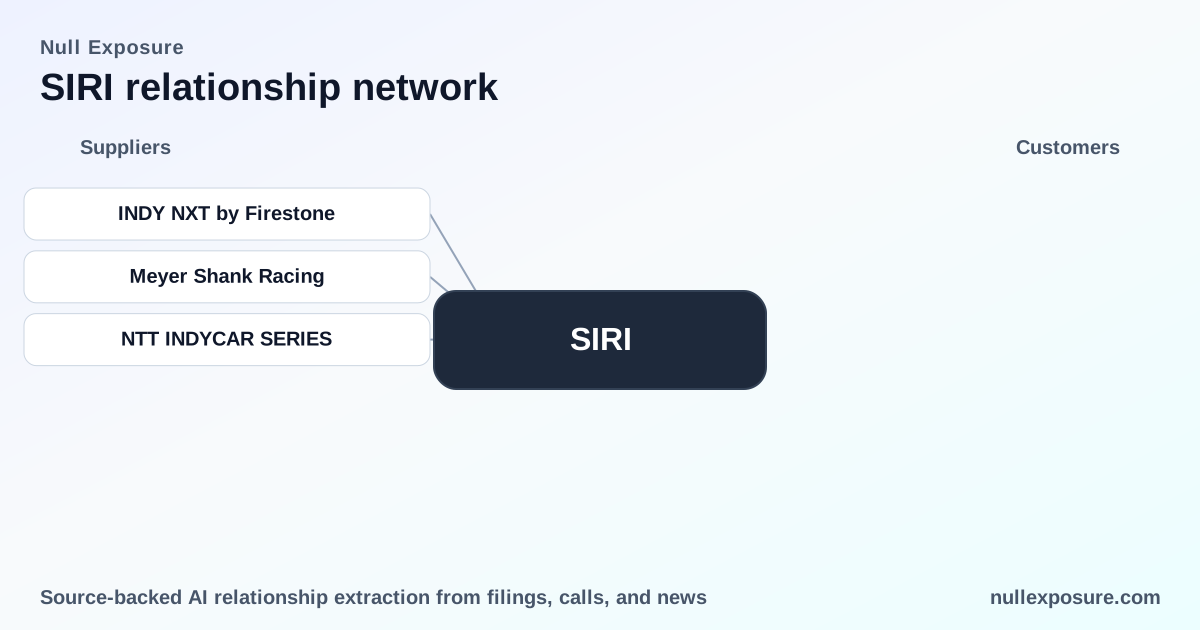
The company’s investor release dated March 10, 2026, lists three partner relationships tied to Sirius XM’s IndyCar coverage; each is summarized below.
NTT INDYCAR SERIES — season-long radio coverage
Sirius XM will provide nationwide season-long coverage of the 2026 NTT INDYCAR SERIES, starting with the Firestone Grand Prix of St. Petersburg, delivering live race audio and related programming to its subscriber base. According to Sirius XM’s investor press release (March 10, 2026), this expands the company’s live-sports inventory and advertising opportunities.
INDY NXT by Firestone — expanded series airings
In addition to the premier series, Sirius XM will air INDY NXT by Firestone races across the season, broadening the scope of motorsports content available to listeners and increasing potential engagement windows for advertisers. The inclusion of INDY NXT was noted in the same Sirius XM press release (March 10, 2026).
Meyer Shank Racing — continued sponsorship collaboration
Meyer Shank Racing will continue a sponsorship collaboration in which Sirius XM channels are showcased in team paint schemes and trackside promotions, translating branding into visible presence at events and in broadcast content. Sirius XM’s March 10, 2026 press release explicitly describes the sponsorship continuation and on-track activation.
Supplier constraints that determine operating posture
Beyond promotional relationships, Sirius XM’s vendor and infrastructure profile contains three company-level signals investors must treat as structural.
- Long-term contracting posture and asset commitment. Company filings document lease terms extending up to 17 years for certain assets, indicating a capital-intensive footprint and limited short-term flexibility on major network and facility costs. This entrenched cost base supports stable service delivery but increases operating leverage in cyclical revenue environments.
- Outsourced manufacturing model. Sirius XM explicitly outsources radio manufacturing to authorized third-party manufacturers and licenses its technology to electronics partners rather than producing radios in-house, establishing an upstream dependency for device supply and brand presence inside vehicles.
- Third-party service providers for mission-critical operations. The company uses external providers to operate and maintain satellite telemetry, tracking and control facilities and terrestrial repeater networks, and routinely engages specialized cybersecurity and incident response advisors to augment internal capabilities, signaling heavy reliance on vendor performance for continuity.
One constraint excerpt names a supplier directly: Lanteris Space Systems (formerly Maxar Space) is identified in filings as the manufacturer of certain in-orbit satellites and is contractually entitled to in-orbit performance payments for satellites meeting design-life targets. That contractual structure links payables and future obligations to hardware performance and life-cycle risk.
For a structured view of supplier concentration, contractual terms and counterparty criticality, review Null Exposure’s supplier intelligence at https://nullexposure.com/.
How these signals translate into investment and operational risk
Sirius XM’s combination of content partnerships and infrastructure outsourcing creates a mixed risk-reward profile:
- Revenue side: Live-sports carriage and visible sponsorships increase advertising yield and differentiation, supporting subscriber retention and potential ARPU expansion. The company’s scale — trailing revenue around $8.56 billion and EBITDA near $2.45 billion — provides leverage to monetize content at scale.
- Cost and capital side: Long-duration leases and satellite performance-linked payments are fixed and semi-fixed obligations that compress margin flexibility during revenue slowdowns; Sirius XM’s EV/EBITDA of ~8.1 and forward P/E in the low single digits reflect both steady cash flow and these embedded operating commitments.
- Operational concentration: Outsourcing manufacturing and mission-critical telemetry/maintenance creates single-point dependencies where supplier performance, delivery timing or cyber incidents would have outsized operational impact. The explicit naming of Lanteris for in-orbit manufacturing underlines this concentrated exposure.
- Maturity and governance: Supplier arrangements are longstanding and institutionally managed; the contracting posture is mature rather than ad hoc, which supports predictability but locks in structural costs that are not easily re-negotiated short-term.
Key takeaways:
- Content partnerships are growth levers; infrastructure contracts are cost anchors.
- Operational continuity is supplier-dependent; satellite/telemetry vendors are mission-critical.
- Contract terms (long leases, performance payments) embed medium-term fixed obligations that investors must price into downside scenarios.
What investors and operators should do next
For portfolio managers and operational leaders assessing Sirius XM as a supplier counterparty or investment target, prioritize these actions:
- Perform a counterparty stress test that models lease and satellite payment obligations against subscriber retention shocks.
- Validate supplier diversification for radios and telemetry services; quantify the substitution timeline and cost if a key manufacturer or operator underperforms.
- Monitor live-sports carriage and sponsorship KPIs (listener-hours, ad yield, churn impact) to tie content deals to monetization outcomes.
If you need deeper supplier-level granularity and contract-risk scoring for Siri or comparable communications firms, see Null Exposure’s research center at https://nullexposure.com/.
Sirius XM’s March 2026 motorsports commitments are a clear example of how content deals create top-line optionality while long-term infrastructure arrangements define bottom-line rigidity; investors must weigh the predictable cash flows against supplier and capital commitments when sizing positions. For tailored supplier risk analysis or to run an exposure screen, visit https://nullexposure.com/ to engage with our research team.