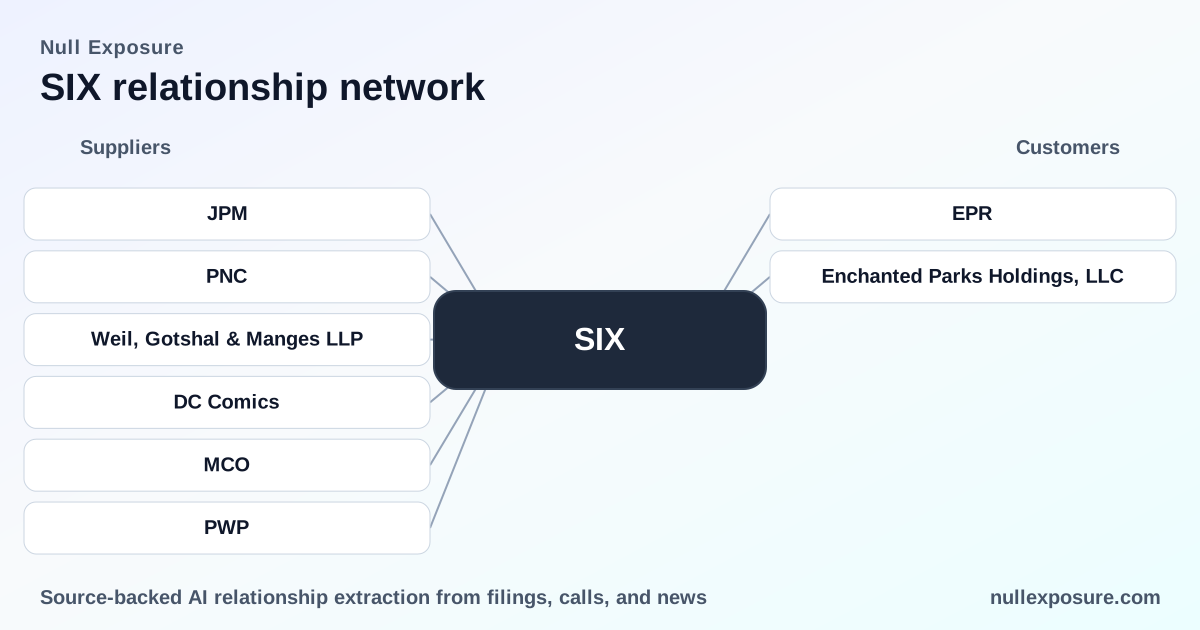
SIX supplier relationships: lenders, advisers, licensors and what investors should price in
Six Flags (SIX) runs regional themed-park operations and monetizes through park admissions, concessions, in-park retail, licensing of branded intellectual property, and periodic capital markets activity — including asset sales and debt refinancing — to manage liquidity and leverage. Recent 2026 activity shows the company actively reshaping its balance sheet while keeping core licensing and legal/advisory linkages intact. For investors, the roster of lenders, advisers, rating agencies and licensors is a direct window into financing risk, contractual optionality, and franchise continuity. Learn more at https://nullexposure.com/.
Why these supplier relationships drive valuation and risk
Supplier relationships here are not incidental vendors; they are strategic counterparties that affect SIX’s cost of capital, contractual flexibility, and the continuity of customer-facing IP. High-yield lenders dictate covenant structure and refinancing cadence; legal counsel and financial advisers shape transaction terms and execution; licensors determine guest experience and recurring licensing fees; rating agencies set market access velocity. Those roles determine whether SIX can deleverage through asset sales, defend park attendance through licensed attractions, and retain favorable capital markets access.
Company-level signals relevant to operational posture:
- Contracting posture: Recent refinancing and asset-sale activity indicate an opportunistic, transaction-driven posture — management is actively negotiating with financiers and advisers to restructure public debt and monetize non-core assets.
- Concentration: Dependence on several large financial institutions and a few key licensors creates concentrated counterparty exposure that directly impacts liquidity and brand continuity.
- Criticality: Lenders and rating agencies are critical to continuing operations at scale; legal counsel and financial advisers are critical during disposals and financings; licensors are critical to park guest appeal.
- Maturity: The relationships reflect a mix of long-standing commercial licensing (mature, ongoing) and short-cycle capital markets counterparts (transactional, high turnover).
The counterparties and what they do for SIX
JPMorgan Chase & Co.
JPMorgan is one of the lead arrangers on a roughly $1 billion high-yield refinancing for Six Flags, putting it in the center of the company’s immediate capital structure reset. According to The Journal Record (January 2026), JPMorgan led the financing effort alongside PNC.
PNC Financial Services Group Inc.
PNC is co-lead on the same $1 billion refinancing, sharing underwriting and syndication duties that determine spread, covenant tightness and closing timing. The Journal Record reported PNC’s role in the transaction (January 2026).
Perella Weinberg Partners
Perella Weinberg acted as Six Flags’ financial adviser on the sale of seven theme parks to EPR Properties, a transaction that directly funds debt reduction and portfolio rationalization. REBusinessOnline covered Perella Weinberg’s advisor role in the park sale (January 2026).
Weil, Gotshal & Manges LLP
Weil served as Six Flags’ legal counsel on the same sale to EPR Properties, executing the transaction documents and purchase agreements that transfer operational assets and contingent liabilities. REBusinessOnline identified Weil as legal counsel to the company (January 2026).
DC Comics (licensor)
DC Comics characters and Looney Tunes branding are explicitly licensed to Six Flags, underpinning guest-facing attractions and merchandising. InsideTheMagic referenced a recent patent filing that confirms Six Flags’ use of DC characters such as Batman and Wonder Woman as licensed IP (January 2026).
Moody’s Ratings
Moody’s assigned a Caa1 rating to a recent offering associated with the financing activity, signaling very high credit risk and materially influencing investor demand and interest costs. The Journal Record noted the Caa1 rating in its refinancing coverage (January 2026).
What these relationships imply for performance and downside
Asset sales, an aggressive refinancing push, and continuing licensing arrangements paint a coherent story: management is prioritizing near-term deleveraging and liquidity while preserving the guest value proposition through key IP licenses. The lead bank syndicate and a Caa1 rating together imply a high current cost of capital: refinancing will improve cash flow only if executed on acceptable covenant and spread terms.
Key implications:
- Liquidity is being managed transactionally. Asset sales (e.g., the seven-park sale to EPR for $331 million reported by REBusinessOnline) provide immediate balance-sheet relief but reduce scale and recurring operating cash flow.
- Counterparty concentration elevates execution risk. Reliance on a handful of lead banks and a single top-tier legal adviser heightens vulnerability to negotiation outcomes and market sentiment.
- Brand continuity is preserved through content licenses. Contracts with licensors like DC Comics protect the guest experience, supporting steady attendance and secondary revenue lines (merchandise, licensing royalties).
- Credit-level constraints will set funding costs. A Caa1 rating from Moody’s increases yield expectations and restricts access to lower-cost capital; this will be a controlling variable in any forecasts of free cash flow and leverage deleveraging timelines.
For investors who want the full supplier map and relationship timelines, explore detailed trade and counterparty intelligence at https://nullexposure.com/.
How to monitor and act
Active monitoring areas for investors and operators:
- Watch covenant language and effective interest spreads in the refinancing documents announced by lead banks; these determine how aggressively SIX can run operations while deleveraging.
- Track subsequent rating actions from Moody’s; upgrades or downgrades directly change refinancing windows and secondary-market liquidity.
- Verify licensing renewal terms and exclusivity clauses with DC properties; licensed IP is a primary driver of in-park revenue per guest.
- Observe legal/advisory footprints in future disposals; the quality and continuity of counsel and advisers will shape deal economics and residual liabilities.
If you need granular counterparty analytics or an investor-ready supplier report, visit https://nullexposure.com/ for subscription options and sample coverage.
Bottom line
Six Flags is executing a capital-structure overhaul while preserving the branded content that drives attendance. Lenders and Moody’s control market access and cost of capital; advisers and counsel control deal economics; licensors control guest demand. For investors, the interplay between those suppliers — and the terms they secure — is the proximate determinant of recovery in equity value and credit stabilization. If you want a deeper read and rolling updates on these supplier relationships, start here: https://nullexposure.com/.