Smucker’s supplier posture: single-source pockets inside a broadly diversified raw-material strategy
The J. M. Smucker Company manufactures and sells branded packaged foods—coffee, peanut butter, preserves and pet snacks—monetizing through retail and away-from-home channels and premium brand positioning. Smucker converts large-scale commodity purchasing and selective single-source partnerships into stable shelf presence and recurring cash flow, with LTM revenue of $8.93B and EBITDA of $1.88B (company TTM). For investors, the key question is how supplier concentration for a few critical items intersects with an otherwise geographically diversified raw-material base and active commodity hedging.
Explore more supplier intelligence at https://nullexposure.com/.
What the supplier footprint looks like in one line
Smucker runs a hybrid supplier model: broad, multi-source commodity sourcing for bulk inputs (coffee green beans, peanuts, sugars) coupled with deliberate single-source or sole-manufacturer relationships for specific finished goods and packaging. That mix reduces cost volatility for commodities while creating discrete operational dependencies on certain third parties for critical SKUs.
The firm-level constraints investors should treat as operational signals
- Payment and working-capital posture is short-term: Smucker discloses supplier payment terms ranging from 0 to 180 days, which reflects typical consumer-packaged-goods working capital practices and gives the company flexibility to manage cash conversion. (FY2025 Form 10‑K)
- Selective long-term contracting exists alongside spot sourcing: the company states it elects long-term contracts for certain packaging materials and finished goods and routinely enters long-term purchase contracts for peanuts to guard against shortages; this reflects an intentional trade-off—price certainty and security of supply at the cost of committed volume. (FY2025 Form 10‑K)
- Geographic sourcing is mixed: peanuts, oils, flour, sugar and fruit are sourced mainly from North America, while green coffee is drawn from more than 20 coffee-producing countries—this reduces single-region geopolitical risk for coffee but concentrates agricultural exposure for key commodities in North America. (FY2025 Form 10‑K)
- Active commodity risk management: Smucker uses commodity derivatives to hedge green coffee, grains and edible oils, signaling financial-layer mitigation for raw-material price shocks. (FY2025 Form 10‑K)
- Mature supplier relationships: management characterizes relationships with key raw-material suppliers as in good standing, implying operational continuity and established contracting behavior. (FY2025 Form 10‑K)
These are company-level structural signals—the operating model mixes scale-driven sourcing with targeted single-source dependencies. See supplier profiling and deeper relationship mapping at https://nullexposure.com/.
Supplier-by-supplier: what the 10‑K names and why it matters
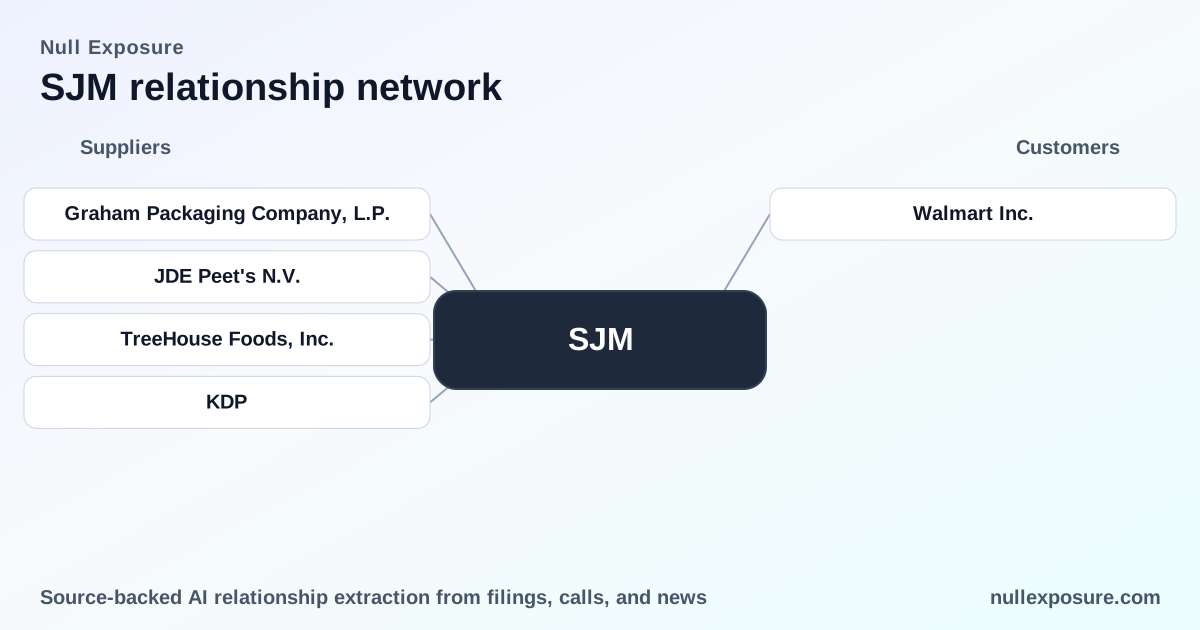
Below are the four supplier relationships identified in Smucker’s FY2025 disclosure; each entry cites the company’s FY2025 Form 10‑K filing.
Graham Packaging Company, L.P.
Graham Packaging is listed as Smucker’s single-source supplier for packaging of its Folgers coffee products, creating an operational dependency on a vendor that supplies a category-defining SKU. According to the company’s FY2025 Form 10‑K, this is a single-source arrangement and therefore a point of concentration for the Folgers packaging supply chain. (FY2025 Form 10‑K)
JDE Peet’s N.V.
JDE Peet’s is identified as the single-source supplier for liquid coffee used in Smucker’s Away From Home business, implying Smucker outsources a finished or semi-finished product line for a channel where consistency and service are critical. The FY2025 Form 10‑K names JDE Peet’s as the single supplier for that liquid coffee. (FY2025 Form 10‑K)
TreeHouse Foods, Inc.
Smucker sold its Canada condiment business to TreeHouse Foods on January 2, 2024, reflecting a strategic divestiture that transitions ownership—and by implication, supplier/customer dynamics—for a regional business line. The FY2025 Form 10‑K records this transaction date and counterparty. (FY2025 Form 10‑K)
Keurig (Keurig Dr Pepper, ticker KDP)
Keurig is disclosed as the single-source supplier for K‑Cup pods used in the proprietary Keurig brewing system, creating a commercial interdependency around a high-volume, branded consumable. Smucker’s FY2025 Form 10‑K explicitly names Keurig as the single-source supplier for those pods. (FY2025 Form 10‑K)
How these relationships translate into investor risk and opportunity
- Concentration risk is present but narrow: only a handful of single-source relationships are disclosed, and they are focused on specific finished goods and packaging rather than core agricultural commodities, which are diversified. This structure reduces broad supply fragility while exposing certain SKUs to supplier disruption.
- Long-term contracting reduces commodity and supply volatility: Smucker’s stated use of long-term purchase contracts for peanuts and selective long-term arrangements for packaging/finished goods is a defensive stance that stabilizes input cost and availability. That lowers headline volatility but creates lock-in risk if input prices revert substantially.
- Geographic differentiation matters: green coffee is globally sourced across >20 producing countries, while peanuts and certain other commodities are North America-centric, concentrating region-specific agricultural risk for those items.
- Financial hedging is a complementary lever: commodity derivatives for coffee, grains and oils offset price swings and protect gross-margin predictability—important for valuation stability in packaged foods.
Investment implications: what an operator or research investor should monitor
- Track continuity clauses and supply alternatives for the single-source relationships named in the 10‑K—any expiration, renegotiation or loss of a single-source supplier is an outsized operational event.
- Monitor peanut and oil crop indicators in North America and coffee origins pricing curves globally—these are the primary drivers of input inflation and margin pressure.
- Watch working-capital dynamics given payment terms up to 180 days; improved cash conversion could free up capital for share buybacks or debt reduction.
- Evaluate counterparty credit and strategic alignment for partners like Graham and Keurig—operational resilience depends on their capacity and contractual stability.
For a fast baseline of supplier concentration and contract profile, visit https://nullexposure.com/ for supplemental exposure mapping.
Bottom line for investors
Smucker operates a pragmatic supplier strategy: diversified global sourcing for core commodities, targeted single-source relationships for specific packaging and finished goods, and active hedging to stabilize margins. That combination delivers scale benefits while creating localized concentration risk that is easily trackable via contract rollout and renewal events disclosed in periodic filings. For portfolio managers and operators, the critical watch items are the single-source contracts, North American agricultural conditions, and the company’s rolling hedging and working-capital posture.
Want an exposure map tailored to your diligence process? Start here: https://nullexposure.com/.