Skeena Resources (SKE): Supplier relationships, community ties, and what operators should price in
Skeena Resources is a project-stage Canadian precious‑metals developer that monetizes by advancing the high‑grade Eskay Creek gold–silver project toward permitting, construction and eventual production, capturing value through resource conversion, strategic partnerships, and commodity sales. The company is pre‑revenue at the corporate level and relies on a mix of capital markets funding, contractor relationships, and community agreements to de‑risk pathway milestones that unlock latent asset value. For investors and supplier managers, the relevant question is how contractual posture and community relationships translate into supply‑chain opportunity and schedule risk as Eskay Creek moves from feasibility to execution.
Explore supplier intelligence and relationship analytics at https://nullexposure.com/.
How Skeena contracts and what that means for suppliers
Skeena operates as a capital‑intensive developer with no operating revenue and a negative EBITDA, which makes project financing and milestone‑based contracting the central mechanics of the business model. According to Skeena’s corporate filings through Q3 2025 and its public corporate profile, the company reported RevenueTTM = 0 and EBITDA negative, confirming a development‑stage operating posture that relies on external contractors and phased spending to preserve capital while de‑risking Eskay Creek. The immediate implications for suppliers and operators are:
- Contracting posture: Project‑stage, milestone and work‑package contracts (EPCM, mine services, local suppliers for early works) rather than long‑term offtake or recurring supply contracts.
- Concentration: Procurement flows will concentrate around the Eskay Creek program; supplier revenue exposure will be lumpy and tied to financing and permit timelines.
- Criticality: Community agreements and permitting are critical path items; supplier access to local labor and services influences schedule execution.
- Maturity: The enterprise is pre‑production with development risk; suppliers should price in schedule uncertainty and capital‑availability triggers.
These characteristics create both upside for contractors (meaningful, concentrated project work) and execution risk (payment timing, scope volatility). For an operator, structuring phased, flexible contract terms with local content clauses will align with Skeena’s model and shore up local social license.
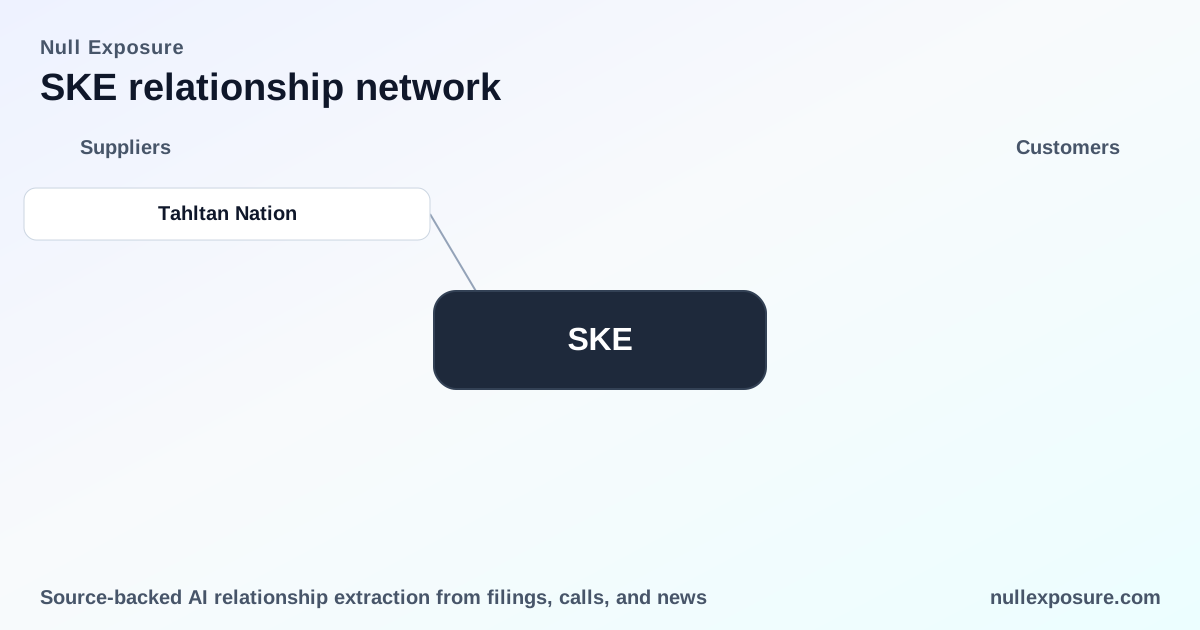
Tahltan Nation — the single supplier/community relationship in scope
Skeena’s most material supplier/community relationship disclosed in the public coverage is with the Tahltan Nation. In FY2025 the Tahltan Nation voted to support the Eskay Creek Impact Benefit Agreement, which commits employment and business opportunities for Tahltan members and companies as part of the project’s social‑license framework. According to a company announcement reported by Resource Capital on March 10, 2026, the vote solidified local participation terms tied to Eskay Creek development (Resource Capital, March 10, 2026: https://www.resource-capital.ch/en/news/view/skeena-gold-silver-announces-successful-tahltan-nation-vote-supporting-the-eskay-creek-impact-benefit-agreement/).
Why this matters: the Tahltan agreement is not a routine supplier contract; it is a preservation-of-license instrument that also creates a pipeline of local suppliers and labor that contractors must price and integrate. For operators, the agreement converts a potential regulatory constraint into a predictable local‑content requirement that shapes subcontracting strategy.
What the Tahltan relationship means for procurement strategy
The Tahltan Impact Benefit Agreement signals two practical procurement imperatives:
- Local content integration: Expect contractual requirements for employment, subcontracting, and supplier development tied to the agreement’s provisions; prime contractors will need robust local supply‑chain plans.
- Schedule and permitting linkage: Progress on social agreements is a gating factor for permits and financing; suppliers should align delivery milestones with the project’s permitting milestones to avoid mis-timed mobilizations.
These points place a premium on early supplier engagement and flexible commercial terms that accommodate phased ramp‑ups and training programs.
Company‑level constraints and signals that shape supplier risk
There are no explicit constraint excerpts attached to the supplier relationships for SKE, so the following are company‑level signals investors and supplier managers must factor into commercial planning:
- Capital dependence: Skeena is a development company with zero reported revenue and a negative EBITDA profile through the latest reported quarter (Q3 2025), making future contracting dependent on successful financing events and staged capital deployments.
- Market sensitivity: A beta above 2 and wide 52‑week trading range indicate elevated equity volatility; supplier credit exposure should be hedged against abrupt funding pauses.
- Investor concentration: Institutional holders represent a substantial portion of the register (reported ~70%), which supports access to capital but also means share price and financing windows are sensitive to market sentiment and commodity cycles.
- Project concentration: Value is concentrated in the Eskay Creek asset; supplier revenue is therefore single‑project dependent and inherently lumpy.
Treat these as operational facts driving negotiation posture: contract terms should prioritize milestone‑linked payments, retention provisions, and contingency clauses for schedule slippage tied to financing or permitting events.
Practical takeaways for investors and supplier managers
- Suppliers should price local content and training into bids—the Tahltan agreement formalizes employment and business opportunities that will be enforced through contracting and community oversight.
- Structure contracts around financing milestones to reduce working‑capital exposure given Skeena’s pre‑revenue status and negative EBITDA profile.
- Prioritize flexibility and staged delivery over fixed long‑lead commitments until major permits and construction financing are in place.
For deeper supplier intelligence and to evaluate how these relationships interact with broader procurement risk, visit https://nullexposure.com/.
Bottom line: community partnerships are both risk mitigants and operational conditions
Skeena’s supplier landscape is defined by project concentration, capital dependency, and a binding community agreement with the Tahltan Nation that creates definable local content obligations. That combination creates clear commercial opportunities for suppliers who design flexible, locally integrated proposals—and it imposes execution risk that operators must mitigate through phased contracting and milestone payment structures. For investors, the strength of community support is a material positive in the de‑risking sequence; for suppliers, it is a contractual reality to be priced and implemented. Learn more about supplier risk and relationship mapping at https://nullexposure.com/.