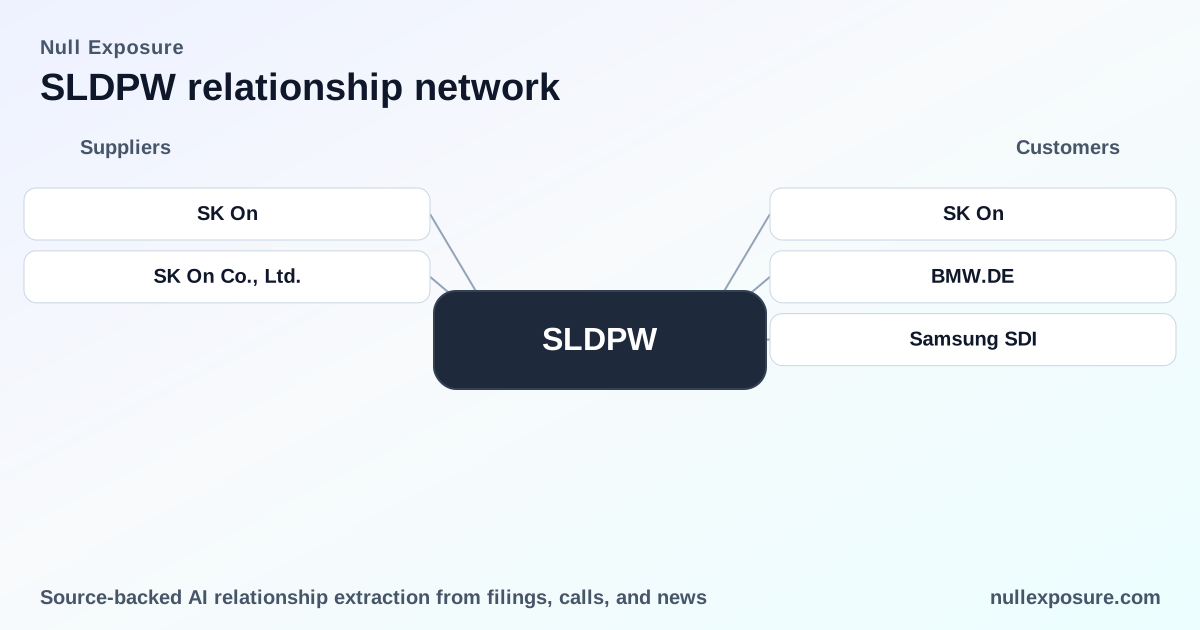
Solid Power (SLDPW) — the supplier relationships that matter
Solid Power develops and sells solid‑state battery materials and cells, monetizing today through materials supply agreements (electrolytes and precursor materials) and, over time, through scaled cell production and licensing to automotive partners. The company’s business model is execution‑heavy: commercial revenue is still nascent while the path to meaningful volume depends on validated supply contracts, upstream raw‑material sourcing, and successful scale‑up with manufacturing partners. For investors and operators evaluating supplier counterparty risk, the relationship footprint in the company’s FY2024 disclosures is concentrated and strategically important to commercialization.
Explore supplier exposures and contract detail at https://nullexposure.com/.
One named partner dominates the supplier disclosures — what the filings show
Solid Power’s 2024 Form 10‑K documents a formal commercial engagement with SK On related to electrolytes.
- SK On. Solid Power discloses that SK On has agreed to purchase Solid Power’s electrolyte for use on the SK On Line under an electrolyte supply agreement, indicating a commercial buyer relationship tied to SK On’s production line (Form 10‑K, FY2024).
- SK On Co., Ltd. The 10‑K specifically records an Electrolyte Supply Agreement dated January 10, 2024, between Solid Power Operating, Inc. and SK On Co., Ltd., confirming the contractual basis for the electrolyte sales referenced elsewhere in the filing (Form 10‑K, FY2024).
Both excerpts are drawn from Solid Power’s FY2024 10‑K and together establish a formal, dated supply contract with SK On for electrolytes destined for an identified production line.
Why the SK On deal matters for revenue and execution
The Jan‑10‑2024 electrolyte agreement is a concrete commercialization milestone: it converts technology development into contracted material sales to a major battery‑maker. That contract provides a path to recurring revenue if Solid Power can meet SK On’s volume, quality, and delivery specifications. For investors, the agreement materially reduces execution uncertainty relative to pure R&D stage companies because the company is selling a defined product into a production line rather than only demonstrating technology.
At the same time, the filing shows limited breadth of disclosed buyers. SK On is the only counterparty named in the supplier relationship results returned from the FY2024 filing, which concentrates short‑term commercial exposure and makes execution with SK On disproportionately important to near‑term revenue realization.
Operating model signals and company‑level constraints
Solid Power’s public disclosures also surface a company‑level supply profile that is constructive on raw‑material breadth but flags one upstream vulnerability. The company states that its electrolyte is made from abundant materials produced at industrial scale in multiple geographical locations, except for the Li2S precursor material (Form 10‑K, FY2024). Treat this as a corporate operating signal rather than a counterparty‑specific detail.
- Global sourcing footprint: Producing most electrolyte inputs across multiple regions is a positive indicator for resilience and logistics flexibility. This supports the company’s ability to supply global partners over time.
- Single‑item sensitivity: The Li2S precursor is an exception; limited sourcing options for this material create a potential single‑point vulnerability that can interrupt production or drive price volatility if supply tightens.
- Operational maturity: A dated supply agreement plus statements about industrial‑scale inputs indicate that Solid Power is moving beyond lab validation toward early commercial supply, but current financials show the business remains in a scaling phase.
These constraints imply a mixed risk profile: operational scalability plausibly achievable, but susceptible to upstream shocks for a specific precursor that could impact fulfillment of contracts such as the SK On agreement.
Contracting posture, concentration, criticality and maturity — a synthesis
- Contracting posture: Formal, written supply agreements are in place (e.g., the Electrolyte Supply Agreement dated Jan 10, 2024), which gives the company predictable commercial obligations and revenue rights once delivery milestones are met.
- Counterparty concentration: High in the near term, since the only named buyer in the disclosed supplier relationships is SK On; a successful ramp with that counterparty will be disproportionately important to reported revenues.
- Component criticality: Electrolyte is essential for cell production, making fulfillment critical to partner timelines; the Li2S precursor exception creates an upstream criticality that must be managed.
- Commercial maturity: The presence of a dated supply agreement signals early‑commercial stage activity—moving from development contracts to product sales—while financials reflect the company is still operating at a loss and with limited revenue scale.
Practical implications for investors and operators
- Execution is the metric: Track SK On line commissioning, qualification milestones, and delivery volumes because they drive whether contracted revenue scales into meaningful top‑line growth.
- Manage the Li2S risk: Evaluate supply sources for the Li2S precursor and contingency plans. The company’s statement about geographic diversity for most inputs is positive, but the single exception is a tangible procurement risk.
- Concentration requires diversification: Additional supply agreements or OEM partnerships will materially de‑risk the commercial path; absence of more named buyers in the FY2024 filing implies further contract wins are necessary to reduce counterparty risk.
For further monitoring and detailed supplier exposure analysis, visit https://nullexposure.com/ for regular updates and document‑level sourcing.
What to watch next — a short checklist for investors
- Progress on SK On line volumes and quality qualification: milestones and shipment notices in press releases or filings will be the earliest signals of revenue conversion.
- Announcements of additional supply agreements: new named buyers will materially shift concentration risk.
- Li2S precursor supply developments: any sourcing partnerships or forward purchase commitments for Li2S will reduce a key upstream vulnerability.
- Cash and capital strategy: with negative EBITDA and limited current revenue, financing cadence will determine how aggressively Solid Power can scale production to meet contractual volumes.
Final take
Solid Power’s FY2024 disclosures put the company at a pivotal commercialization inflection: a dated electrolyte supply agreement with SK On translates technological progress into a real commercial commitment, but the current supplier footprint is narrow and upstream sourcing for one critical precursor presents a visible operational risk. Investors and operators should treat the SK On contract as both an opportunity and a concentration exposure; the company’s ability to replicate that deal across multiple partners and to secure resilient precursor supply will determine whether Solid Power transitions from pilot revenue to durable commercial growth.
If you want ongoing coverage of supplier contracts, filing‑level excerpts, and counterparty risk scoring, start here: https://nullexposure.com/.
For tailored monitoring of SLDPW supplier disclosures and automated alerts when new counterparty agreements are filed, see https://nullexposure.com/ — sign up for real‑time updates and document‑level evidence.