Sol-Gel Technologies (SLGL): Supplier relationships, strategic signals, and what investors should price in
Sol-Gel Technologies commercializes a patented microencapsulation platform for topical dermatological pharmaceuticals and monetizes through product sales and occasional licensing/out‑licensing of technology. The company sells branded and development-stage therapeutic products derived from its microencapsulation IP, and has historically converted non-core assets into cash via technology transactions — a recurring optional monetization channel for an otherwise clinical-stage, product-driven business. For a concise view of other supplier and partner signals that affect counterparty risk or optional monetization, visit https://nullexposure.com/.
Company snapshot and how the model generates cash
Sol-Gel is a small-cap specialty biotech headquartered in Israel that converts its microencapsulation delivery system into topical pharmaceutical assets. Revenue is generated primarily from product sales and licensing/licensing-like transactions, while balance-sheet support has come from discrete technology sales and capital raises. According to company disclosures through Q2 2025 (latest quarter 2025-06-30), revenue TTM is $23.93M with gross profit only $0.422M, and the firm is reporting negative EPS (-1.22); market capitalization is roughly $99M. Insider concentration is unusually high at ~70%, while institutional ownership is low (~15%), creating a governance profile where management and founders exert substantial control over strategic supplier and partner choices.
Key structural takeaways:
- Small revenue base and thin gross margin — product economics are fragile and licensing events materially affect cash flow.
- High insider ownership and small public float — counterparty and contract negotiation dynamics skew toward insider-led decisions and concentrated control.
- History of monetizing IP — transactional exits of specific technologies are a real, precedent-based source of liquidity.
Supplier and partner relationships: the full roll-up
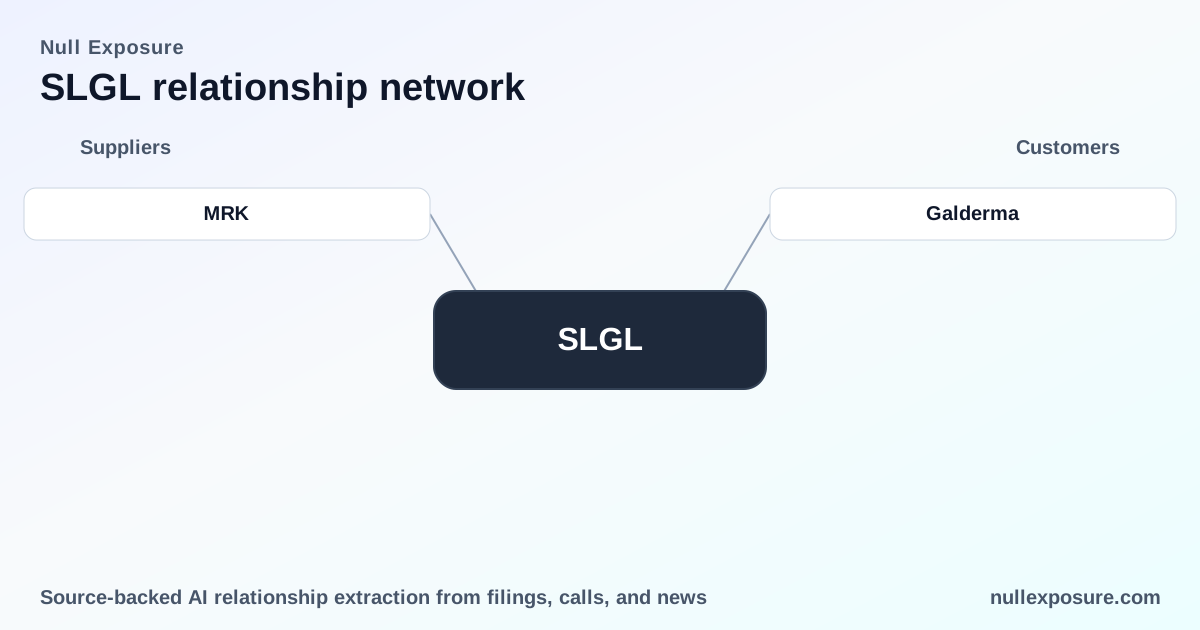
Sol-Gel’s disclosed supplier/partner relationships in our review include a single material historical transaction with a global pharma player:
Merck & Co.
In 2008 Sol‑Gel sold elements of its sun‑protection technology to Merck & Co. for $10 million, a prior monetization of IP that demonstrates the company’s capacity to realize non-dilutive proceeds from selective technology sales. This historical transaction was documented in coverage by Globes on March 10, 2026. (Source: Globes, March 10, 2026 — reporting the 2008 transaction).
What that Merck interaction means for counterparties and investors
The Merck transaction is not an ongoing supplier relationship but it is a proven commercial exit route: large pharma will transact for niche formulation technology when it fills a strategic gap. For investors, this clarifies two things: first, Sol‑Gel’s microencapsulation IP has third‑party commercial value; second, the company can deploy licensing or outright sale as a tactical liquidity lever rather than relying solely on operational margins. The Merck event underwrites valuation optionality for investors who price in future licensing or M&A outcomes.
Constraints and operating-model signals (company-level)
There are no supplier-specific constraints recorded in the supplied relationship data. Treat this absence as a company-level operating signal: public filings and commercially available records do not show supplier covenants, embedded third‑party encumbrances, or disclosed long-term supplier lock‑ins that would materially restrict corporate flexibility. From an operating-model perspective this implies:
- Contracting posture — flexible: The company shows no public evidence of long-duration, exclusive supplier contracts that would limit strategic choices. That flexibility supports opportunistic licensing or asset sales.
- Concentration — uncertain operationally, concentrated ownership governance: While supplier concentration cannot be confirmed from the data, ownership concentration is high (70% insiders) which centralizes contracting power and negotiation posture with suppliers and partners.
- Criticality — product economics drive criticality: Given the thin gross profit, individual supplier failures for key formulations or manufacturing could be material; however, the company’s history of IP monetization reduces absolute dependency on any single revenue source.
- Maturity — early / clinical-stage commercial profile: Financials and scale indicate a company still evolving its commercial footprint rather than a mature, vertically integrated supplier network.
These are company-level signals drawn from the absence of recorded supplier constraints together with the balance-sheet and ownership profile.
Investor implications and a tactical checklist
For investors evaluating SLGL as a supplier/partner exposure or an equity investment, core points to price into models:
- Liquidity optionality through IP sales is a recurring strategic lever given the Merck precedent; value in the IP can be crystallized outside normal product economics.
- Operational fragility: low gross profit and negative EPS signal operational risk; product sales are insufficiently robust to absorb shocks without non-dilutive transactions or capital raises.
- Governance concentration means strategic deals can execute quickly but also concentrate downside risk in insider decision-making.
- Low institutional ownership and small float translate into higher share-price volatility on news of licensing or clinical readouts.
Risk checklist (quick bullets to guide diligence):
- Regulatory and clinical outcomes for topical therapeutics.
- Counterparty terms for any outsourced manufacturing or formulation suppliers (economic criticality despite no public constraints).
- Track record and cadence of licensing or asset-sale activity.
- Insider-driven strategic initiatives and potential minority-holder dilution risk.
For a grouped view of supplier signals across small-cap biotech suppliers and to benchmark Sol‑Gel against peers, visit https://nullexposure.com/ — the platform aggregates partner and counterparty exposures that matter for valuation and counterparty risk management.
Bottom line: positioning and next steps
Sol‑Gel is a small, IP-rich specialty biotech where value is as much in the optionality of technology monetization as it is in current product margins. The historical Merck deal is the clearest external validation of that optionality; public records do not show ongoing supplier constraints, which supports tactical flexibility but does not remove operational risk given the company’s thin gross profit and heavily insider-controlled capital structure.
If your mandate includes counterparty risk or supplier-concentration analysis for small-cap pharma, prioritize contractual diligence on manufacturing and formulation partners, and model scenarios where licensing events take on outsized importance to liquidity. For additional curated supplier-relationship intelligence and to see how SLGL compares with other specialty suppliers, explore the platform at https://nullexposure.com/.