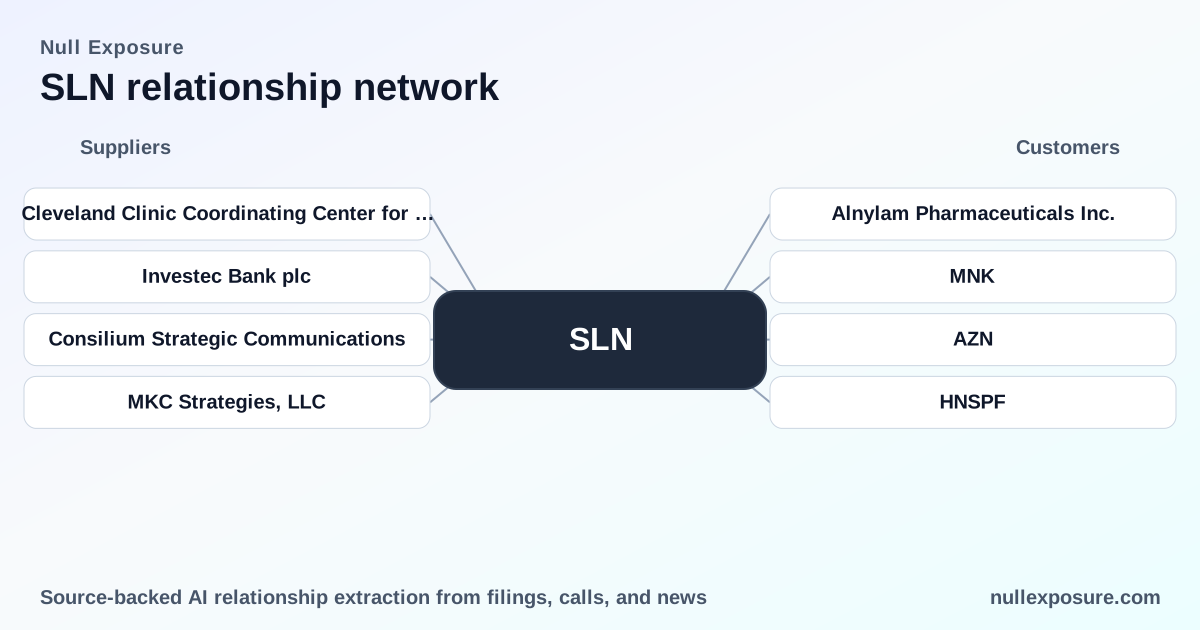
Silence Therapeutics (SLN): supplier map and what it means for investors
Silence Therapeutics develops and licenses RNA-based therapeutics, advancing clinical-stage candidates while outsourcing most manufacturing and execution to third parties; the company monetizes through clinical progress, partnerships and eventual product commercialization rather than routine product sales today. Revenue is nascent, R&D spend is the value driver, and supplier relationships are the operational backbone that determine whether clinical programs can scale into commercial products. For a concise supplier-risk briefing and ongoing monitoring, visit https://nullexposure.com/.
Why suppliers are central to Silence’s economics
Silence is a development-stage biotechnology company whose long-term value depends on timely, compliant manufacture of investigational drug substance and product, plus reliable clinical operations. The company relies on third-party manufacturers (CDMOs) and service providers (CROs and medical institutions) to execute its clinical program and therefore cannot deliver milestones or generate revenue without those partners. Financials underline the exposure: negative EBITDA and minimal revenue reflect a model that converts scientific progress into value rather than current cash flow.
Operationally this creates four consequential characteristics:
- Outsourced contracting posture: core manufacturing and many trial activities are externalized, so contract terms and partner execution quality are primary controls.
- High criticality: manufacturing or regulatory failures at a supplier can delay programs and trigger material adverse impacts.
- Moderate concentration risk: Silence reports contracting with multiple third-party manufacturers (eleven named in filings), so single-site failures could be disruptive but are partially mitigated by multiple CDMOs.
- Active development stage: supplier relationships are operational and ongoing, not legacy; continuity of service matters for near-term milestones.
These are company-level signals drawn from regulatory disclosures and public statements about manufacturing and service reliance. For deeper supplier mapping and continuous surveillance, see https://nullexposure.com/.
What the public record shows about specific partners
Silence’s public communications and press materials name several external organizations that support trials, investor relations and media engagement. Below are every relationship captured in the referenced public results.
Cleveland Clinic Coordinating Center for Clinical Research (C5Research)
Silence sponsored a clinical trial coordinated by the Cleveland Clinic C5Research that assessed a gene-silencing therapy’s effect on lipoprotein(a), indicating the use of a large clinical research center to run pivotal or exploratory studies. According to the Cleveland Clinic newsroom release (April 3, 2022), the trial was coordinated by C5Research and sponsored by Silence Therapeutics.
Investec Bank plc
Investec acted as Silence’s nominated adviser and broker in investor communications and capital-market activities, providing financial advisory and market-facing services that support the company’s equity financing and investor relations cadence. This relationship is disclosed in a GlobeNewswire press release detailing R&D and corporate updates (Oct 21, 2021).
Consilium Strategic Communications
Consilium serves as European public relations counsel to Silence, supplying strategic communications and media relations in support of corporate messaging and R&D announcements. The GlobeNewswire release (Oct 21, 2021) lists Consilium as the company’s European PR contact.
MKC Strategies, LLC
MKC Strategies is named as Silence’s US media relations firm, handling outreach and communications to US press and investor audiences to support program updates and corporate disclosures. The same GlobeNewswire corporate update (Oct 21, 2021) identifies MKC Strategies as the US media contact.
How the constraints translate into investment and operational risk
Public constraint excerpts make the operational stakes explicit: Silence acknowledges the material risk that third-party manufacturing or regulatory noncompliance could trigger sanctions, batch invalidation, recalls or approval delays. That legal disclosure is not boilerplate in practice — it signals that manufacturing and regulatory continuity are among the most acute risks to program timelines and valuation.
Because manufacturing and services are core to delivery, contract terms, audit access, and supplier diversification are valuation-relevant variables. Investors should treat supplier performance as a leading indicator for milestone delivery and cash-burn forecasting; operational slips at CDMOs or CROs will likely translate to share-price sensitivity given the company’s development-stage economics.
Practical implications for operators and procurement teams
Operators running supplier strategy for a company like Silence should prioritize the following actions:
- Negotiate robust quality, audit and regulatory cooperation clauses in CDMO contracts to preserve inspection and remediation rights.
- Maintain dual-sourcing or qualified-backup plans for critical drug-substance steps, especially those tied to pivotal studies.
- Monitor supplier financial stability and capacity to avoid late-stage manufacturing bottlenecks during scale-up.
- Institutionalize scenario plans for regulatory actions that could affect supply continuity and product lot release.
These measures reduce the most damaging operational tail risks that directly impair milestone realization and market value. If you need to map suppliers to regulatory and financial risk profiles, begin with a focused audit of CDMO contracts and trial coordination agreements.
For ongoing supplier intelligence and alerts, use https://nullexposure.com/ to subscribe to continuous monitoring and relationship mapping.
Bottom line for investors
Silence Therapeutics is a small, development-stage RNA therapeutics company whose value is driven by scientific progress and partner execution rather than recurring revenues. Supplier relationships — especially CDMOs and clinical coordinating centers — are critical to converting R&D into value, and the company’s own disclosures treat supplier compliance and performance as material risks. Investors should incorporate supplier concentration, contract robustness and regulatory exposure into any valuation or event-driven trade thesis. For a structured supplier risk assessment and monitoring workflow, visit https://nullexposure.com/.
- Key takeaway: Operational success at Silence is contingent on external manufacturers and service providers; governance of those relationships is the single biggest non-scientific determinant of near-term value.