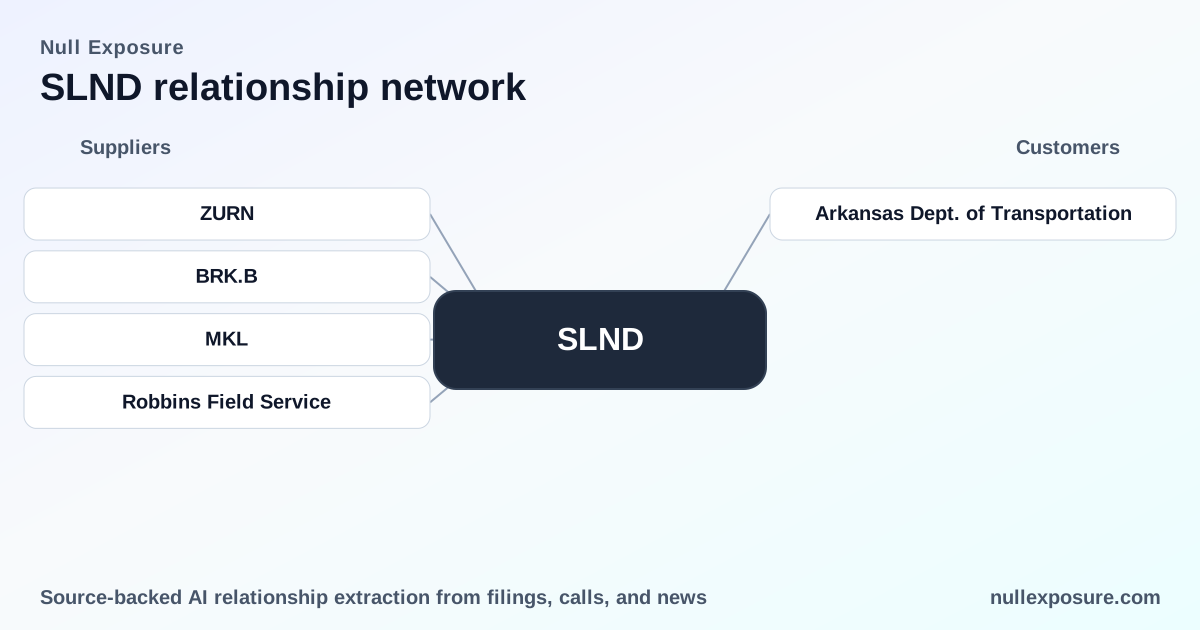
Southland Holdings (SLND): How surety lines and specialty contractors underpin project continuity
Southland Holdings builds and services heavy infrastructure projects and monetizes through contract execution, progress billings and back-end retention on long-duration construction contracts. The company offsets cash-flow volatility and bonded performance risk by securing surety advances from major insurers and partnering with specialist field vendors on select tunneling and equipment-intensive projects — arrangements that stabilize project delivery but concentrate financial dependence on a small set of guarantors.
If you are evaluating SLND for supplier risk or premium finance exposure, focus on the surety advances, indemnity structures and the limited set of specialist vendors that keep projects moving. Learn more about supplier risk coverage and monitoring at https://nullexposure.com/.
What the capital and supplier posture looks like in plain terms
Southland’s commercial model is project-centric: the firm wins large, bonded construction contracts, then relies on surety providers to fund bonded obligations when project cash flow or client payments lag. That creates a two-way dependency: Southland needs surety liquidity to continue work, and sureties require general indemnity and reimbursement from Southland (or its backers). The result is a contracting posture that is contingent and indemnity-heavy, with critical counterparty reliance on insurers that advance funds to meet bonded obligations.
The company also sources equipment and specialized field services from domestic and international vendors, which is a firm-level signal that supply lines are global and require active management for cross-border logistics and parts availability.
How the relationships are documented (every item in the public record)
Zurich Insurance — TradingView reported that Zurich Insurance advanced $15 million to Southland to satisfy bonded project obligations and keep construction progress on schedule, disclosed in March 2026. (TradingView, March 10, 2026)
Berkshire Hathaway Specialty Insurance Company — A Globe and Mail press release states Southland received approximately $14 million of an available $30 million in surety funds from Berkshire Hathaway Specialty Insurance Company under a general indemnity agreement to pay bonded construction obligations. (Globe and Mail press release, March 10, 2026)
Markel Insurance Company — According to a Globe and Mail filing in fiscal 2026, Markel advanced roughly $5 million under a general indemnity agreement to fund bonded construction contract obligations, obligating Southland to indemnify and reimburse those advances. (Globe and Mail press release, March 10, 2026)
Zurich Insurance Company Ltd — A simultaneous Globe and Mail filing notes prior advances of about $33 million from Zurich Insurance Company Ltd, and when combined with other insurer advances the total surety advances to Southland were reported at roughly $59 million as of the filing date. (Globe and Mail press release, March 10, 2026)
Berkshire Hathaway (parent reference) — A separate TradingView notice recorded that Berkshire Hathaway agreed to advance up to $30 million for Southland project obligations in an earlier filing tied to FY2025 activity, confirming multi-period surety support. (TradingView, first seen March 10, 2026; referencing FY2025)
Berkshire Hathaway Specialty Insurance Company (prior advance) — The Globe and Mail filing also quantifies prior advances of about $21 million from Berkshire Hathaway Specialty Insurance Company, which—together with other insurer advances—contributed to the aggregated surety funding disclosed in the same filing. (Globe and Mail press release, March 10, 2026)
Robbins Field Service — A project report on tunneling activity (Mill Creek) references Robbins Field Service positively, saying Robbins has been “great to work with” during tunneling operations, indicating operational reliance on specialist field vendors for TBM and maintenance work. (TunnelingOnline, project report reflecting FY2020 project commentary)
What these relationships mean for premium finance and counterparty exposure
-
Concentration of critical counterparty risk. The surety funding reported is concentrated among a handful of large specialty insurers (Berkshire Hathaway Specialty, Zurich, Markel). That concentration increases counterparty-criticality: if one insurer tightens exposure or underwrites more restrictive indemnity conditions, Southland’s ability to meet bonded obligations could be impaired.
-
Indemnity-heavy contracting posture. All insurer advances are provided under general indemnity agreements that legally obligate Southland to reimburse advances; this structure shifts liquidity pressure onto Southland and its backers, which has direct implications for any lender or premium-finance provider assessing recovery and collateral waterfall scenarios.
-
Maturity and repeat support signal underwriting confidence. Multi-period advances and repeated engagement by Berkshire Hathaway and Zurich indicate insurer willingness to support ongoing projects across reporting periods; that underwriting continuity reduces immediate liquidity stress but also underlines strategic dependence on maintaining those relationships.
-
Operational criticality of specialist vendors. Positive working references for Robbins Field Service underscore that certain niche suppliers are operationally indispensable — particularly on tunneling or TBM-centric projects — and are therefore elevated in a supplier-prioritization matrix for contingency planning.
If you want to translate these relationship insights into exposure modelling and monitoring playbooks, visit https://nullexposure.com/ for supplier coverage and tracking solutions.
Risk vectors investors and operators should prioritize
-
Indemnity exposure and reimbursement timing. Surety advances create contingent liabilities that crystallize if reimbursement lags; premium finance facilities should include clauses that reflect indemnity timing and recovery rights.
-
Insurance concentration risk. A small number of insurers supply the bulk of advances; underwriter policy changes or reputation events affecting those insurers would propagate to project finance stress at Southland.
-
Supply-chain scope (global sourcing). Southland sources materials and equipment domestically and internationally, requiring cross-border logistics oversight and potential FX, tariff, or customs disruption hedges; treat this as a company-level constraint on procurement maturity and risk control.
-
Operational dependency on specialists. Vendors like Robbins Field Service are not interchangeable on complex tunneling jobs; downtime or vendor disputes have an outsized impact on schedule and cash flow.
These are the practical variables premium financiers should model when setting terms, covenants, or collateral triggers for SLND exposures.
What to watch next and tactical takeaways
- Monitor quarter-to-quarter filings for changes in the size and composition of surety advances and any new indemnity terms that expand or restrict insurer liability.
- Track insurer press or rating changes for Berkshire Hathaway Specialty, Zurich and Markel, and quantify what a withdrawal or contraction by any single insurer would mean to Southland’s immediate liquidity needs.
- Ensure monitoring of specialist supplier relationships and their contractual assignment/step-in rights so lenders or premium finance providers can limit operational interruption risk.
For structured monitoring, model updates, and supplier-focused credit overlays for contractors like Southland, see the coverage tools at https://nullexposure.com/.
Final assessment
Southland operates with a project-funding model dependent on surety advances and a small set of specialist suppliers; that structure supports continuity in the near term but concentrates financial and operational risk. For investors and premium finance operators, the critical questions are: can Southland sustain indemnity obligations without diluting lender recoveries, and can insurers and specialist vendors continue to supply advances and services at current levels? Answer those two questions and you have the central frame for underwriting exposure to SLND.