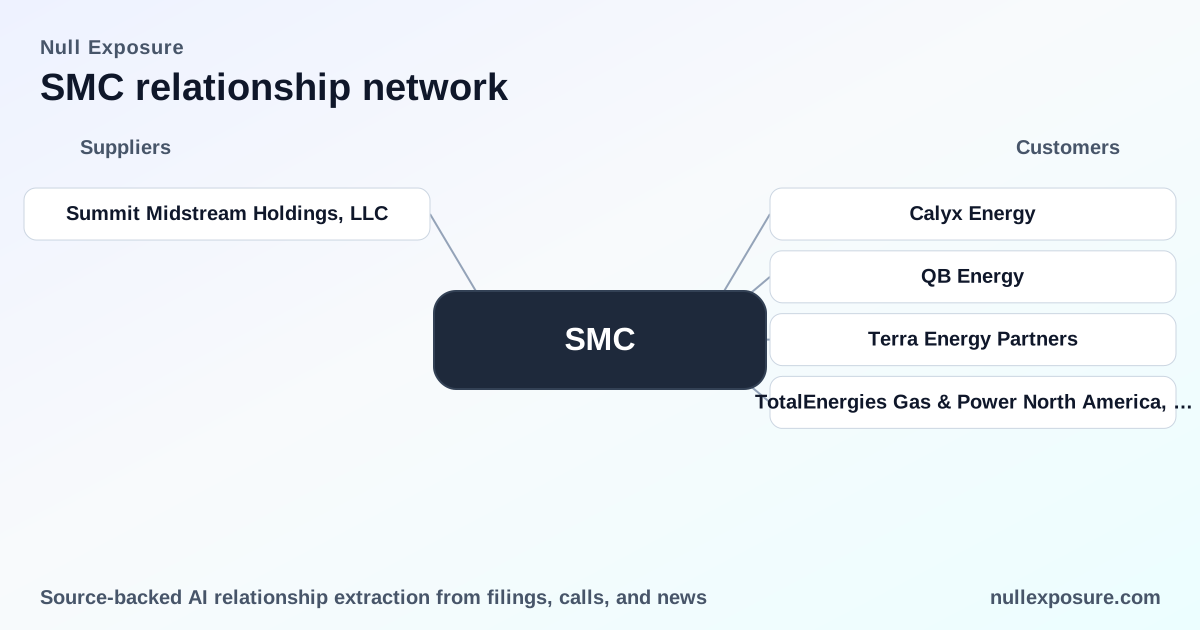
Summit Midstream (SMC): Supplier Landscape and Strategic Implications for Investors
Summit Midstream Corporation operates gathering, processing and transportation networks for natural gas and monetizes those assets primarily through fee-based contracts, capacity reservations and throughput-sensitive processing margins. The company’s earnings profile is driven by stable midstream cash flows augmented by selective commodity exposure and disciplined capital redeployment, with portfolio moves that reshape regional footprint and counterparty exposure.
For a deeper read on supplier dynamics and counterparty signals, visit https://nullexposure.com/ for the full supplier intelligence suite.
How Summit actually makes money — the operating model in plain English
Summit owns and operates midstream infrastructure that connects producers to markets. Revenues derive from:
- contracted fees for gathering and transportation capacity;
- processing margins when Summit takes custody and conditions gas streams; and
- throughput-linked income on uncontracted volumes when commodity conditions favor processing.
The balance sheet and valuation metrics underscore a company that is mid-sized and cash-flow focused: FY revenue ~ $514M, EBITDA ~ $193M, operating margin positive while EPS is negative, indicating capital intensity and recent accounting charges or non-cash items. Market multiples (EV/EBITDA ~ 8.1; Price/Book ~ 0.84) place Summit in a valuation band consistent with established midstream peers that trade on cash yield and asset stability rather than rapid revenue growth.
One recent supplier/asset relationship you need to know
A March 2026 transaction reduced Summit’s direct footprint in parts of North Dakota. In that deal, Steel Reef Infrastructure Corp., through Steel Reef US Corp., paid US$40 million to acquire associated gas gathering assets in Burke and Mountrail Counties from Summit Midstream Holdings, LLC. A March 2026 report from PipelineOnline covered the closing and the purchase price. (Source: https://pipelineonline.ca/steel-reef-picks-up-north-dakota-assets-near-existing-infrastructure/)
Why this relationship matters to investors
The divestiture to Steel Reef is a concrete signal about how Summit manages its asset portfolio: the company is pruning non-core or lower-return assets and recycling capital into higher-growth or higher-margin markets. The $40 million transaction size is modest relative to Summit’s revenue base but meaningful as an execution example of balance-sheet optimization and regional repositioning. The buyer—Steel Reef—focused on assets that sit near existing infrastructure, which implies the sold assets were operationally synergistic rather than stranded.
For investors tracking supplier risk and counterparty concentration, this kind of sale changes the counterparty map in two ways: it reduces Summit’s direct operational exposures in specific Bakken sub-regions, and it introduces Steel Reef as the operating counterparty for those gathering flows going forward.
Explore more supplier relationship intelligence at https://nullexposure.com/.
Operating posture, concentration and maturity — company-level signals
Summit’s public metrics and ownership structure reveal the following company-level signals about its business model:
- Contracting posture: Midstream contracts are typically long-term and fee-oriented; Summit’s positive operating margin and steady EBITDA imply a high proportion of contracted or minimum-fee arrangements that underwrite cash flow stability.
- Concentration and control: With a relatively small float (about 2.64M shares) and insider ownership exceeding 17% alongside institutional ownership near 40%, Summit’s equity base is concentrated, producing a governance and liquidity profile where strategic moves (like asset sales) can be executed cleanly but with limited trading liquidity.
- Criticality of assets: Gathering and processing infrastructure are critical to regional production economics; selling peripheral assets does not materially reduce the systemic importance of Summit’s remaining network where throughput volumes and interconnectivity persist.
- Maturity and capital orientation: Operating margin and EV/EBITDA point to a mature midstream operator that prioritizes steady cash returns and capital discipline over aggressive expansion. Negative EPS reflects either recent impairments or financing structure rather than an underperforming core business.
These signals should shape how investors evaluate supplier relationships: counterparty stability and contract tenor are primary risk mitigants, while asset concentration and insider ownership dictate execution risk and strategic flexibility.
Relationship-by-relationship coverage (complete list from available reporting)
- Summit Midstream Holdings, LLC → Steel Reef Infrastructure Corp.: Steel Reef’s US arm closed on the purchase of associated gas gathering assets in Burke and Mountrail Counties, North Dakota from Summit Midstream Holdings, LLC for US$40 million in March 2026; the sale reduces Summit’s ownership of those regional gathering assets and transfers operating responsibility to Steel Reef. (Source: PipelineOnline, March 2026 — https://pipelineonline.ca/steel-reef-picks-up-north-dakota-assets-near-existing-infrastructure/)
Investment implications and risk checklist
- Capital redeployment strategy: Asset sales of this size indicate an active portfolio management approach—investors should watch disclosures for where proceeds are deployed (debt reduction, buybacks, higher-return projects).
- Counterparty risk shifts: Transactions that substitute operators (from Summit to Steel Reef in this instance) alter service risk for producers and downstream customers; underwritten contracts or existing interconnect obligations limit disruption.
- Valuation sensitivity: With EV/EBITDA ~ 8.1 and Price/Book below 1.0, the market prices in a combination of steady midstream cash flow and limited upside—operational improvements or strategic asset reallocations can re-rate the multiple.
- Liquidity and governance: Concentrated insider holdings and a small float increase the potential for board-driven strategic changes and limit share liquidity under stress.
What investors should do next
- Review Summit’s next investor filing for disclosure of proceeds use and any related-party or third-party agreements tied to sold assets.
- Monitor throughput and fee schedules on core systems for evidence of volume migration or contract re-pricing following the sale.
- Reassess counterparty maps for material producer customers in Burke and Mountrail counties to understand demand substitution to Steel Reef.
For a systematic supplier risk view and to monitor related transactions, visit https://nullexposure.com/.
Bottom line
Summit Midstream is executing tactical portfolio pruning while maintaining a cash-flow oriented midstream business model. The March 2026 Steel Reef purchase is a modest but meaningful example of Summit shifting capital and counterparty exposure. For investors and operators, the immediate implication is clearer network focus and a slight reduction in regional operating scope—outcomes that favor a disciplined, execution-first midstream profile rather than speculative growth. For ongoing supplier intelligence and to track these shifts as they happen, return to https://nullexposure.com/.