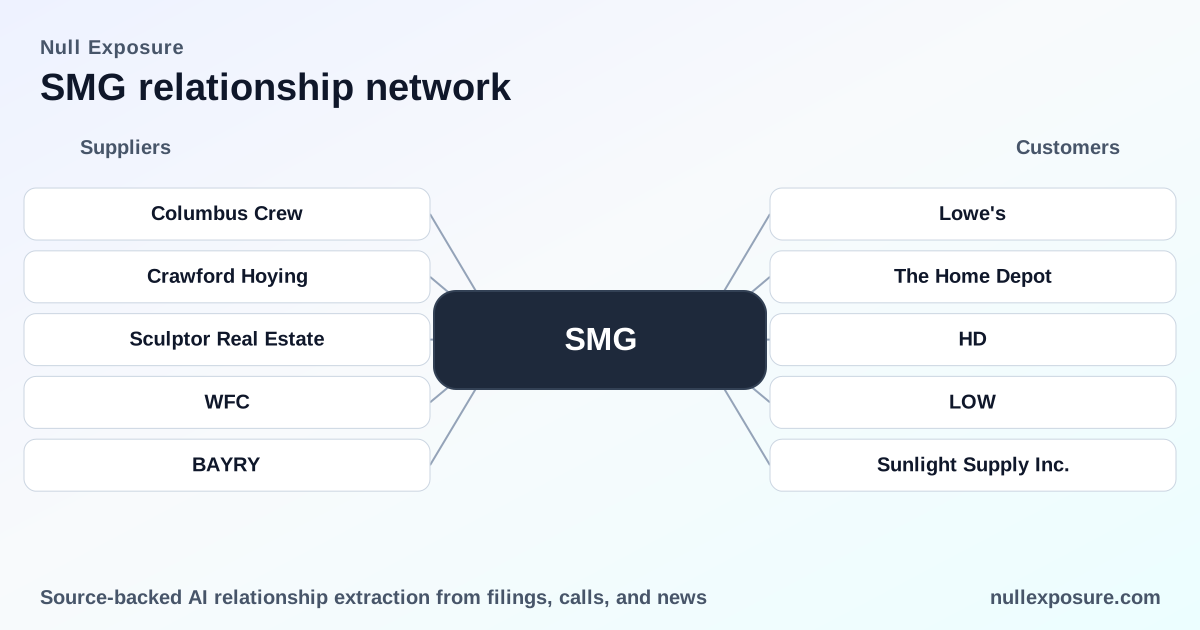
Scotts Miracle-Gro (SMG): Supplier Relationships and Operational Constraints — What Investors Should Know
Scotts Miracle-Gro manufactures, markets, and sells lawn and garden products and monetizes primarily through branded product sales, licensing, and retail distribution across the U.S. and internationally. The business generates cash through consumer product revenue (Revenue TTM ~$3.4B) and leverages recognizable brands—Scotts, Miracle-Gro, and licensed names such as Roundup—to capture retail shelf space and pricing power. For investors assessing supplier and counterparty exposure, the company’s supplier posture, real-estate leasing arrangements, and occasional transactional advisors are the relevant levers that determine working-capital risk and operational continuity. Learn more at the NullExposure homepage: https://nullexposure.com/
How Scotts structures supplier relationships and what that implies for cash flow
Scotts runs a traditional buyer-seller model with commercial payment terms and a supplemental supplier finance program. Company disclosures indicate standard payment terms of 30–60 days, which defines the firm’s short-term payables profile and supports predictable cash conversion. The firm also offers or facilitates a supplier finance program that allows participating suppliers to monetize receivables through a third-party financial institution, shifting liquidity risk off suppliers while preserving Scotts’ payment cadence.
At a company level these constraints signal:
- Contracting posture: Scotts acts principally as a buyer with market-standard payment windows; the supplier finance program shows active management of working-capital optics and supplier relations.
- Concentration and criticality: The business purchases raw materials from various sources, implying exposure to commodity and input-price volatility but not single-supplier criticality disclosed in available public excerpts.
- Maturity and formality: Use of supplier finance and explicit payment-term ranges indicate a mature procurement function focused on balancing supplier health with corporate liquidity.
These are company-level signals drawn from corporate excerpts about payment terms and supplier finance; they are not tied to any single counterparty. For deeper vendor intelligence, visit https://nullexposure.com/
Public counterparty list and what each relationship means for investors
Below are the supplier- and partner-related relationships referenced in public reporting and news coverage. Each is summarized in plain English with the reporting source.
Columbus Crew — stadium and community partner
ScottsMiracle-Gro is the Official Lawn Care & Gardening Partner for the Columbus Crew, supplying products to maintain the team’s natural grass surfaces and supporting community field refurbishments and youth sports initiatives. (Columbus Crew press release, March 2026: https://www.columbuscrew.com/news/columbus-crew-and-scottsmiracle-gro-expand-long-standing-partnership-highlighted-by-stadium-naming-rights)
Crawford Hoying — developer for distribution facility
Crawford Hoying developed a build-to-suit Midwest distribution center completed in 2023 specifically for The Scotts Company, indicating long-term logistics footprint decisions that lock in distribution costs and location-specific capacity. (AJOT coverage of financing for the property, March 2026: https://www.ajot.com/news/affinius-capital-provides-76.25-million-acquisition-financing-for-purchase-of-scotts-midwest-distribution-center-in-the-columbus-oh)
Sculptor Real Estate — landlord/owner of leased facility
Sculptor Real Estate acquired the distribution facility and holds it long term, with the property leased to a Scotts subsidiary; the transaction was financed by a loan used to acquire the property that remains under long-term lease to Scotts. This arrangement shifts real-estate ownership risk to an institutional landlord while preserving operational stability for Scotts’ Midwest logistics. (AJOT coverage, March 2026: https://www.ajot.com/news/affinius-capital-provides-76.25-million-acquisition-financing-for-purchase-of-scotts-midwest-distribution-center-in-the-columbus-oh)
Wells Fargo Securities — financial advisor in M&A
Wells Fargo Securities acted as financial advisor to ScottsMiracle-Gro on the company’s prior acquisition of Sunlight Supply in 2018, demonstrating the use of major investment banks for strategic transactions. The relationship is advisory and transactional rather than procurement-related, but it evidences the company’s engagement with established financial institutions for M&A execution. (NewCannabisVentures retrospective, reporting on the 2018 transaction: https://www.newcannabisventures.com/scotts-miracle-gro-announces-450-million-acquisition-of-sunlight-supply-as-hawthorne-sales-slump/)
Bayer — licensing partner for Roundup
Scotts markets products under licensed brands including Roundup, a relationship that positions the company within a broader chemical and seed ecosystem and ties part of its brand portfolio to third-party intellectual property and licensing terms. Licensing relationships create revenue upside from brand recognition but introduce contract renewal and reputational vectors to monitor. (Morningstar coverage, FY2025 commentary on brand mix: https://global.morningstar.com/en-ca/stocks/undervalued-by-36-this-high-yield-stock-is-buy)
What these relationships say about operational risk and strategic optionality
Taken together, the public relationships show diversified counterparty categories: marketing/sponsorship partners (Columbus Crew), real-estate owners and developers (Crawford Hoying, Sculptor Real Estate), financial advisors for strategic transactions (Wells Fargo Securities), and licensing counterparts (Bayer). Those categories imply different risk profiles:
- Real estate is persistent and high-criticality. Leased, build-to-suit distribution centers create long-duration operational dependency; landlord credit and lease terms matter to service continuity.
- Marketing partnerships are low criticality but high brand value. Stadium and community relationships enhance distribution and visibility without introducing material supply risk.
- Licensing is strategic and contract-sensitive. Dependence on third-party licensed brands creates renewal and margin risk tied to contract terms and brand health.
- Advisory and capital partners are episodic. Financial advisors influence strategic execution during M&A windows but do not affect day-to-day supply operations.
Key risk and monitoring checklist for investors:
- Watch lease expirations and landlord concentration for distribution hubs to assess operational continuity.
- Track supplier finance program utilization and payables days (30–60 day baseline) to evaluate working-capital leverage.
- Monitor licensing renewals and any shifts in brand royalties or scope that could affect gross margin.
Bottom line: where the supplier picture strengthens — and where it requires oversight
Scotts operates as a large branded consumer-packaged-goods business with a mature procurement posture and explicit tools (payment terms, supplier finance) to manage supplier relationships. The mix of long-term real-estate leases and licensing agreements is the primary operational exposure investors should monitor, while sponsorships and advisory relationships are secondary but relevant to brand and strategic execution.
For a structured vendor-risk briefing or to integrate these relationship signals into your investment workflow, visit our platform at https://nullexposure.com/ — the clearest route to tailored supplier intelligence. For ongoing coverage and alerts on counterparty shifts and constraint signals, return to https://nullexposure.com/ for updated analysis and data feeds.