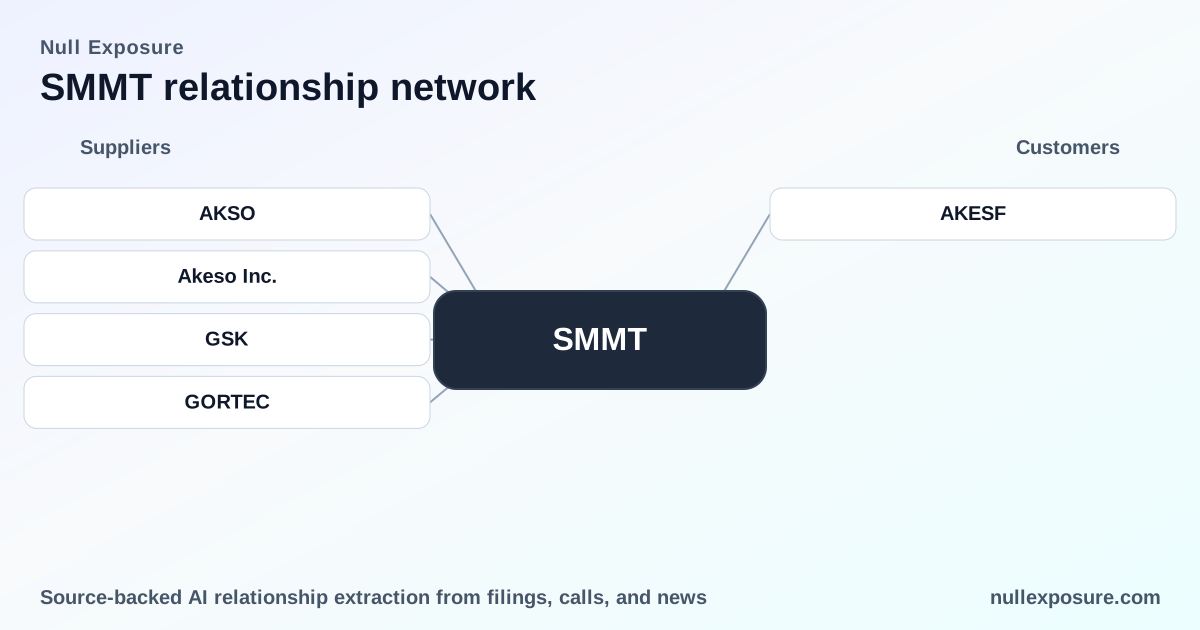
Summit Therapeutics (SMMT): supplier footprint and what it means for investors
Summit Therapeutics operates as a development-stage biopharmaceutical company that discovers, develops and intends to commercialize therapeutics—most notably the PD‑1‑based bispecific ivonescimab. The company monetizes by progressing drug candidates through clinical trials, securing commercialization rights through acquisitions and collaborations, and outsourcing clinical and commercial manufacturing to third parties; revenue is currently negligible while capital deployment is concentrated in R&D and strategic deals. For investors and procurement operators, the material commercial exposure is to a small set of external partners that handle manufacturing, clinical execution and combination-program collaborations. Learn more on the NullExposure homepage: https://nullexposure.com/
How Summit runs the program and where cash flows will ultimately land
Summit’s operating model is classic biotech: it invests heavily in clinical development and secures access to scale through partnerships rather than internal manufacturing. Financials underscore the development-stage profile—reported revenue is zero while EBITDA is deeply negative (roughly -$1.09 billion across the latest reporting), and the company has large market capitalization and valuation multiples unsupported by current sales. Summit’s strategy converts operational risk into counterparty risk: manufacturing and trial execution are delegated, and the company’s ability to commercialize ivonescimab depends on those external relationships being stable and scalable.
Summit’s capital allocation choices are clear: large, up-front cash outlays have already been made for in‑process R&D and licence considerations, while ongoing purchase obligations appear modest by comparison. Operators evaluating Summit as a supplier customer should prioritize counterparties that can absorb scale-ups and regulatory complexity. Explore supplier relationship analytics at NullExposure: https://nullexposure.com/
Supplier relationships investors need to know
Akeso / Akeso Inc. — multiple entries in public coverage
- Summit relies on third‑party manufacturers for production of ivonescimab and has active supply agreements with Akeso for clinical and commercial supply; those arrangements are central to the program’s manufacturability and launch readiness. (TradingView summary of Summit’s FY2026 10‑K; March 2026: https://www.tradingview.com/news/tradingview:28ee42dc4eda4:0-summit-therapeutics-inc-sec-10-k-report/)
- Akeso is also referenced in press coverage describing a larger collaboration/out‑licence framework that transferred PD‑1‑based bispecific rights to Summit as part of a multi‑billion dollar commercial collaboration, confirming the commercial and licensing dimension of the relationship. (European Pharmaceutical Review, March 2026: https://www.europeanpharmaceuticalreview.com/news/177217/5-billion-bispecific-antibody-pharma-collaboration/)
- Summit’s press release coverage reiterates the strategic partnership and forward‑looking trial and development plans tied to the collaboration with Akeso. (Yahoo Finance press release, March 2026: https://finance.yahoo.com/news/summit-therapeutics-announces-u-fda-123000277.html)
GSK plc
- Summit has a research collaboration with GSK to evaluate ivonescimab in combination with B7‑H3 agents and other oncology candidates, positioning GSK as a co‑development partner for combination regimens and an important scientific partner for broader oncology development. (InsiderMonkey coverage, March 2026: https://www.insidermonkey.com/blog/summit-therapeutics-inc-smmt-focused-on-non-small-cell-lung-cancer-trial-of-ivonescimab-1706765/?amp=1)
GORTEC
- Summit engaged GORTEC (a European head and neck oncology and radiotherapy cooperative group) to activate clinical sites for a Phase III study, establishing GORTEC as a clinical execution partner for large‑scale site activation in Europe. (InsiderMonkey coverage, March 2026: https://www.insidermonkey.com/blog/summit-therapeutics-inc-smmt-focused-on-non-small-cell-lung-cancer-trial-of-ivonescimab-1706765/?amp=1)
Operating model constraints and how they shape supplier risk
Summit’s filings and public disclosures paint a clear company‑level operating posture:
- Outsourced manufacturing is the rule, not the exception. Summit does not own manufacturing facilities and intentionally outsources API, drug substance and drug product production to third parties; this is a structural feature of the business model, not a temporary arrangement.
- Contracts show a mixed contracting posture. Filings describe both long‑term agreements to secure clinical and commercial supply and a large number of contracts that remain cancellable on notice, creating a dual dynamic of secured supply commitments alongside operational flexibility for both parties.
- Manufacturing relationships are active and mission‑critical. The company explicitly states supply agreements with Akeso for clinical and commercial use of ivonescimab, elevating Akeso from vendor to critical-path partner.
- Spend profile combines large strategic payments with modest recurring purchase obligations. A material one‑time cash outflow (acquisition/in‑process R&D: ~$474.9 million in cash plus a stock component) shows that Summit deploys seven‑figure to nine‑figure capital for strategic deals, while unconditional purchase obligations for near‑term operations are reported around $13.9 million as of Dec 31, 2024.
These constraints imply that procurement diligence should balance strategic counterparty strength (capacity, regulatory compliance, business continuity) with contract provisions that protect Summit’s launch timetable and commercial scale-up.
What this means for investor and operator risk assessments
- Concentration risk is material. With a primary manufacturer relationship and a small roster of strategic partners, supply disruption at Akeso or a clinical execution problem at a cooperative group like GORTEC would directly threaten timelines and value realization.
- Commercial leverage is asymmetrical. Summit’s valuation and investor expectations are predicated on future commercialization; current revenue is zero, EBITDA is deeply negative (~‑$1.09B), and operating leverage will only materialize if external partners scale and regulatory approvals are achieved.
- Counterparty selection is a live risk. Given the mixed contract types (long‑term commitments alongside cancellable contracts), contract terms should be examined for termination rights, quality‑assurance metrics, and transferability to alternate manufacturers.
Company financials and ownership structure further color the risk picture: market capitalization (~$12.5B) versus zero reported revenue and heavy insider ownership (insiders hold ~82.6% of shares) require investors to treat development milestones and partner execution as the primary value drivers (source: company overview, latest public filings and market data).
Concrete next steps for investors and operators
- Confirm capacity and regulatory inspection history for Akeso and any secondary manufacturers; prioritize audit access and contingency planning in vendor agreements.
- Negotiate clear long‑term supply commitments and strong termination‑for‑cause provisions where commercialization timelines are supported by contractual commitments rather than goodwill.
- Monitor spend cadence: large strategic payouts have already occurred, but near‑term purchase obligations are modest—assess whether additional capital requirements for commercial launch are contracted or financed.
For a focused review of Summit’s partner network and supplier risk posture, visit NullExposure for relationship-level intelligence and vendor scoring: https://nullexposure.com/
Final thought: Summit’s pathway to value is straightforward in economic logic—successful clinical outcomes and reliable external execution convert intangible valuation into revenue—but the entire chain depends on a narrow group of suppliers and collaborators. Investors and operators should treat partner stability and contractual protections as the primary risk controls for SMMT’s thesis. Learn more and access supplier analytics at https://nullexposure.com/