Standard Motor Products (SMP): Audit Certainty, Parts Economics, and What Investors Should Price In
Standard Motor Products manufactures and distributes replacement parts to the automotive aftermarket and monetizes through product sales, parts rebuild programs, and exchange services to professional and retail channels. Revenue is generated from a broad portfolio of engine management, temperature control, and fuel system components, supplemented by refurbishment and core-exchange mechanics that reduce cost of goods sold and support margins. For a concise supplier intelligence feed and deeper counterparty profiles visit https://nullexposure.com/.
Business snapshot investors need: SMP is a cyclical, cash-generative auto-parts supplier with FY‑TTM revenue of about $1.79 billion, EBITDA of $227 million, and a trailing P/E of 10.3. The company operates with a healthy institutional ownership base and a dividend yield around 3.5%, giving it an income-oriented profile within the consumer cyclical space.
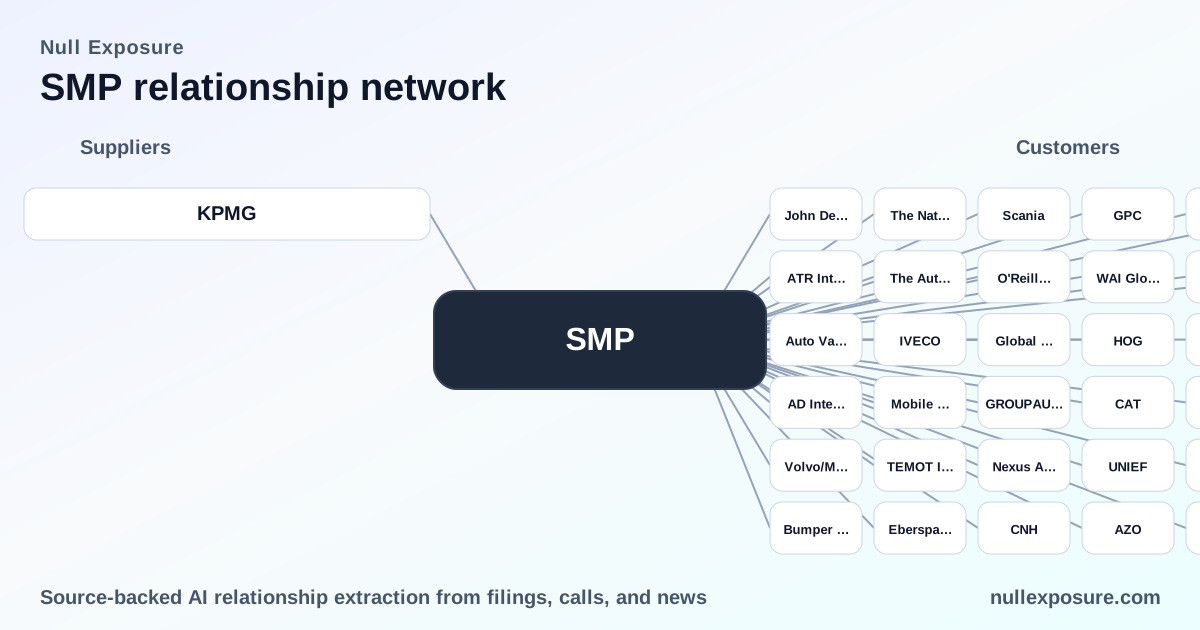
The single documented counterparty: what the KPMG mention implies
KPMG appears in investor-facing commentary as the company’s external auditor. A Q4 2025 / FY2026 earnings call transcript published on March 10, 2026, records management stating “we received a clean opinion from KPMG.” That is a one-line but material confirmation that SMP’s FY2026 audited financials carry an unqualified audit opinion (InsiderMonkey, March 10, 2026: https://www.insidermonkey.com/blog/standard-motor-products-inc-nysesmp-q4-2025-earnings-call-transcript-1705242/).
- This single relationship entry is notable because audit clarity is a low-friction, high-impact supplier relationship from an investor perspective—a clean audit reduces accounting risk and supports model transparency.
Every counterparty identified in the review
KPMG — The transcript of the FY2026 earnings call notes that SMP received a clean audit opinion from KPMG; that confirms external audit oversight in the most recent fiscal period (InsiderMonkey, March 10, 2026: https://www.insidermonkey.com/blog/standard-motor-products-inc-nysesmp-q4-2025-earnings-call-transcript-1705242/).
How the operational constraints shape supplier posture and sourcing economics
SMP’s public disclosures include an operational description of parts rebuilds and core acquisition: the company rebuilds air‑conditioning compressors, diesel injectors, and pumps from used cores obtained either by outright purchase from brokers or through customer returns under an exchange program. That language signals a structured buyer posture: SMP actively sources return flows and purchased cores to lower input costs and control inventory of rebuildable components.
- Contracting posture: The combination of core purchases and exchange programs positions SMP as an active buyer with negotiated supplier/customer arrangements rather than a passive distributor. That bargaining posture supports margin resilience because reclaimed cores reduce raw material cost and shorten lead times for remanufactured SKUs.
- Concentration and criticality: The constraint language does not identify a single critical supplier, which suggests SMP’s sourcing model is diversified at the parts-core level; criticality resides in maintaining steady core inflow and efficient exchange logistics rather than dependency on a single vendor.
- Maturity and process discipline: Rebuild and exchange programs are operationally mature activities in aftermarket parts businesses; SMP’s disclosure of these processes indicates established internal capabilities and a steady-state supply chain that contributes to predictable gross-profit conversion.
These characteristics justify viewing SMP as cost-efficient on rebuildable SKUs with operational leverage tied to core availability and exchange program uptake.
What this means for counterparty and operational risk
From a supplier/partner evaluation lens, key investor takeaways are:
- Low accounting risk from external audit validation (KPMG clean opinion).
- Operational risk concentrated in core logistics (collection, quality control, and refurbishment throughput), not in single-vendor exposure.
- Revenue visibility tied to aftermarket demand for replacement parts and the effectiveness of exchange programs to capture returns and control input costs.
Given SMP’s margin profile—gross profit of roughly $559 million on $1.79 billion revenue and operating margin near 8%—management’s ability to sustain rebuild economics and manage core flows is as important as top-line shocks in determining near-term profitability.
For investors wanting the supplier breakdown and counterparty risk view in a single place, visit https://nullexposure.com/ for a focused supplier intelligence feed.
Practical risks and upside levers for investors
- Upside: Higher penetration of exchange programs and improved core recovery rates would directly improve gross margins and free cash flow, supporting buybacks or dividend growth.
- Downside: Disruption to core collection channels (e.g., broker network interruption or lower returns from customers) would lift input costs and compress gross margins; this is a supply-chain operational risk, not an accounting one.
SMP’s balance between in-house rebuild capability and broker purchasing creates flexibility. Institutional ownership above 80% and stable dividend policy further reinforce the investment case for yield-seeking allocators, but cyclical demand should remain front-and-center in valuation models.
Investment implication and next steps
For investors evaluating supplier relationships, SMP is a structurally sensible supplier partner: audited financials are clean, the company runs an active buyer model for cores, and the critical operational exposure is to execution of rebuild and exchange logistics rather than concentrated vendor counterparty risk. For analysts building counterparty scenarios, stress the core-recovery rate and aftermarket demand elasticity rather than audit or financial-reporting uncertainty.
If you want a deeper, transaction-level supplier map and monitoring for SMP and similar names, explore the supplier intelligence available at https://nullexposure.com/ — the right inputs shorten diligence cycles and sharpen downside scenarios.
In sum: SMP blends durable aftermarket economics with disciplined audit transparency; operational execution on core exchange and rebuilds is the single largest determinant of near-term margin outcomes.