SmartRent (SMRT) — Supplier Relationships and Operational Risk Profile
SmartRent operates an integrated smart-home operating system for residential property owners, monetizing through a mix of hardware sales (where SmartRent acts as principal) and recurring subscription and service revenue tied to property management and resident services. The business generated $152.3M of revenue TTM with $49.8M gross profit while carrying a negative net margin and elevated operating leverage, which makes supplier continuity and third‑party risk management material to both top‑line delivery and cost control. For investors and operators evaluating SmartRent supplier relationships, the near-term priority is assessing third‑party cyber and single‑source supplier exposure and how contract terms preserve margin and continuity. Learn more at https://nullexposure.com/.
What happened in the recent vendor incident and why it matters
A vendor-related data breach disclosed in FY2025 was routed through SmartRent’s external accounting firm that manages the company’s 401(k) plan, and SmartRent contracted identity‑protection services for affected employees. These developments are operationally important because they illustrate two distinct supplier risk vectors: service-provider cybersecurity (accounting/audit firms that hold employee data) and third‑party remediation vendors (identity protection providers) that incur reputational and cash costs when activated. According to reporting on March 10, 2026, the incident originated through a vendor and SmartRent offered identity protection to impacted people (ClaimDepot, March 2026).
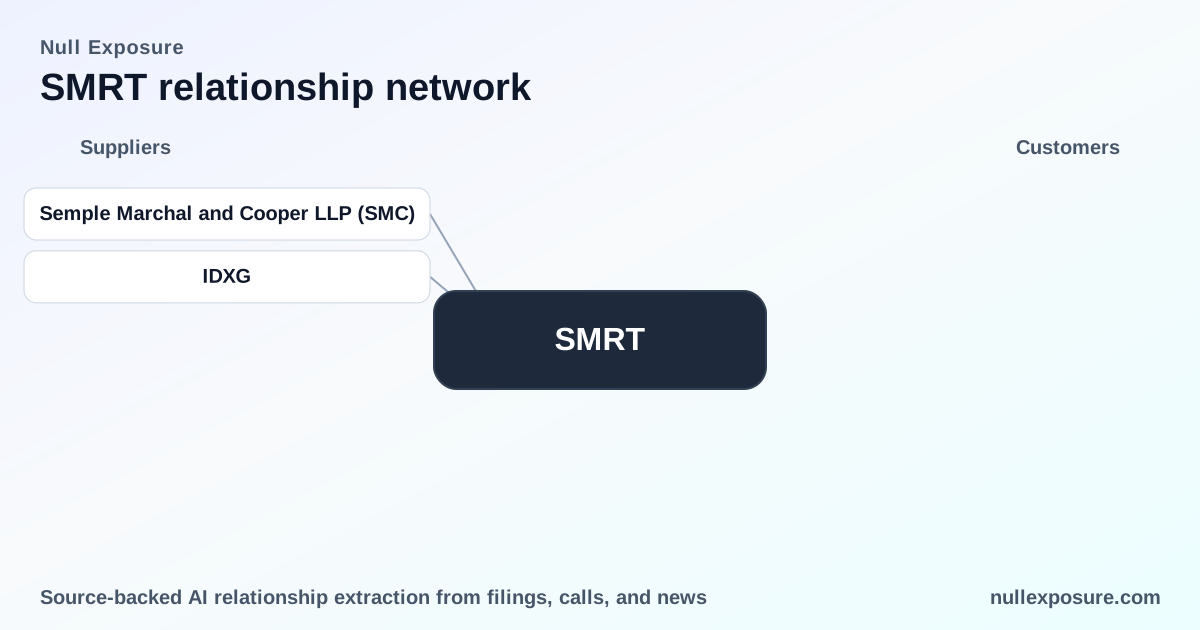
Semple Marchal and Cooper LLP (SMC)
ClaimDepot reported that the breach originated not inside SmartRent’s systems but through Semple Marchal and Cooper LLP (SMC), the accounting firm responsible for auditing SmartRent’s 401(k) retirement savings plan in FY2025. This places employee-data custody and vendor cyber hygiene squarely in the operational risk bucket that impacts HR, compliance, and potential regulatory follow‑ups (ClaimDepot reporting, March 2026).
IDX (identity protection vendor)
SmartRent is providing 24 months of identity protection services from IDX to current and former employees affected by the incident, according to the same disclosures; the contract for remediation services is an operational cost and a reputational mitigation step (ClaimDepot reporting, March 2026). IDX is listed with the inferred ticker IDXG in third‑party references.
Company‑level signals from disclosures and what they imply for suppliers
SmartRent’s public disclosures provide explicit signals about its supplier strategy and geographic sourcing that shape supplier risk and contracting posture:
- SmartRent conducts business globally and sources products from Asia, Europe and the U.S. — this establishes APAC, EMEA and NA as active sourcing regions and implies exposure to cross‑jurisdictional supply chain constraints and logistics complexity (company disclosures).
- The company states it relies on a limited number of suppliers to manufacture and transport products, and in some cases uses a single supplier for certain components. This creates concentration risk and single‑point dependency for critical hardware lines that support recurring revenue.
- SmartRent partners with several manufacturers and maintains control of hardware prior to transfer to customers, acting as the principal in those arrangements; that contracting posture increases SmartRent’s operational responsibility for quality, warranty and supplier performance while preserving revenue recognition control.
- The supplier relationships indicated in disclosure are active; the company lists ongoing supplier dependencies rather than one‑off or exploratory relationships.
These points are company‑level signals drawn from SmartRent’s filings and investor disclosures, and they define the constraint set investors and operators must manage: geographic sourcing complexity, supplier concentration, principal contracting responsibility, and active supplier dependencies.
Mid‑analysis note: for a consolidated view of SmartRent supplier risk and to monitor vendor events in real time, visit https://nullexposure.com/.
Why the SMC breach and the IDX remediation contract matter to investors
- Operational continuity: A breach through an auditor underscores that organizational cybersecurity extends beyond in‑house systems; vendors with privileged data access represent a material operational vulnerability.
- Cost and margin pressure: Paying for identity protection and managing remediation increases operating expense and diverts cash from growth initiatives at a time when SmartRent’s net margins are negative. Financials show $152.3M revenue TTM and negative net margin; supplier incidents therefore have direct P&L and cashflow implications (company filings, latest quarter 2025-12-31).
- Contractual and reputational risk: Acting as principal over hardware and relying on a narrow manufacturing base means supplier failures or reputational damage can interrupt product delivery and service activation — both key drivers of recurring revenue and customer retention.
Practical watchlist for investors and operators
- Negotiate contract terms that shift verified liability and cyber insurance proof to critical suppliers, and require regular third‑party security attestations for any vendor with employee or customer data access.
- Prioritize supplier diversification for any product lines identified as single‑source in filings, and model the financial impact of a prolonged supplier outage on recurring revenue.
- Require service level agreements and inventory buffers for principal‑managed hardware channels to protect deployment cadence and margin.
- Track regulatory follow‑through from the FY2025 vendor breach and observe whether remediation costs or fines are booked in future quarters.
Operational and financial context to interpret supplier risk
SmartRent’s balance of recurring services and hardware revenue creates a hybrid exposure: hardware outages or component scarcity slow activation of subscription revenue, and third‑party service failures generate immediate remediation costs. The financials reflect this dynamic: positive gross margin but negative net margin and negative EBITDA, which means supplier‑related expense shocks reduce runway and constrain discretionary spend on supplier risk mitigation. Investors must therefore treat supplier resilience as more than operational hygiene — it is an economic lever.
For further supplier diligence and ongoing tracking of vendor incidents, refer to https://nullexposure.com/.
Bottom line: what to act on now
- Treat the SMC breach as a wake‑up call: require proof of cyber hygiene from any vendor with access to employee or customer personal data.
- Address concentration risk in manufacturing: prioritize mitigation for components described as single‑supplier in filings.
- Validate contract terms reflecting SmartRent’s principal posture: ensure warranties, delivery protections, and indemnities protect margin and service continuity.
SmartRent’s supplier profile combines global sourcing, concentrated manufacturing relationships, and principal control over hardware — a mix that accelerates both upside from integrated product‑service delivery and downside from supplier failures. Active monitoring of third‑party incidents and strict contractual controls will determine whether those supplier relationships are a strategic advantage or a recurring operational liability. Learn more about monitoring supplier risk at https://nullexposure.com/.