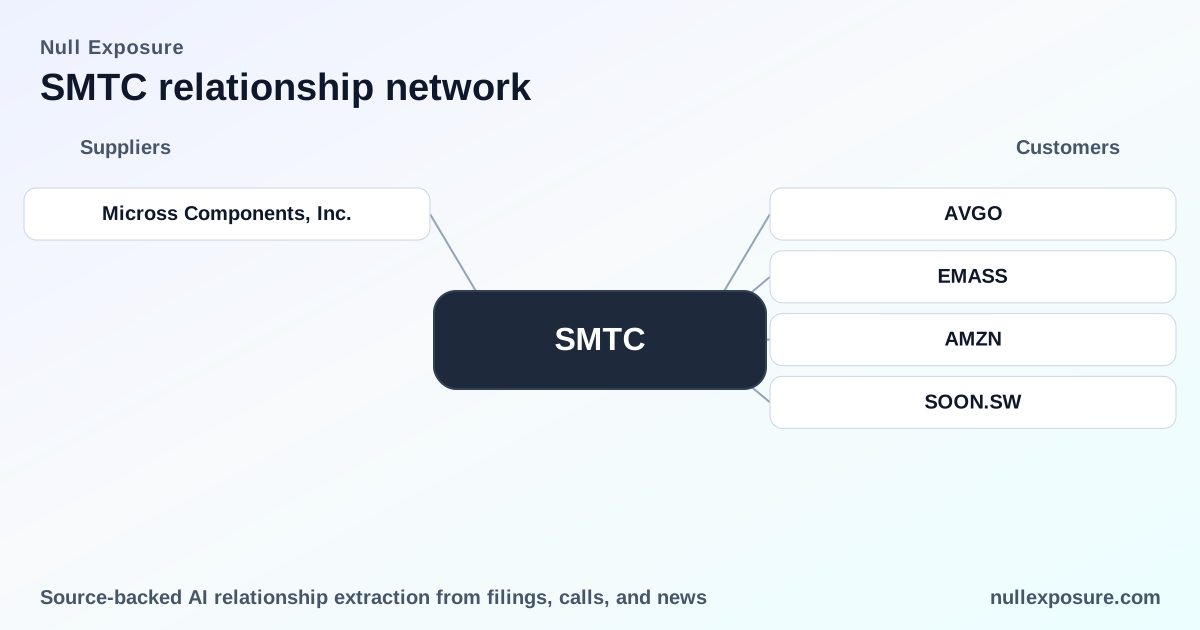
Semtech (SMTC) — supplier footprint, strategic constraints, and the one counterparty worth noting
Semtech designs, develops and markets mixed-signal and analog semiconductor products and advanced algorithms, and it monetizes by selling those components across communications, industrial and sensing markets while outsourcing most physical production to third-party foundries, assembly/test contractors and EMS partners. Revenue is product sales; margin and capital intensity are determined by Semtech’s ability to control outsourced manufacturing, purchase commitments and global supply relationships. For a concise supplier-risk briefing and more supplier maps, visit https://nullexposure.com/.
How Semtech runs its supply chain and why that matters to investors
Semtech operates a primarily asset-light manufacturing model: most wafer fabrication, assembly and test functions are outsourced to a limited set of third-party partners. That outsourcing strategy converts fixed-capex manufacturing risk into counterparty and procurement risk — Semtech’s gross and operating margins are sensitive to supplier pricing, capacity constraints and geopolitical disruption in manufacturing hubs.
The company’s FY2025 Form 10‑K confirms this posture and quantifies contractual commitments. According to Semtech’s FY2025 10‑K filing, total purchase commitments were disclosed (the filing lists figures of $319,195 and $333,653 in the contractual commitments section), which demonstrates multiyear supplier engagements and sizable procurement exposure on the balance sheet. These commitments are a structural part of the operating model and influence liquidity planning and procurement leverage.
Operational constraints that drive risk and opportunity
Semtech’s public disclosures identify several consistent, company-level supply signals:
- Geographic concentration: Semtech sources significant manufacturing and assembly/test services across APAC (China, Taiwan, Vietnam, Malaysia) and North America (including the U.S. and Canada). The Form 10‑K explicitly lists those countries as material locations for third‑party foundries and contractors, creating a mix of geopolitical and logistical exposure across two dominant regions.
- Outsourced manufacturing posture: The company’s strategy is to outsource most manufacturing to third‑party foundries and EMS partners; this reduces in‑house capex but increases counterparty criticality and supplier negotiation risk.
- Supplier concentration and criticality: Semtech relies on a limited number of third‑party subcontractors for wafers, chipsets, packaging and test functions — a concentration that makes single‑supplier disruptions more impactful on revenue and delivery.
- Scale of contractual commitments: The filing discloses purchase commitments at a scale that indicates ongoing, large-dollar procurement relationships, which create both predictable supply and fixed-cost tail risks if demand shifts.
These constraints are not isolated statistics; they shape contracting posture (favoring long-term purchase commitments and partner relationships), concentration risk (few suppliers holding outsized operational importance), and maturity (an experienced, global manufacturer network rather than nascent supplier relationships).
Micross Components, Inc. — the specific relationship disclosed
Semtech’s FY2025 Form 10‑K records a single named transaction with Micross Components, Inc.: on May 3, 2022 Semtech completed the divestiture of its high‑reliability discrete diodes and assemblies business to Micross for $26.2 million, net of cash disposed, in an all‑cash transaction. This was a disposal of a legacy product line rather than an ongoing supplier agreement, and the 10‑K entry documents the transaction as part of Semtech’s restructuring of product scope. (Source: Semtech FY2025 Form 10‑K, filing dated 2025‑01‑26.)
Impact in plain terms: this relationship is a past divestiture that reduces Semtech’s exposure to high‑reliability discrete diode manufacturing and transfers associated manufacturing obligations off Semtech’s balance sheet. The transaction indicates active portfolio optimization rather than a continuing procurement dependency with Micross. (Source: Semtech FY2025 Form 10‑K.)
What investors and operators should watch next
Semtech’s supplier dynamics create discrete areas for monitoring that are actionable for both portfolio managers and corporate operators:
- Concentration risk: With manufacturing and assembly concentrated among a limited set of third‑party partners, investors should watch supplier earnings, foundry utilization rates in Taiwan and China, and any contractual renegotiations that could affect gross margin. A single production interruption in a key APAC foundry could create outsized revenue delivery risk.
- Geopolitical and supply-chain volatility: The firm’s reliance on APAC and North American contractors exposes it to trade policy, export controls and regional logistics shocks; track regulatory developments and shipping-cost trends affecting semiconductor supply chains.
- Procurement and working capital: Large purchase commitments increase backward-looking certainty of supply but also create balance‑sheet obligations if demand weakens; follow Semtech’s capex guidance and purchase commitment disclosures in subsequent filings.
- Portfolio management: Divestitures like the Micross transaction demonstrate management’s willingness to prune lower-growth or non‑core product lines; future M&A or carve‑outs will change supplier exposures and should be assessed for implications on supplier concentration.
For a structured supplier-risk scorecard that overlays these signals against revenue and supplier-location mapping, see https://nullexposure.com/ and request an investor briefing.
Tactical takeaways for due diligence and risk mitigation
Operators negotiating with Semtech or evaluating vendor portfolios should consider these tactical moves:
- Build redundancy plans for wafer and package sourcing across APAC and North America to reduce single‑point risk.
- Require transparency on lead times and escalation clauses in purchase commitments to avoid payment obligations without supply.
- Monitor Semtech’s 10‑K/10‑Q supplier disclosure cadence for changes in purchase-commitment magnitude and named counterparties.
Bottom line: Semtech’s business model deliberately externalizes manufacturing to third parties, which transforms traditional factory risk into supplier, geopolitical and contractual risk. The Micross transaction is a historical divestiture that reduces product-line complexity rather than an active supplier relationship to be managed. Investors should treat supplier concentration and regional exposure as first‑order risk factors when modeling margins and downside scenarios.
For a concise supplier-risk map and to compare Semtech’s supplier posture with peer semiconductors, visit https://nullexposure.com/. If you want a tailored briefing on Semtech’s procurement commitments and regional supply exposure, find more resources at https://nullexposure.com/ and request a report.