SenesTech (SNES): Small-cap specialty-chem supplier with concentrated partner risk and active litigation
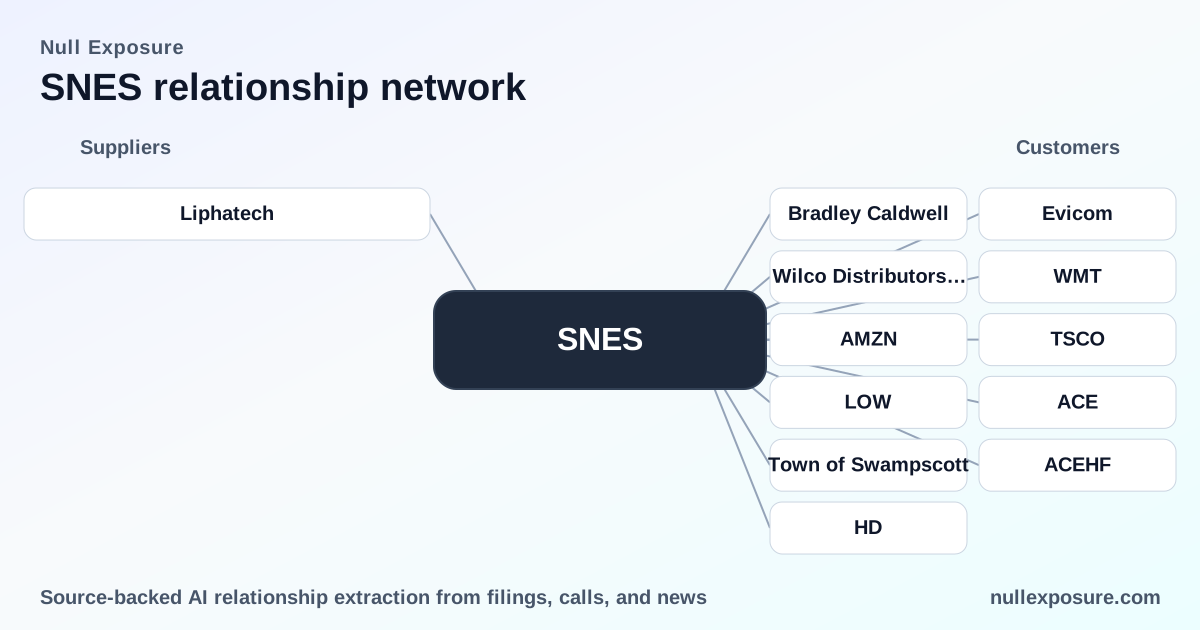
SenesTech develops fertility-control technology for managing pest animal populations and monetizes through product sales, licensing and research collaborations with pest-control manufacturers and public-sector customers. The company's commercial scale is small, its margins are negative, and third-party relationships carry outsized operational and legal significance — investors should treat supplier and partner exposure as a material part of the investment thesis. For a mapped view of supplier relationships and legal interactions, see https://nullexposure.com/.
Quick company capsule: what drives the economics
SenesTech is a micro-cap specialty-chem company headquartered in Phoenix that sells fertility-control solutions for pest populations. Key operating facts that determine supplier posture and negotiating leverage:
- Market capitalization ~ $9.7M with TTM revenue ~$2.22M and negative EBITDA, which constrains procurement leverage and contingency spending.
- Small share count and low institutional ownership (SharesOutstanding ~5.2M; PercentInstitutions ~26.8%) imply limited capital reserves and narrower access to market financing.
- Business model drivers are product commercialization and research partnerships, so supplier and collaborator relationships are functionally critical to go-to-market execution. These characteristics create a profile of high counterparty sensitivity and operational concentration that investors should monitor continuously. For more context on supplier linkages, visit https://nullexposure.com/.
The single reported supplier/partner relationship you must model
Below I cover every relationship returned in the supplier search results.
Liphatech — active litigation stemming from prior joint research
SenesTech disclosed on its 2025 Q3 earnings call that it is currently being sued by Liphatech, a rodenticide manufacturer with which the company previously conducted joint research; the disclosure was part of management’s public remarks in the 2025 Q3 call (remarks logged March 7, 2026). This is both a legal and supplier/partner risk because it relates to prior collaborative work and could affect future commercial ties with other manufacturers. (Earnings call, 2025 Q3; disclosure recorded 2026-03-07.)
Why this single relationship matters more for a small supplier
Liphatech is the only partnership-related item surfaced in the supplier review, and for a company at SenesTech’s scale that concentrates revenue and IP development around a few external collaborators, a single legal dispute can carry outsized financial and operational consequences. The litigation is not a routine vendor disagreement: it arises from joint research activity, which ties together intellectual property, future licensing potential, and co-development obligations. Investors must therefore treat this as both a legal risk and a commercial counterparty risk.
Company-level constraints and what they imply (company-level signals)
No supplier-specific constraints were extracted in the reviewed materials, which itself is an informative signal:
- Absence of formal supplier constraints in public filings is consistent with a small, early-commercial firm that relies on ad hoc research partnerships rather than long-term, multi-supplier procurement contracts.
- This profile implies a direct contracting posture (short-term or transaction-based agreements rather than integrated supply chains), high concentration (few counterparties deliver outsized value), and immature supplier governance (limited contractual buffers or indemnities available if disputes escalate). Those are company-level signals you should fold into valuation stress tests and operational due diligence.
Operational and investor implications — what to watch
For investors and operators evaluating SNES supplier relationships, prioritize the following actions:
- Legal diligence and cost-scoping: quantify the potential financial exposure from the Liphatech suit and assess whether existing reserves or insurance cover attorneys’ fees and damages. With negative EBITDA and a small market cap, large legal payouts would be materially dilutive.
- Counterparty concentration assessment: map revenue and development dependency on individual manufacturers and research partners; create scenarios where a single partner stops commercial activity or terminates cooperation.
- Contracting posture review: insist on clear IP ownership, indemnities, and termination clauses in future collaborative research agreements to prevent recurrence of litigation-linked commercial risk.
- Liquidity and contingency planning: given the company’s small balance sheet and operating losses, ensure management has credible bridge financing or strategic alternatives to fund defense and R&D continuity if partners withhold collaboration.
Risk versus opportunity — framing the investment case
SenesTech’s technology addresses a clear market need in pest control and offers high-margin potential at scale, but current financials underscore execution risk: negative EPS, negative operating margins, and minimal revenue base constrain flexibility. The Liphatech litigation converts an operational partnership into a capital and governance issue — for buyers of the equity, that raises both downside risk and potential catalysts (settlement, licensing resolution, or restructured partnerships) that could re-rate the stock if resolved favorably.
Recommendations for investors and procurement teams
- For investors: model litigation scenarios explicitly and stress-test equity value under plausibly adverse rulings or partner walkaways; require management updates on litigation status and potential settlements.
- For procurement/operational teams: renegotiate future research contracts with clear IP assignment and indemnity language; diversify development partners to reduce single-counterparty exposure. If you want a supplier-focused map and historical context for SNES relationships and legal disclosures, start with https://nullexposure.com/.
Final takeaways and next steps
- Primary risk: a legal dispute with a single manufacturing partner (Liphatech) that originated from joint research.
- Structural constraint: small market cap and limited revenues create low procurement leverage and high counterparty concentration, elevating the impact of any partner dispute.
- Actionable priority: obtain transparent legal-cost estimates, secure rights and indemnities in future collaborations, and diversify partner exposure.
For a consolidated view of supplier relationships and ongoing monitoring tools, visit https://nullexposure.com/.