Senti Biosciences (SNTI): supplier map and operational implications for investors
Senti Biosciences builds programmable cell and gene therapies around its proprietary GeneCircuit platform and monetizes through advancing clinical-stage assets while outsourcing capital-intensive manufacturing and select development work. The company leverages external partners to convert R&D progress into manufacturable clinical material, preserving cash and deferring fixed-cost capacity, while retaining upside through licenses and program economics. For investors and operators, the supplier posture is a deliberate trade of balance-sheet capital for operational flexibility—critical suppliers thus directly influence Senti’s ability to reach and supply clinical milestones. Learn more about supplier risk and supplier relationships at https://nullexposure.com/.
How Senti organizes its manufacturing and vendor relationships
Senti does not operate large-scale commercial manufacturing in-house. Instead it transfers assets and capacity to specialized third parties and contracts for development and manufacturing services. This model reduces near-term capital outlay and operating leverage but increases reliance on a small set of partner providers for clinical supply and regulatory readiness. Long-term contracts and framework agreements are central to this model; the commercial and clinical success of lead programs is therefore materially linked to the performance of those partners.
Supplier and advisor relationships you need to know
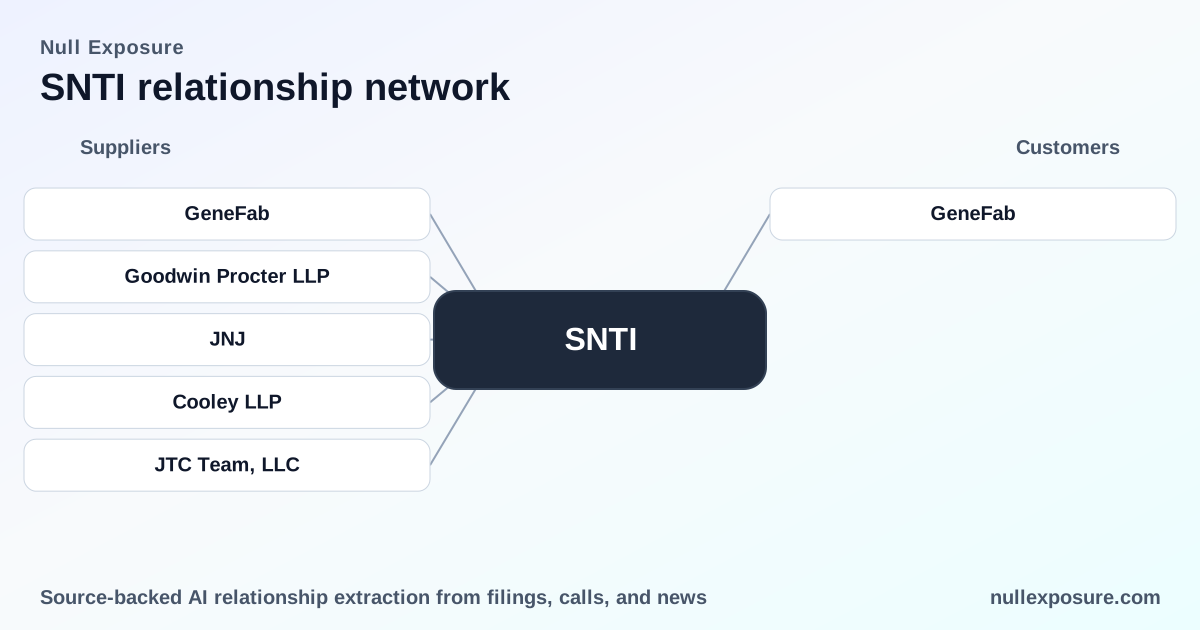
GeneFab — manufacturing partner, long-term counterparty
Senti subleased its 92,000 sq. ft. cGMP facility in Alameda to GeneFab and entered a framework agreement transferring certain equipment, leasehold improvements, and related rights; GeneFab provides development and manufacturing services and supports Senti’s CAR‑NK clinical manufacturing, including SENTI‑202. According to Senti’s 2024 Form 10‑K and associated press coverage, the sublease and DMSA are active and extend the company’s manufacturing capability through a provider under contract through September 2032. (Senti 2024 10‑K; GlobeNewswire/FiercePharma, Aug 2023)
Goodwin Procter LLP — legal advisor
Goodwin Procter served as a legal advisor to Senti in transactions described in company announcements related to the GeneFab arrangements. The role was documented in public filings and press releases covering the 2023 transactions. (GlobeNewswire, Aug 2023)
Cooley LLP — legal advisor
Cooley LLP acted alongside Goodwin as legal counsel to Senti in connection with the 2023 strategic transactions that restructured Senti’s manufacturing assets and established third‑party manufacturing relationships. (GlobeNewswire, Aug 2023)
Johnson & Johnson Innovation, JLABS at South San Francisco (JLABS @ SSF) — incubator/residency
Senti was a resident company at JLABS @ SSF early in its lifecycle and used the incubator as part of its initial growth and Series A activity, positioning the company within a commercial innovation network during 2018 fundraising. (PR Newswire, 2018)
JTC Team, LLC — investor relations contact
JTC Team, LLC is listed as Senti’s investor relations contact in virtual investor presentations and press distributions in 2026, providing official investor communications and contact details for the company. (Yahoo Finance / QuiverQuant news releases, 2026)
What the filing-level constraints reveal about operating posture
Senti’s disclosures and the constraint evidences point to a consistent supplier strategy:
- Long-term contractual commitment: The company executed a sublease for its Alameda cGMP facility that expires in September 2032, signaling a multi‑year outsourcing posture for manufacturing capacity. This is an explicit, named contractual arrangement with GeneFab and is a binding element of Senti’s capital and operational plan.
- Framework and transfer deals: Senti sold and assigned equipment, leasehold improvements, and certain contractual rights under a framework agreement with GeneFab and Valere Bio, creating a lasting commercial relationship that goes beyond ad hoc service orders.
- Manufacturer and service-provider dependence: Multiple excerpts describe GeneFab’s role as both a manufacturer and service provider under a development and manufacturing services agreement (DMSA), indicating operational criticality—the partner performs functions materially necessary for clinical supply.
- Active relationship stage: The arrangement is live and contributes to near‑term operations and cash management, having delivered capital and a note receivable to Senti while reducing ongoing operating expense exposure.
Those constraints, taken together, form a company‑level signal: Senti intentionally outsources core manufacturing under long-dated commercial structures, concentrating a critical operational function with a named third party.
Investment implications: concentration, contract risk, and optionality
Senti’s model creates distinct investment trade-offs:
- Concentration risk is high but manageable if the counterparty performs. Relying on a single named manufacturer for clinical material compresses execution risk—delays or quality events at that partner would directly affect trials and timelines. However, the framework transfer and DMSA create predictability and capacity assurance compared with one-off CMOs.
- Contracting posture reduces capital burn but increases counterparty exposure. The sublease and asset transfer provided immediate capital and lower operating expenses, improving short-term liquidity dynamics, while shifting capital intensity off Senti’s balance sheet.
- Regulatory and quality criticality. Because the partner handles cGMP manufacturing for CAR‑NK programs, regulatory readiness and manufacturing quality are direct drivers of development value capture. Investors should prioritize operational diligence on the partner’s facility, audit readiness, and change‑control processes.
- Maturity and runway. The relationships are active and long‑dated; this provides planning horizon clarity through 2032 but limits Senti’s unilateral control over manufacturing capacity unless contractual remedies exist. Review milestone, termination, and supply continuity clauses when assessing downside.
For deeper supplier due diligence and mapping of counterparty concentration, visit https://nullexposure.com/.
Tactical considerations for operators and portfolio managers
Operators and allocators should take concrete steps:
- Validate supply‑continuity clauses and quality metrics in the DMSA and sublease language where available.
- Monitor press releases and Senti filings for amendments to framework agreements, capacity expansions, or sublicensing changes.
- Prioritize on‑site audits or third‑party quality attestations for the Alameda facility if exposure to SNTI programs is material to portfolio valuations.
Explore supplier intelligence and contract signals at https://nullexposure.com/ for structured monitoring and alerting.
Final read: where the leverage lies
Senti’s supplier architecture is a deliberate financing and operational decision: outsourcing manufacturing to GeneFab provides capital relief and operational scale but concentrates clinical execution risk. Legal advisors and incubator relationships underscore traditional biotech maturation steps—fundraising, counsel, and lab residency—while investor‑relations contacts show active market communications. For investors, the decisive factors that will move the valuation are clinical readouts backed by reliable supply and regulatory milestones; those depend on the partner network Senti has built and the contractual protections embedded in those relationships.
If your investment thesis depends on near‑term clinical supply or trial timelines, prioritize contract clauses and operational audits. For broader monitoring and supplier intelligence, return to https://nullexposure.com/ for tracking and analysis.