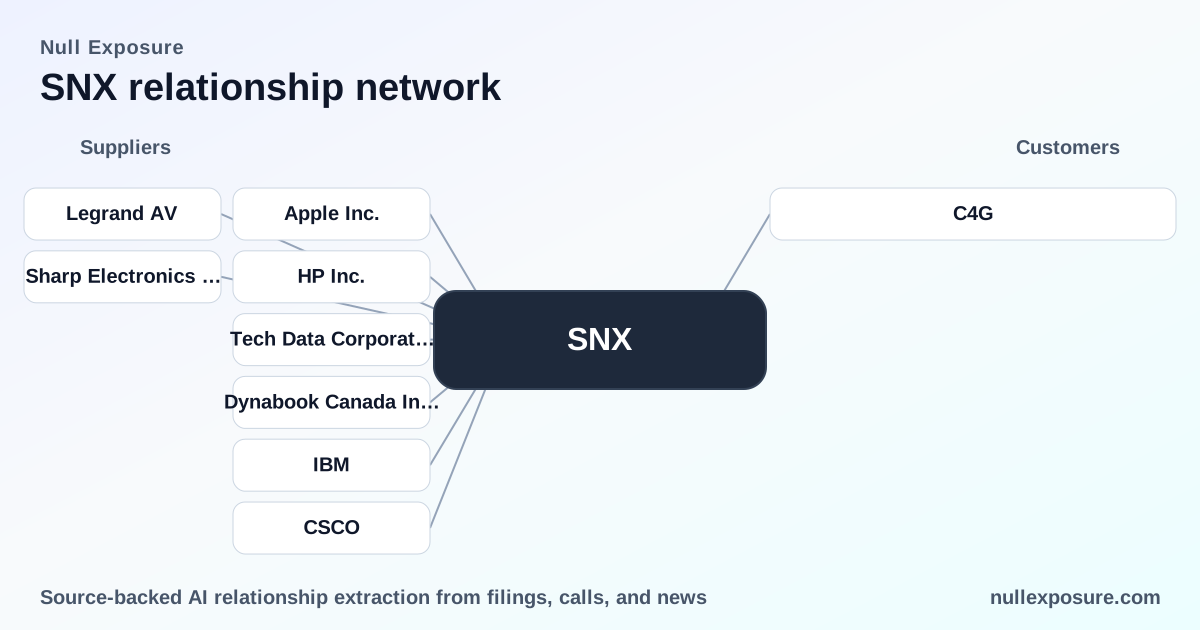
TD SYNNEX (SNX) — supplier relationships investors need to track
TD SYNNEX operates as a global IT distributor and services aggregator: it purchases hardware, software and systems from multinational manufacturers and resells them to resellers, VARs and retailers while layering logistics, finance and value‑add services to capture margin. The company monetizes through distribution markup, services revenue and scale advantages tied to concentrated vendor relationships that drive volume economics and working capital rotation.
Learn how supplier concentration affects risk and opportunity at https://nullexposure.com/.
Why supplier relationships define TD SYNNEX’s economics
TD SYNNEX’s model is a two‑sided commercial engine: suppliers provide branded products and scale, while resellers supply demand and recurring order flow. The result is high revenue throughput with thin margins amplified by scale and vendor exclusivity. The FY2025 Form 10‑K discloses that a few OEMs account for material shares of purchases and revenue, which makes vendor access and contractual posture core drivers of earnings volatility and working capital needs.
According to the FY2025 10‑K, TD SYNNEX’s supplier agreements are generally short‑term and renewable, and the company identifies its suppliers largely as large enterprise manufacturers — a structural feature that shapes negotiation leverage and concentration risk.
What the filings and press releases say about contracting posture and concentration
The company’s public disclosures identify three operating characteristics that investors should treat as structural signals:
- Short‑term contracting posture. The 10‑K states supplier agreements are generally short‑term and often terminable on relatively short notice, which creates execution risk if a large vendor changes distribution strategy.
- Large‑enterprise counterparties. TD SYNNEX sources products from major IT and networking manufacturers rather than small niche vendors, concentrating counterparty exposure.
- Manufacturer role for suppliers. The firm’s relationships are primarily with product manufacturers whose supply and commercial terms determine TD SYNNEX’s inventory mix and margin profile.
These are company‑level signals drawn from the FY2025 10‑K; they feed into concentration, criticality and maturity analysis for each vendor.
Relationship map: the suppliers and what each means for investors
Apple Inc.
Apple product sales represented approximately 12% of consolidated revenue in FY2025 (and 12% in FY2024). That level of concentration makes Apple a material source of volume and seasonal cash flow for TD SYNNEX. According to the FY2025 Form 10‑K, Apple accounted for roughly 12% of total revenue for the twelve months ended November 30, 2025.
HP Inc.
HP contributed about 10% of total revenue in FY2025, a meaningful single‑vendor exposure that influences purchasing mix and bargaining power. The FY2025 Form 10‑K reports HP comprised approximately 10% of total revenue for the year ended November 30, 2025.
Tech Data Corporation
Tech Data is an acquired entity: on September 1, 2021 SYNNEX completed the Tech Data acquisition, making Tech Data an indirect subsidiary of TD SYNNEX and materially expanding distribution scale and geographic reach. The FY2025 Form 10‑K documents the September 2021 acquisition and its integration into TD SYNNEX.
Dynabook Canada Inc.
TD SYNNEX signed a nationwide distribution agreement to expand Dynabook Canada’s business‑class laptop access across Canada, strengthening the distributor’s consumer and commercial notebook portfolio in that region. This partnership was announced in a GlobeNewswire release distributed via DigitalJournal in March 2026.
IBM
IBM is a strategic technology partner whose products and software (including watsonx opportunities) are being advanced through TD SYNNEX’s gold‑tier partner programs and services bundles, positioning SNX to capture hybrid‑cloud and AI‑adjacent spend. IndustryAnalysts reported in May 2024 that gold‑tier partners leverage IBM watsonx via IBM technology plus TD SYNNEX value‑add capabilities; later coverage (Finviz, 2026) listed IBM among leading vendors supplied through TD SYNNEX.
Cisco
Cisco maintains a close commercial relationship with TD SYNNEX: Cisco named TD SYNNEX “distributor of the year” globally and regionally in the Americas and EMEA, underscoring strong vendor recognition and preferred channel status that supports Cisco product flow through SNX. Multiple Q4 FY2025 earnings call transcripts and press reports (InsiderMonkey and The Globe and Mail, 2026) cite Cisco’s distributor awards to TD SYNNEX, and market commentary (Finviz, 2026) lists Cisco as a leading vendor.
Legrand AV
Legrand AV expanded its global distribution partnership with TD SYNNEX, extending TD SYNNEX Maverick’s AV, UC and digital‑signage offering across Europe and bringing brands such as Chief and Middle Atlantic into TD SYNNEX’s channel inventory. RavePubs covered the expanded agreement in 2026, highlighting the European AV distribution extension.
Sharp Electronics of Canada
TD SYNNEX’s relationship with Sharp Electronics of Canada builds on an existing distribution partnership to broaden Sharp’s business technology portfolio in Canada, aligning TD SYNNEX with Sharp’s Canadian market strategy. This was described in the March 2026 GlobeNewswire / DigitalJournal release announcing Dynabook’s Canada expansion and referencing the existing Sharp relationship.
What investors should take from the map
Concentration is reality: Apple and HP together accounted for the single‑vendor materiality thresholds disclosed in the FY2025 10‑K, so vendor decisions by either OEM can alter SNX’s revenue profile materially. Contracting is short and transactional: the 10‑K language on short‑term contracts implies execution and repricing risk if vendor strategies change or supply tightens. Scale and preferred distribution status matter: awards and expanded partnerships with Cisco, IBM, Legrand AV and Dynabook evidence preferred channel positioning that supports recurring volume flows and incremental services revenue.
Key implications for investors:
- Revenue volatility risk from vendor re‑shoring, direct‑to‑customer moves or abrupt contract non‑renewals.
- Earnings leverage through services and distribution scale if TD SYNNEX retains preferred distributor status with large OEMs.
- Working capital sensitivity given high throughput and short contract horizons.
For a deeper read into supplier concentration and distribution economics visit https://nullexposure.com/.
Investment framing and next steps
For investors and operators, the supplier map is actionable: monitor OEM renewal cycles, vendor awards (like Cisco’s distributor recognition) and integration progress of strategic partnerships (Tech Data integration and IBM watsonx programs). Balance the upside of scale and vendor preference against single‑vendor concentration and short contractual tenors.
Explore supplier risk scoring and relationship timelines at https://nullexposure.com/ — use that analysis to stress‑test revenue and working capital under vendor‑specific scenarios.
Conclusion: TD SYNNEX’s model captures distribution rents and services upside through concentrated relationships with major manufacturers, but investors must price concentration risk, short‑term contract exposure and working‑capital cyclicality when valuing SNX.