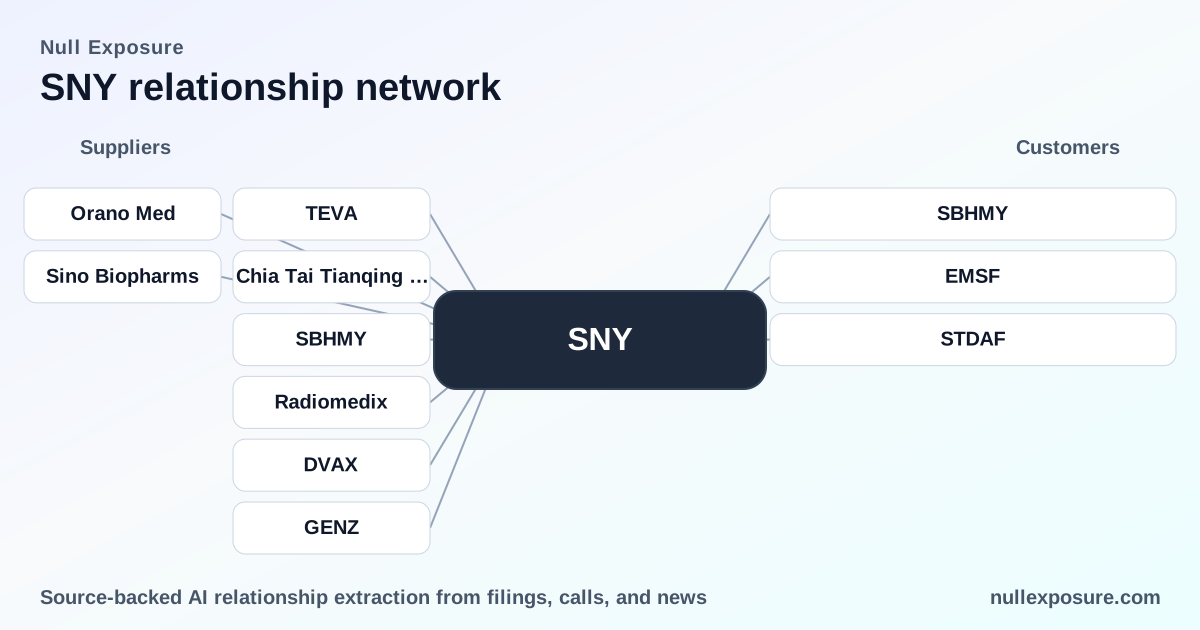
Sanofi (SNY) — Supplier Relationship Review and Investment Implications
Sanofi operates as a vertically integrated global pharmaceutical company that monetizes through drug and vaccine sales, strategic licensing, and M&A to refill its pipeline. The company couples internal R&D with targeted partnerships and bolt-on acquisitions to access late-stage assets and regional rights, funding those plays from operating cash flow (2025 revenue ~ $46.7B) and dedicated deal spend. For investors and procurement teams, the critical lens is how Sanofi converts upfront/license spend into durable revenue streams and whether partner counterparty risk, integration capability, and regulatory trajectories justify the valuation (Market Cap ~$106B; Forward P/E ~8.95).
Explore supplier risk and partner exposure at NullExposure.
How Sanofi’s supplier and licensing posture shapes value creation
Sanofi’s operating model is deal-driven: management supplements organic discovery with licensing agreements that transfer regional or global rights in exchange for upfront payments, milestone schedules, and royalties. The company’s contracting posture is acquisitive and licensing-intensive, visible in large upfront payments (multi-hundred-million to multi-billion dollar brackets) and co-development structures. Sanofi shows portfolio diversification across vaccines, immunology, hematology, and radioconjugates, reducing single-asset concentration but increasing exposure to multiple partner execution paths. Its maturity profile is hybrid: steady cash from established franchises and risk-weighted upside from licensed early-to-mid-stage candidates.
- Contracting posture: aggressive buyer of rights and small biotechs; frequent upfronts and co-development deals.
- Concentration: diversified across therapeutic areas but dependent on a flow of external assets to offset internal R&D cycles.
- Criticality: supplier relationships are material to pipeline replenishment and medium-term revenue growth.
- Maturity: combination of mature revenue drivers and higher-volatility developmental assets.
For a concise partner exposure dashboard, visit NullExposure.
Deal-by-deal: what every supplier relationship in the record tells investors
Below I list every relationship flagged in the record and what it means in plain English.
Teva (TEVA) — anti-TL1A co-development
Sanofi paid Teva $500 million for rights to co-develop and co-commercialize an anti-TL1A therapy, signaling large upfront commitments for mid-stage specialty immunology assets (FierceBiotech, Mar 10, 2026).
Chia Tai Tianqing Pharmaceutical — China licensing milestone
Sanofi agreed to a $135 million upfront to Chia Tai Tianqing Pharmaceutical, a Sino Biopharm subsidiary, to secure exclusive Chinese rights to rovadicitinib, reflecting geographic rights purchases to accelerate China commercialization (FiercePharma, Mar 10, 2026).
Sino Biopharmaceutical (SBHMY) — global JAK/ROCK license
Sanofi committed up to $1.53 billion to license a first-in-class JAK/ROCK inhibitor (Anxu/rovadicitnib) from Sino Biopharmaceutical, taking global rights to a compound that could serve both hematology and immunology franchises (FiercePharma, Mar 10, 2026).
Sino Biopharmaceutical — confirmation from European press
European Pharmaceutical Review reported the same licensing framework: an up-to-$1.53 billion deal for the oral JAK/ROCK inhibitor, underscoring cross-market coverage and repeated reporting of a material long-term commitment (European Pharmaceutical Review, Mar 10, 2026).
Radiomedix — radioconjugate licensing origin
Sanofi licensed a lead-212 SSTR-targeting radioconjugate in 2024 from Orano Med and Radiomedix for €100 million up front, illustrating Sanofi’s selective entry into radioligand therapeutics through third-party licensing (OncologyPipeline, Mar 10, 2026).
Dynavax (DVAX) — vaccine acquisition
Sanofi acquired Dynavax for $2.2 billion to add Heplisav‑B (hepatitis B vaccine), a transaction that strengthens the vaccines portfolio and demonstrates Sanofi’s willingness to pay premium multiples for strategic vaccine assets (BioSpace, Mar 10, 2026).
Genzyme (GENZ) — historical integration note
Reporting highlighted Sanofi management experience integrating Genzyme after the 2011 acquisition, reminding investors that large-scale biotech integrations are part of Sanofi’s operating DNA and remain a relevant competency for future deals (BioSpace, Mar 10, 2026).
Orano Med — co-originator of radioconjugate license
Orano Med was one of the licensors for the 2024 lead-212 license, confirming the multi-vendor sourcing approach Sanofi uses for complex radiopharmaceutical assets (OncologyPipeline, Mar 10, 2026).
Sino Biopharms — broader media coverage of the same stake
Finviz and other outlets repeated the Sanofi bet on Sino Biopharms’ transplant drug in coverage of the $1.5B licensing deal, indicating market attention and analyst scrutiny on Sanofi’s R&D track record tied to big external deals (Finviz, Mar 10, 2026).
What these relationships imply for risk and return
Sanofi’s pattern of large upfront license fees and strategic acquisitions creates a two-fold profile: near-term cash outflows with the potential for high-margin, long-duration revenue if the assets reach commercialization. Financial characteristics support that stance: 2025 revenue around $46.7B, EBITDA ~$12.6B, and a Forward P/E of ~8.95, suggesting the market values Sanofi’s current franchises while pricing in execution risk for pipeline bets. The dividend yield (~9.45%) and low beta (~0.36) position Sanofi as a defensive, income-oriented play, but the company’s willingness to commit large sums to external assets introduces episodic balance-sheet risk and integration demands. Regulatory approvals in key markets (US, EU, China) are the primary binary outcomes that convert licensing spend into revenue.
Practical takeaways for investors and procurement teams
- Monitor milestone schedules and contingent payments for each license to understand cash flow timing and downside protection.
- Assess partner depth: Chinese sub‑licensing deals provide market access but increase dependency on third-party development and regulatory timelines.
- Evaluate integration capability: Past Genzyme integration and the Dynavax purchase indicate capability, but each large acquisition increases short-term execution risk.
- Watch therapeutic-area concentration: Multiple JAK/ROCK and radioconjugate plays concentrate scientific and regulatory risk even as they diversify commercial exposure.
For more detailed supplier exposure analytics and tailored alerts, visit NullExposure.
Final assessment
Sanofi’s supplier relationships show a decisive, capital-intensive strategy to buy growth rather than wait for internal discovery alone. The company balances predictable cash flow from established products with high-variance upside from licensed assets. Investors should weigh Sanofi’s low forward valuation and high dividend against execution and regulatory risk inherent in big-ticket licenses and acquisitions. Procurement and risk teams should track milestone dependency, regional rights carve-outs, and counterparty execution records as primary drivers of whether these supplier relationships deliver the intended return on investment.