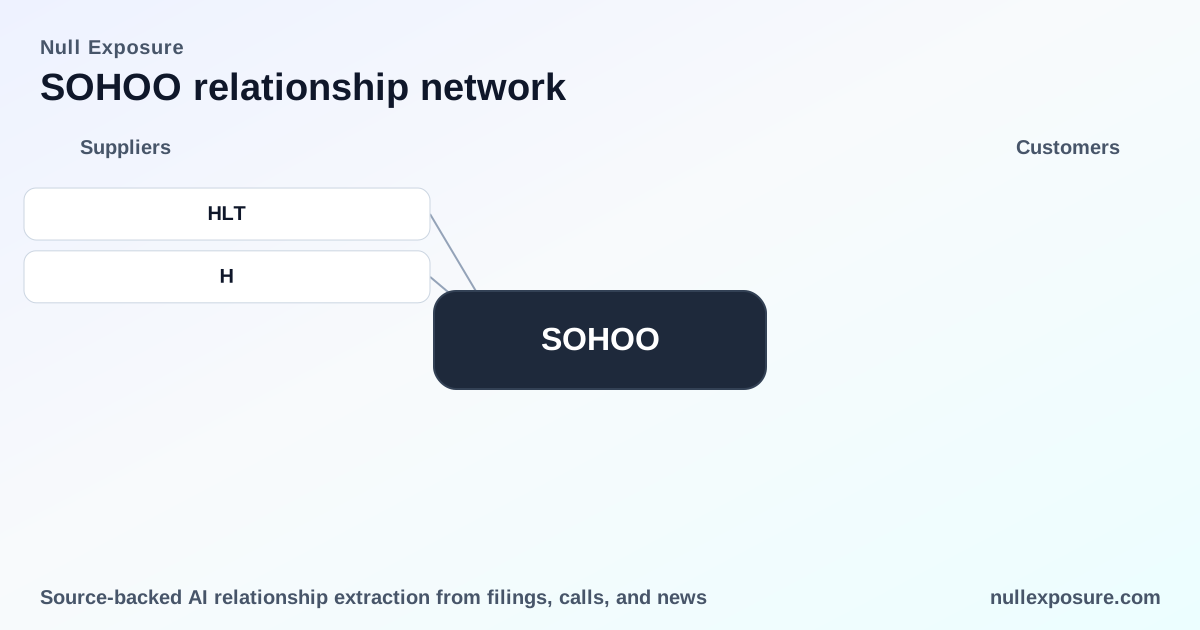
Sotherly Hotels (SOHOO Pref): Supplier relationships that shape cash flow and operating leverage
Sotherly Hotels operates as a self-managed lodging REIT that acquires and repositions full‑service and upscale hotels, then monetizes those assets through lease and management structures: franchise/royalty fees paid by its TRS lessees, long‑term ground and lease payments, and third‑party management contracts that govern day‑to‑day operations. Investor returns therefore depend on stable franchise relationships, durable management contracts, and the performance of a small portfolio of branded properties. For a fast read on how those supplier relationships affect credit and operational risk, see NullExposure’s supplier module at https://nullexposure.com/.
Why supplier relationships matter for a hotel REIT like Sotherly
Sotherly’s economic model layers real estate ownership with franchise and management arrangements. The company’s wholly‑owned hotels are leased to TRS lessees that hold franchise licenses and pay franchise/royalty fees (roughly 3–4% of gross revenue as disclosed), while Our Town Hospitality, LLC operates the hotels under management agreements that generate base and incentive management fees for the operator. These contracts concentrate revenue and cost exposure into a small number of long‑dated relationships, so counterparty stability and contract mechanics translate directly into cash flow predictability. Learn more about supplier exposure at https://nullexposure.com/.
Supplier mentions found in recent coverage
The available media coverage and company disclosures identify several national brands that operate across Sotherly’s portfolio. Each relationship below is summarized in plain English with a source.
DoubleTree by Hilton
Sotherly’s portfolio includes multiple Hilton‑branded properties under the DoubleTree flag, indicating franchise relationships that route brand, marketing, and reservation services through Hilton’s systems; those franchises typically imply royalty flows and adherence to brand standards. A March 10, 2026 MarketScreener article enumerated Sotherly properties including DoubleTree by Hilton Jacksonville Riverfront and DoubleTree by Hilton Laurel (MarketScreener, March 10, 2026).
Hyatt Centric
Sotherly owns at least one property operating under the Hyatt Centric brand (Hyatt Centric Arlington is listed among portfolio hotels), positioning Hyatt as a franchisor/licensor for that asset and implicating Hyatt’s distribution and brand standards in that hotel’s revenue performance. The same MarketScreener article lists Hyatt Centric Arlington among the company’s properties (MarketScreener, March 10, 2026). Relevant filing language also shows a dated contract term tied specifically to Hyatt Centric Arlington through March 2038, which establishes a long contract horizon for that relationship (company filings as of December 31, 2024).
Tapestry Collection by Hilton
Sotherly’s holdings include Tapestry Collection hotels (Hotel Alba Tampa and Hotel Ballast Wilmington are cited), which again places Hilton as a material franchisor in the portfolio and creates ongoing royalty and marketing fee obligations for Sotherly’s TRS lessees. The MarketScreener coverage names these Tapestry Collection properties within Sotherly’s portfolio (MarketScreener, March 10, 2026).
Constraints and operating model signals that matter to investors
Sotherly’s disclosures identify several structural characteristics that drive supplier risk and value capture. These are company‑level signals unless explicitly tied to a named relationship.
- Long‑term contracting posture: Multiple excerpts state that hotel management agreements and ground leases have initial terms extending to 2035 with extensions and renewal options; termination mechanics include limited termination fees. This creates predictable operating windows and makes near‑term revenue streams contractually durable (company filings, 2024).
- Large‑enterprise franchisors predominate: The company reports that all but three wholly‑owned hotels operate under franchise licenses from national hotel companies, signaling concentration of brand counterparty risk with large enterprise franchisors (company filings, Dec 31, 2024).
- Service provider centralization: Our Town Hospitality, LLC is the active manager across Sotherly’s wholly‑owned hotels and condominium rental programs, and management fees to that operator constituted roughly $4–4.7 million in base fees in recent years. Operational execution is therefore concentrated in a single management provider whose performance is critical to cash flows (company filings, 2022–2024).
- Spend and fee scale: Base management fees historically fall in the mid‑single‑digit millions annually; the company also disclosed rent resets and appraisal‑driven adjustments that move certain rent levels into the $1–10 million spend band on a yearly basis, which frames counterparty exposure sizes (company filings, 2024–2025).
- Technology and cyber reliance, but limited materiality: Sotherly relies on third‑party technology and software providers for its information systems while reporting that, as of December 31, 2024, no cyber incident had materially affected its business—this indicates dependency without documented material losses to date (company filings, Dec 31, 2024).
- Active and mature relationships: Management agreements and franchise licenses are active; multiple contracts include explicit renewal mechanics, rendering the relationships operationally mature rather than experimental (company filings, 2024).
These constraints combine into a working model where contractual durability and a small number of franchisor/managers drive near‑term cash‑flow stability, while concentration of brand and manager dependency constitute the principal operational risk.
What this means for investors and operators
- Upside: Long‑dated management and lease agreements convert hotel revenue volatility into more stable cash flow for the REIT, supporting dividend capacity and debt servicing when occupancy is within historical ranges. The presence of national brands provides distribution and demand elasticity benefits.
- Key risks: Concentration risk across a limited number of franchisors and a single management operator is the top supplier‑side vulnerability; any deterioration in the franchisor relationship or a failure at Our Town would have outsized effects. Lease and appraisal resets also create cash‑flow sensitivity to market rent assumptions.
- Operational levers: Investors should watch renewal triggers, termination fee mechanics, and upcoming appraisal dates that can adjust rent levels or incentive fee structures; these contract levers are where value is realized or lost.
If you are modeling counterparty exposure or underwriting covenants, NullExposure’s supplier intelligence can accelerate diligence—start here: https://nullexposure.com/.
Final verdict and recommended next steps
Sotherly’s supplier footprint is characterized by long tenors, concentrated national franchisor relationships, centralized management via Our Town, and material recurring management fees in the low‑millions annually. That structure supports predictable cash flows but imposes concentrated operational risk that warrants focused covenant and counterparty monitoring.
For portfolio managers and credit analysts: prioritize review of renewal clauses, termination fees, and the financial health of Our Town and the principal franchisors. For operators and partners: negotiate transparency on franchise compliance costs and appraisal timing to reduce rent‑reset surprises.
For a deeper supplier risk profile and continuous monitoring of Sotherly’s counterparty exposures, visit NullExposure’s home page: https://nullexposure.com/.
Sources: company filings and disclosures as of December 31, 2024 (management agreements, lease terms, fee schedules) and a March 10, 2026 MarketScreener article enumerating portfolio brands and properties (MarketScreener, March 10, 2026).