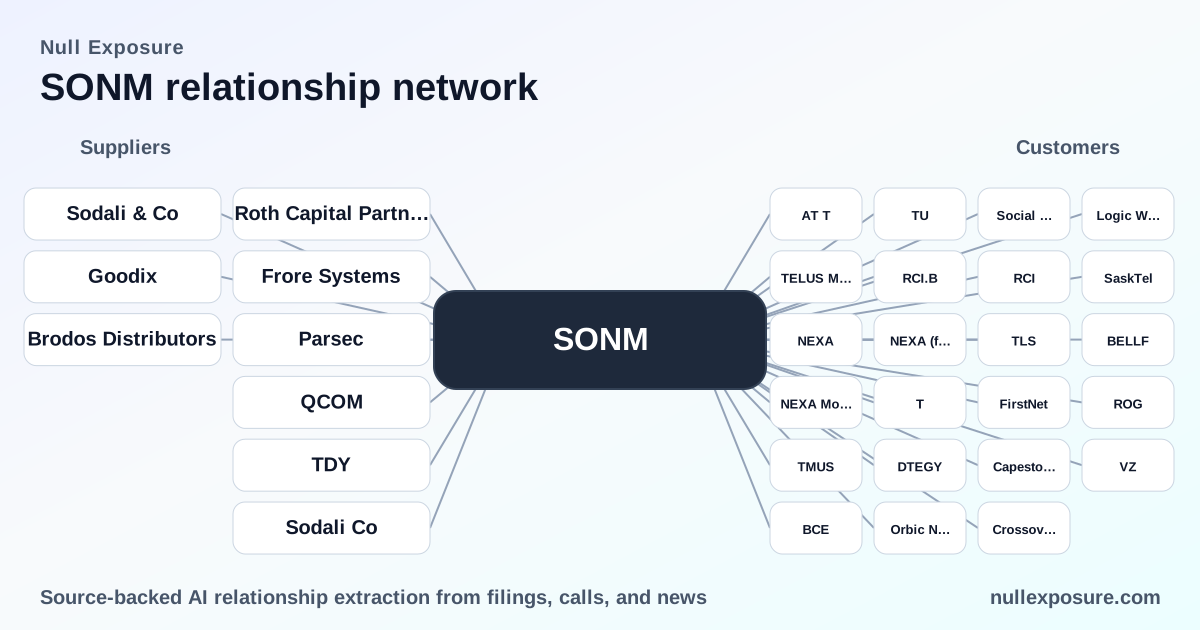
Sonim Technologies (SONM) — supplier map, strategic constraints, and what investors should watch
Sonim Technologies designs and sells ultra-rugged mobile phones and connectivity devices for task workers and public-safety customers, monetizing primarily through device sales to carrier and enterprise channels, recurring per-unit royalty obligations to IP holders, and component/service contracts tied to product programs. Annual revenue runs in the tens of millions (Revenue TTM: $59.1M) against negative operating profitability, making supplier relationships and manufacturing continuity central to short‑term cash flow and any turnaround plan. For deeper supplier intelligence and relationship monitoring visit https://nullexposure.com/.
Why supplier relationships drive Sonim’s valuation story
Sonim is not a smartphone OEM in the consumer sense — it sells highly specialized, durable devices into narrow verticals where supply-chain reliability and certifiable component partners determine product viability and carrier certification. The company’s mix of outsourced manufacturing, per‑unit royalties, and targeted R&D in Asia creates a supplier profile that is operationally intensive and concentrated. With a market cap under $7 million and recent negative EBITDA, supplier disruption or certification delays translate directly into revenue and liquidity risk.
For ongoing supplier tracking and to surface material changes in partner posture, visit https://nullexposure.com/.
The supplier and partner roster you need to know
Below I cover every partner reference surfaced in recent disclosures and press — each entry is a concise, investor‑oriented summary with the original source noted.
Roth Capital Partners
Roth Capital Partners acted as the exclusive placement agent for a $5.55 million public offering for Sonim, a capital markets engagement that directly affects available cash and dilution for suppliers and creditors (Newsfile, March 10, 2026 — https://www.newsfilecorp.com/release/257337/Sonim-Technologies-Announces-Pricing-of-5.55-Million-Public-Offering).
Frore Systems
Frore Systems supplies an active cooling technology (AirJet) used in the MegaConnect hotspot, a component enabling higher RF performance in a compact package — a performance‑critical supplier for the product’s thermal management (Newsfile, March 10, 2026 — https://www.newsfilecorp.com/release/258998/Worlds-Most-Powerful-WiFi-Hotspot-Sonim-MegaConnect-Delivers-Superior-Connectivity-for-Public-Safety-on-FirstNet?lang=fr).
Parsec
Parsec is developing a portable dock for the MegaConnect hotspot that will extend reach, indicating a peripheral accessory supplier relationship that expands product functionality and addressable use cases (Newsfile, March 10, 2026 — https://www.newsfilecorp.com/release/258998/Worlds-Most-Powerful-WiFi-Hotspot-Sonim-MegaConnect-Delivers-Superior-Connectivity-for-Public-Safety-on-FirstNet?lang=fr).
Qualcomm / Qualcomm Technologies, Inc. / Qualcomm Incorporated (QCOM)
Qualcomm supplies key modem and chipset technologies (Snapdragon X75, Snapdragon 7 Gen 3 and other Snapdragon platforms) that power multiple Sonim devices including the H700 hotspot and XP-series phones; this is a core component supplier whose platform choices determine certification, performance and upgrade cadence (Critical Communications Review and ACN Newswire reporting FY2024; Newsfile and Yahoo Finance reports FY2025 — see representative links: https://www.criticalcommunicationsreview.com/ccr/news/114619/sonim-introduces-world-s-first-rugged-hotspot-enabling-reliability-in-extreme-conditions; https://finance.yahoo.com/news/sonim-unveils-xp-pro-thermal-064800542.html).
Teledyne FLIR (TDY)
Teledyne FLIR provides the thermal imaging OEM module used in Sonim’s XP Pro Thermal device, giving Sonim a capability that suits industrial and public‑safety buyers and differentiates the product lineup (Yahoo Finance coverage, March 2026 — https://finance.yahoo.com/news/sonim-unveils-xp-pro-thermal-064800542.html).
Sodali / Sodali & Co
Sodali & Co serves as Sonim’s proxy solicitor for an asset‑purchase special meeting tied to the NEXA Mobility transaction, a governance and shareholder‑engagement service that matters for closing strategic corporate actions (Newsfile and Yahoo Finance, March 2026 — https://www.newsfilecorp.com/release/275875/Sonim-Technologies-Files-Preliminary-Proxy-Statement-Advancing-Asset-Purchase-by-NEXA-Mobility; https://finance.yahoo.com/news/sonim-technologies-files-preliminary-proxy-210100707.html).
Goodix
Goodix supplies audio and echo/noise cancellation technology used in Sonim devices (e.g., XP10 5G), representing a component supplier for user‑experience features in handheld devices (Yahoo Finance, FY2022 product announcement referenced in company press — https://finance.yahoo.com/news/sonim-technologies-launches-xp10-5g-133000657.html).
Brodos Distributors
Brodos Distributors partnered with Sonim to exhibit at IFA Berlin, functioning as a regional distribution or channel partner to support EMEA market coverage and carrier engagement (Newsfile, FY2024 — https://www.newsfilecorp.com/release/222569/Sonim-Unveils-Two-New-Phones-for-EMEA-Markets-at-IFA-Berlin).
How supplier constraints shape operational risk and upside
The public disclosures and press coverage produce several company‑level signals that define Sonim’s supplier posture and the investor risk profile:
-
Contracting posture — hybrid long‑term and usage‑based exposure. Sonim pays per‑unit royalties to wireless patent holders that are usage‑based and extend across multiple years, with aggregate royalty expense under 5% of net revenues per unit and expirations running to 2033. That structure aligns cost with sales but creates ongoing obligations tied to device shipments.
-
Concentration in APAC manufacturing and R&D. The majority of suppliers and manufacturing facilities are outside the U.S., and a meaningful portion of R&D is located in China and India, which increases geopolitical and logistics exposure for inventory and certification timelines.
-
Outsourced manufacturing and transitional supply relationships. Sonim has outsourced manufacturing and final assembly to third‑party ODMs and is actively moving away from a white‑label business model; these transitions signal both reduced margin products being phased out and a reliance on contract manufacturers for continuity.
-
Service provider dependencies. The company uses external firms for certification, cybersecurity testing, and proxy solicitation — a mix of technical and governance suppliers that are critical during product launches and corporate transactions.
-
Maturity and stage — winding down legacy lines. Sonim is in a transition phase, phasing out low‑margin white‑label business and reorienting toward carrier channel sales and new product launches; supplier relationships are therefore reconfiguring rather than steady-state.
Taken together, these constraints imply operational leverage: improvements in manufacturing stability, component supply, or carrier certifications will lift margins quickly; conversely, a supplier interruption or certification setback will compress cash and exacerbate the company’s negative profitability.
Investor takeaways and monitoring checklist
- Supplier concentration and APAC production are the principal operational risks; monitor shipping and lead‑time commentary from Sonim and its ODMs.
- Qualcomm and Teledyne FLIR are strategic component partners whose roadmaps determine Sonim’s product competitiveness; track chipset availability and firmware support cycles.
- Per‑unit royalties are ongoing, usage‑based cash outflows that reduce operating leverage but protect Sonim from fixed licensing shock; they are material to per‑unit economics despite being capped at <5% of unit revenue.
- Corporate actions (NEXA asset purchase) and capital raises (Roth placement) directly influence supplier payments and inventory funding; follow proxy and offering documents for timing.
For operational due diligence, supplier monitoring feeds, and alerting on material partner changes visit https://nullexposure.com/.
Sonim’s story is one of concentrated product niches, outsized dependency on a small set of component and manufacturing partners, and a transitional business strategy that makes supplier signals more predictive of near‑term outcomes than broad market multiples. Investors should prioritize contemporaneous updates from Qualcomm, Teledyne FLIR, manufacturing partners, and filings related to the NEXA transaction to anticipate revenue and margin inflection points. For tailored supplier intelligence and ongoing alerting on SONM relationships, check https://nullexposure.com/.