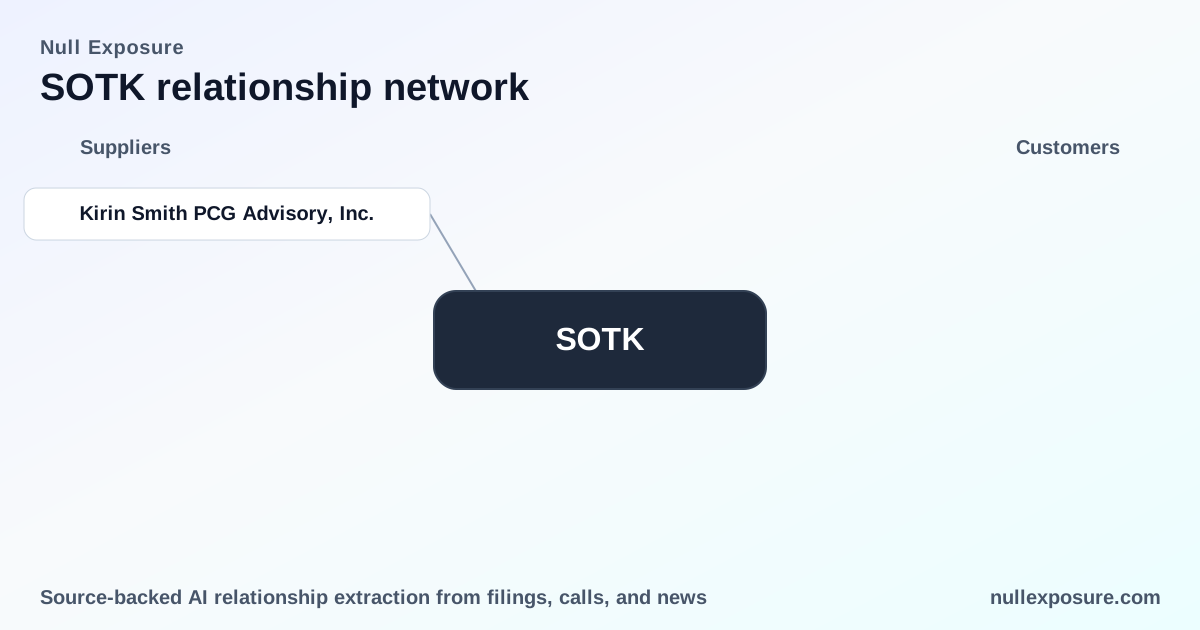
Sono-Tek (SOTK) supplier snapshot: operational profile, supplier posture, and the relationships that matter
Sono-Tek designs and manufactures ultrasonic coating systems for microelectronics, alternative energy, medical, and industrial markets and monetizes through equipment sales, aftermarket consumables, and service contracts. With roughly $20.4M in trailing twelve‑month revenue and a market capitalization near $69M, the company operates as a small-cap, specialized manufacturing supplier to capital‑goods and component-intensive end markets. For investors focused on counterparty and supply-chain exposure, the combination of global sourcing, a historical lack of raw-material disruption, and an outsized role for aftermarket service define the commercial levers that drive margin persistence and capital intensity. For a direct inspection of supplier signals, visit the NullExposure homepage: https://nullexposure.com/
How Sono‑Tek sources, contracts, and where supplier risk shows up
Sono‑Tek reports that it purchases printed circuit board assemblies and sheet metal components from a wide range of suppliers across the world. The company explicitly states: "We purchase circuit board assemblies and sheet metal components from a wide range of suppliers throughout the world." That line signals a globally distributed procurement footprint rather than concentrated, single‑source arrangements.
At the same time, Sono‑Tek characterizes raw‑material and component availability as historically immaterial: "Historically, we have not been adversely impacted by the availability of raw materials or components used in the manufacture of our products." Taken together, these disclosures create a profile with four practical implications for investors:
- Contracting posture — transactional and diversified. The global vendor base suggests Sono‑Tek relies on multiple suppliers for standard assemblies and sheet metal work rather than exclusive, long‑term proprietary suppliers.
- Concentration — low at the supplier‑level, higher at the customer‑level. Supplier concentration looks limited; concentration risk for revenue likely lies more with customer handfuls in specialty markets than with single suppliers.
- Criticality — moderate. Components are necessary for finished equipment, but the historical immateriality of supply shortages reduces the urgency of single‑source risk today.
- Maturity — stable manufacturing for niche industrial systems. Sono‑Tek’s product set is specialized but not raw‑material intensive in the way commodity processors are, which supports predictable procurement cycles.
Put succinctly: Sono‑Tek’s supplier base is global and diversified, and the company reports that supply availability has not historically constrained manufacturing — a positive structural signal for operators and investors assessing counterparty exposure.
Financial context that frames supplier vulnerability
Financial size constrains how much supply negotiation leverage Sono‑Tek carries. Key public figures: Revenue TTM $20.42M, Gross Profit TTM $10.19M, Operating Margin ~6.4%, Market Cap ~$69.3M, EV/EBITDA ~24.7. These numbers indicate modest scale and relatively high capital intensity per dollar of revenue, which matters because specialized components and service skills are important to product delivery even if raw‑material risk has been immaterial historically. Investors should weigh Sono‑Tek’s niche technical know‑how and aftermarket service as value drivers that offset the company’s small scale.
For direct access to supplier signal analytics, visit the NullExposure homepage: https://nullexposure.com/
Supplier and service relationships disclosed in public sources
The public record for supplier‑scope relationships tied specifically to SOTK is sparse in filings, but the results include a listed external provider involved in investor relations and communications:
- Kirin Smith PCG Advisory, Inc. — The company lists Kirin Smith PCG Advisory as an Investor Relations contact in a fiscal press release, indicating a retained communications/IR relationship for market outreach during FY2025. According to a GlobeNewswire press release posted via The Manila Times on October 14, 2025, Investor Relations contact information is shown as "Kirin Smith PCG Advisory, Inc. [email protected]". This is a service relationship for investor communications rather than a direct production supplier.
That item is the only supplier‑scope relationship surfaced in the reviewed results. The disclosure is operationally immaterial to manufacturing but relevant to market communications and investor access.
What the constraints tell operators and risk teams
The two explicit constraints in the record are company‑level signals, not relationship‑specific:
- Geography: Global sourcing — supported by the excerpt about purchasing assemblies and sheet metal components worldwide. This creates logistical exposure (lead times, freight, tariffs) but reduces single‑vendor dependency.
- Materiality: Immaterial historical impact from raw material availability — the company discloses it has not been adversely impacted historically, which signals low past procurement disruption.
From a practical investor perspective, these constraints translate into actionable monitoring priorities: track freight and international logistics conditions (as a global buyer, Sono‑Tek is sensitive to cross‑border bottlenecks), and monitor procurement lines in future filings for any move away from the stated immaterial stance.
Risk checklist for investors and operators
- Supply diversification is a strength, but global sourcing increases exposure to geopolitical and freight shocks; quantify lead‑time elasticity in scenario work.
- Small public scale amplifies supplier pricing power shifts — Sono‑Tek cannot absorb sustained input cost inflation as easily as larger OEM peers.
- Aftermarket service drives recurring revenue; protect that margin by ensuring replacement parts availability and local service partners.
- IR and communications relationships such as the engagement with Kirin Smith PCG Advisory play a role in market access and investor perception, but do not materially affect manufacturing continuity.
Bottom line and next steps for due diligence
Sono‑Tek’s procurement profile shows global supplier coverage and historically immaterial raw‑material disruption, which reduces immediate supplier concentration risk. However, the company’s modest scale and specialized product set keep supplier and logistics management strategically important. For investors conducting counterparty diligence, focus on published procurement language in 10‑Ks and earnings releases and on any shifts toward single‑source components or consigned inventory programs.
Learn more about supplier exposure and counterparty intelligence at NullExposure: https://nullexposure.com/ — use the platform to map supplier links and monitor changes in real time.