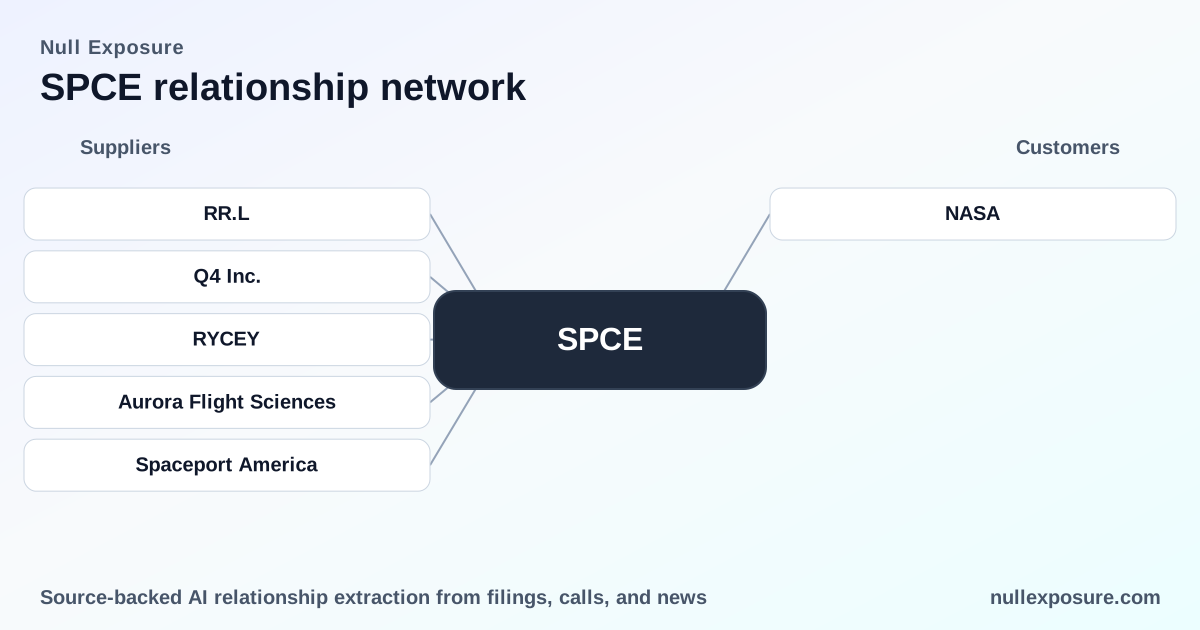
Virgin Galactic (SPCE) — supplier relationships that shape the launch plan
Virgin Galactic operates a dual-revenue aviation and space-tourism business: it develops and sells suborbital human spaceflights and designs next‑generation high‑speed aircraft, monetizing through ticket sales and long‑lead product development contracts while outsourcing significant manufacturing and propulsion work to strategic partners. For investors and operators, the key operational lever is control over mission-critical suppliers and long‑term infrastructure commitments that underwrite flight cadence and capital intensity. Explore supplier-level intelligence and deal signals at https://nullexposure.com/.
What to know up front: how the supplier network drives value
Virgin Galactic’s go‑to‑market depends on two structural facts: launch infrastructure anchored by a long‑term lease and third‑party manufacturing and propulsion partnerships for its Delta‑class spaceships and future Mach‑3 aircraft. These relationships are not peripheral — they determine capital requirements, delivery schedules, and regulatory route‑to‑market. The company’s unit economics will improve only if supplier performance, capacity, and certification timelines accelerate in line with ticket sales.
See broader supplier profiles and timelines at https://nullexposure.com/
The relationships that matter — concise, source‑linked snapshots
Below are the supplier relationships identified in public reporting and press coverage. Each entry is a plain-English account with the original source noted.
-
Rolls‑Royce: Virgin Galactic has partnered with Rolls‑Royce on high‑speed propulsion development and as the announced powerplant provider for a proposed Mach‑3 commercial aircraft. This is a strategic technology and future‑product relationship, reported alongside the public unveiling of the Mach‑3 concept in August 2020. Sources include an AirlineGeeks story from August 2020 and coverage in Flying Magazine (August 2020), as well as later discussion in a WCCFTech piece referencing development plans into FY2021.
-
Q4 Inc.: Q4 Inc. provided investor‑relations and web hosting functionality for Virgin Galactic’s investor communications, appearing as the platform powering a 2022 investor reservation announcement. This is an administrative service relationship tied to investor communications rather than core manufacturing. The investor site notice in FY2022 cites Q4’s platform.
-
Aurora Flight Sciences (Boeing affiliate): Virgin Galactic announced a collaboration with Aurora Flight Sciences for the design and manufacture of its carrier “motherships,” aligning a Boeing‑affiliated engineering and manufacturing partner with vehicle assembly plans. Simple Flying reported the partnership in FY2022 as part of the company’s Arizona manufacturing expansion.
-
Spaceport America: Virgin Galactic launches its suborbital flights from Spaceport America in New Mexico and serves as the facility’s anchor tenant under a long‑term lease, which was disclosed in investor filings and referenced in FY2022 communications. The company’s reservation announcement and corporate filings confirm Spaceport America as the launch location.
Why these relationships change the investment calculus
Each relationship adds a distinct operational dimension that affects revenue realization and risk:
-
Rolls‑Royce ties Virgin Galactic to an advanced propulsion partner for non‑core supersonic product development; this reduces the company’s in‑house engineering burden but transfers technological execution risk to a single critical partner for the Mach‑3 program.
-
Aurora Flight Sciences positions Boeing’s manufacturing capability inside Virgin Galactic’s supply chain, accelerating production capacity for carrier aircraft and mothership assembly while concentrating manufacturing risk in a major aerospace contractor.
-
Spaceport America provides physical launch capacity and has been underpinned by a 20‑year lease that makes the company the anchor tenant — this stabilizes short‑term launch location risk but creates exposure to a single site until the lease term ends in 2028 (with a company option to extend five years), as disclosed in the company’s lease language.
-
Q4 Inc. is operationally immaterial to flight operations but signals mature investor‑relations processes and third‑party dependency for external communications.
Contracting posture, concentration, criticality and maturity — constraints that matter
The public evidence delivers several company‑level signals about supplier strategy and constraints:
-
Contracting posture — long‑term infrastructure anchoring. The Spaceport America arrangement is a long‑dated lease that anchors launch operations to New Mexico and gives the company runway to scale flight operations through 2028, with a potential five‑year extension disclosed in filings.
-
Geographic concentration — U.S.‑centric operations. Most suppliers and operational footprint are in the United States, which centralizes regulatory and supply‑chain exposure in North America and can compress sourcing alternatives under geopolitical or regional shocks.
-
Relationship roles — outsourced manufacturing and service providers. Virgin Galactic explicitly partners with third parties to manufacture key subassemblies for Delta‑class spaceships and relies on service providers for functions such as investor communications and cybersecurity oversight, indicating a hybrid in‑house/outsourced model that increases vendor management complexity.
-
Segment and capital intensity — manufacturing focus with significant capex. Public statements emphasize third‑party manufacturing arrangements for next‑generation vehicles and a recently completed Arizona assembly facility (July 2024), signaling material capital commitments and multi‑year production ramp risk.
These constraints imply higher operational leverage and dependency on supplier execution as the company scales commercial flights and new aircraft programs.
Review supplier screening and partner timelines at https://nullexposure.com/
Operational and investor takeaways
-
Supplier concentration is strategic but creates single‑site and supplier dependency risks. Anchor tenancy at Spaceport America reduces short‑term launch uncertainty but concentrates critical operations in one geographic node through 2028. (Investor filings and the FY2022 reservation announcement document this arrangement.)
-
Strategic partnerships outsource major technical deliveries. Rolls‑Royce and Aurora Flight Sciences handle propulsion and mothership manufacturing respectively, which accelerates development but transfers schedule and certification risk to those partners (coverage spans FY2020–FY2022).
-
Non‑manufacturing vendors are functional but important. Firms like Q4 Inc. indicate mature investor relations infrastructure; cybersecurity expectations imply service providers must meet industry certification standards, adding contract compliance costs.
Final verdict for operators and investors
Virgin Galactic’s supplier map is strategic and capital‑intensive: it combines a long‑term infrastructure commitment with heavyweight aerospace partners to de‑risk in‑house engineering. For investors, the return profile hinges on timely supplier performance, certification outcomes, and the company’s ability to convert reservations into a regular flight cadence. For operators, supplier governance, contingency planning for geographic concentration, and close oversight of Rolls‑Royce and Aurora deliverables are the immediate action items.
For deeper supplier analytics and to monitor relationship developments in real time, visit https://nullexposure.com/ for the full supplier index and alerts.
Explore more supplier intelligence and monitoring tools at https://nullexposure.com/.