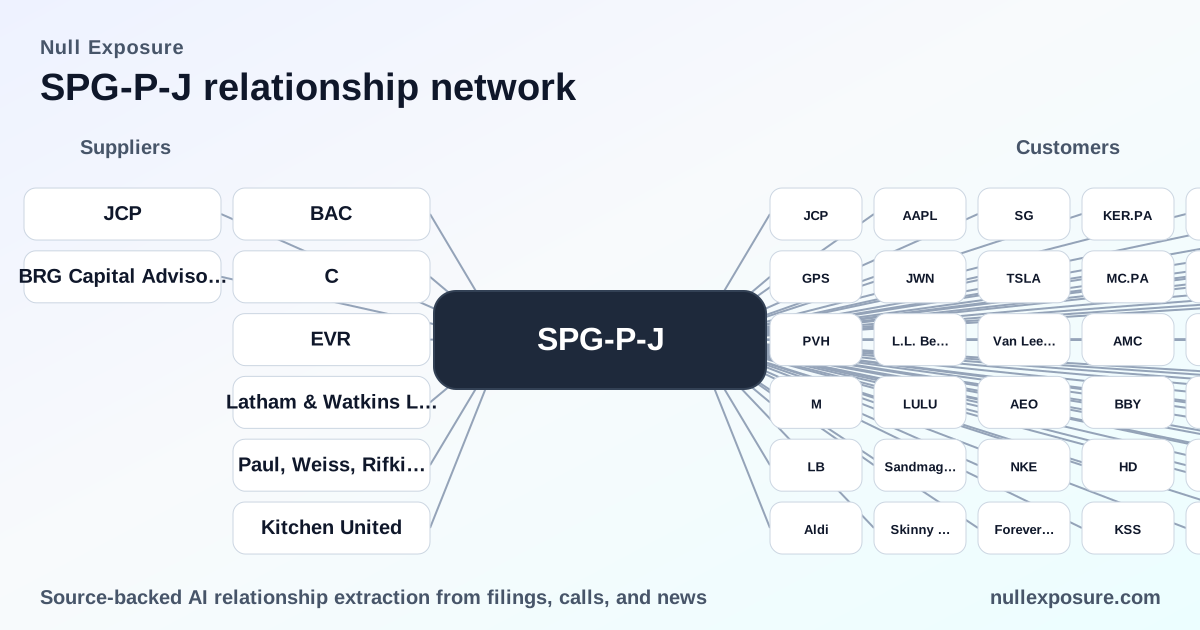
SPG‑P‑J (Simon Property Group Series J) — supplier relationships and strategic readout
Simon Property Group is the largest US owner-operator of shopping malls and outlet centers; the SPG‑P‑J instrument is a cumulative redeemable preferred issued by Simon carrying an 8 3/8% stated rate, offering investors fixed-preference cash flow ahead of common equity. The company monetizes through long-term tenant leases, property management and repositioning, and opportunistic M&A that drives scale and fee income across its retail platform. For investors in SPG‑P‑J, understanding Simon’s advisor, legal and technology suppliers is critical because these relationships shape deal execution, tenant strategy, and the pace of portfolio transformation. Read more at https://nullexposure.com/.
Why supplier relationships matter for a preferred shareholder
Preferred holders do not run day-to-day operations, but supplier and adviser footprints influence credit durability and cash-flow predictability. Major investment banks and elite law firms indicate high transaction intensity and a posture of proactive capital deployment, while partnerships with retail tech providers signal operational modernization that supports tenant sales and occupancy. NullExposure’s supplier view gives investors a quick lens into how Simon executes M&A, legal work, and tenant services — all relevant to dividend sustainability and balance-sheet resilience. Explore more at https://nullexposure.com/.
Company-level operating signals from the constraints set
The dataset returned no explicit contractual constraints for SPG‑P‑J, which itself is a signal: there are no flagged supplier-side restrictions or vendor-level covenants in the collected sources. From a company-level perspective, the supplier relationship pattern suggests these operating characteristics:
- Contracting posture: advisory and tier‑one counsel-driven. Simon engages premier banks and law firms for major transactions rather than boutique or fragmented advisors.
- Concentration: concentrated around a few elite advisors. Reliance on top banks and law firms implies limited but high-quality external dependency in critical deals.
- Criticality: supplier relationships are strategically material. Financial and legal advisors are central to M&A execution; technology partners support tenant revenue channels.
- Maturity: institutional and repeatable. The advisor roster and recurring use of national counsel indicate a mature, repeatable operating model for complex transactions.
These company-level signals should inform credit and operational diligence for preferred investors.
Detailed readout: every named relationship and what it means for investors
BofA Securities
BofA Securities served as a financial advisor to Simon in the Taubman acquisition process, indicating Simon’s preference for large, full‑service banks on transformative M&A work. (Shopping Center Business coverage of the Taubman acquisition — fiscal period FY2021; https://shoppingcenterbusiness.com/simon-property-group-completes-acquisition-of-taubman-centers/)
Citigroup Global Markets Inc.
Citigroup Global Markets was also retained as a financial advisor to Simon on the Taubman transaction, reinforcing that Simon allocates deal work across multiple major bulge‑bracket banks for advisory coverage and execution capacity. (Shopping Center Business, FY2021; https://shoppingcenterbusiness.com/simon-property-group-completes-acquisition-of-taubman-centers/)
Evercore Group, L.L.C.
Evercore Group acted as a financial advisor to Simon alongside BofA and Citi, signaling that Simon mixes both investment-banking models (bulge bracket and independent advisory boutiques) to balance origination and independent advice on large acquisitions. (Shopping Center Business, FY2021; https://shoppingcenterbusiness.com/simon-property-group-completes-acquisition-of-taubman-centers/)
Latham & Watkins LLP
Latham & Watkins is listed as a legal advisor to Simon on the Taubman deal, demonstrating Simon’s use of top-tier corporate law firms for merger documentation and regulatory work in complex asset deals. (Shopping Center Business / PR Newswire reporting on merger terms — FY2020/FY2021; https://shoppingcenterbusiness.com/simon-property-group-completes-acquisition-of-taubman-centers/ and https://www.prnewswire.com/news-releases/simon-and-taubman-modify-merger-price-to-43-00-per-share-in-cash-301173266.html)
Paul, Weiss, Rifkind, Wharton & Garrison LLP
Paul, Weiss served as legal counsel to Simon in the same transaction set, underscoring the reliance on elite law firms to manage high‑stakes bankruptcy, antitrust and M&A legal risk. (Shopping Center Business / PR Newswire — FY2020/FY2021; https://shoppingcenterbusiness.com/simon-property-group-completes-acquisition-of-taubman-centers/ and https://www.prnewswire.com/news-releases/simon-and-taubman-modify-merger-price-to-43-00-per-share-in-cash-301173266.html)
Kitchen United
Kitchen United provided technology for e-commerce food-court ordering and was adopted by Simon (and other mall operators) to drive digital ordering from mall restaurants, a strategic operational tie that enhances tenant sales channels and food & beverage occupancy economics. (Business Insider reporting on Kitchen United partnerships, FY2022; https://www.businessinsider.com/kitchen-united-raises-100-million-from-kroger-burger-king-owner-2022-6)
JCPenney
JCPenney’s retail and operating assets were sold to Simon Property Group and Brookfield Asset Management following the retailer’s Chapter 11 process, evidencing Simon’s active role as an opportunistic acquirer of distressed retail operations to stabilize occupancy and repurpose space. (Financier Worldwide coverage of the JCPenney emergence from Chapter 11, FY2021; https://www.financierworldwide.com/jcpenney-emerges-from-chapter-11)
BRG Capital Advisors, LLC
BRG Capital Advisors acted as a financial adviser to Simon and Brookfield in connection with the JCPenney restructuring, showing Simon’s use of specialized advisory firms for complex bankruptcy sale processes in addition to its bulge‑bracket relationships. (Financier Worldwide, FY2021; https://www.financierworldwide.com/jcpenney-emerges-from-chapter-11)
What investors should take away — risks and strategic levers
- Advisory concentration is a double‑edged sword. Having BofA, Citi and Evercore on-call provides execution horsepower for large deals but concentrates counterparty exposure; disruptions to these relationships could slow M&A and strategic repositioning.
- Legal sophistication reduces deal execution risk. Repeated use of national law firms like Paul Weiss and Latham & Watkins signals institutional governance and a low likelihood of simple legal missteps in high‑stakes transactions.
- Operational modernization is incremental but material. Partnerships with providers such as Kitchen United show that Simon leverages technology to support tenant sales — a practical lever for supporting same-store sales and occupancy without large capital outlays.
- Distressed acquisitions are core to growth playbook. The JCPenney transaction shows Simon’s willingness to acquire operating businesses and run integration — this strategy can accelerate scale but adds operational complexity that could pressure short-term cash flow.
For a deeper supplier risk and concentration assessment tailored to SPG preferred instruments, see the platform at https://nullexposure.com/.
Actionable next steps for investors
- Monitor advisory roster continuity around any new large M&A announcements — changes in bank or counsel mix are informative about deal complexity and appetite.
- Track technology partnerships and tenant programs (food & beverage, e-commerce enabling services) as leading indicators of same-store sales stabilization.
- For ongoing supplier intelligence and to map counterparty dependencies across Simon’s capital and legal partners, use our platform: https://nullexposure.com/.
Conclusion: Simon’s supplier footprint reflects an institutionally run REIT that uses elite financial and legal advisors for strategic deals, supplements its tenant value proposition with targeted technology partnerships, and pursues opportunistic acquisitions to reposition assets. Those patterns matter for preferred shareholders because advisor selection, legal rigor and operational partners directly affect execution risk and cash-flow durability. Learn more and subscribe at https://nullexposure.com/.