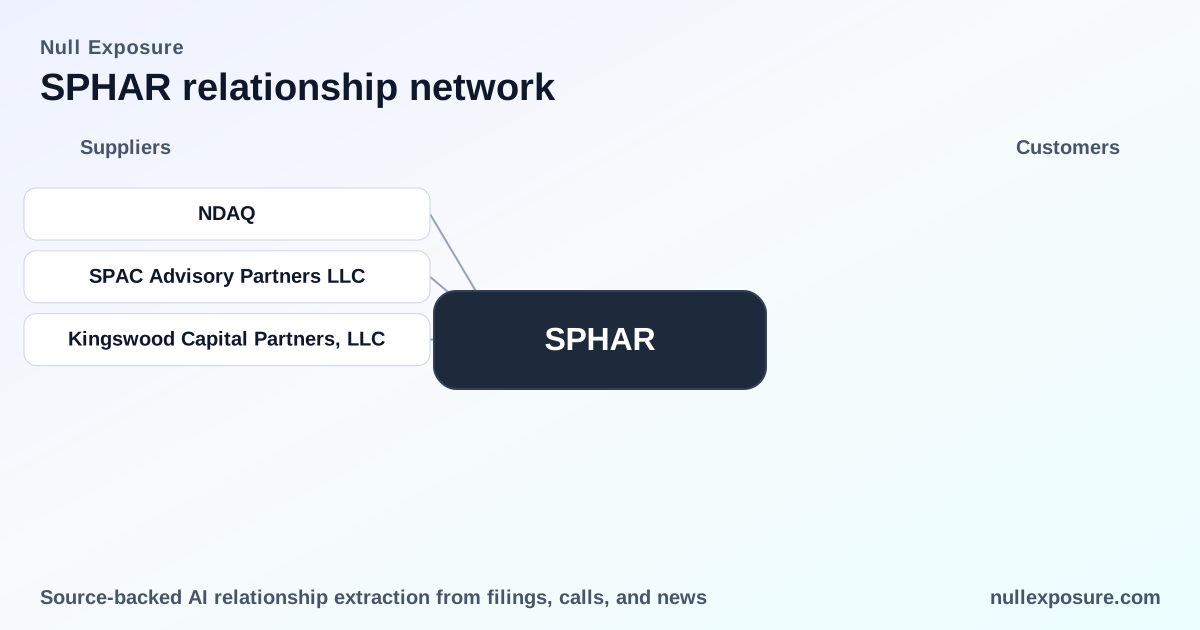
SPHAR supplier map: what the IPO stack tells investors about exposure and execution risk
SPHAR operates as a capital-raising vehicle within the SPAC ecosystem, monetizing through market access and the transactional economics that surround an initial public offering: listing fees, underwriting and bookrunning arrangements, and sponsor-led distribution of units. Its commercial model is execution-dependent—revenue and strategic optionality flow from the quality of exchange placement and the strength of underwriting partners. For investors and operators evaluating supplier relationships, supplier choice defines distribution reach, fundraising success, and downstream deal velocity. For a concise supplier-risk briefing, visit https://nullexposure.com/.
The immediate commercial reality: IPO mechanics drive supplier selection
Shepherd Ave Capital’s pricing of a $75 million IPO and subsequent unit listing is the operational event that generates the supplier footprint under review. Listing on a major exchange and hiring a sole bookrunner concentrates execution risk but accelerates capital formation if the bookrunner has distribution heft. This structure defines short-term revenue potential and the path toward a business combination.
- The exchange relationship is a strategic gate: it delivers liquidity, legitimacy, and ongoing listing obligations that translate directly into ongoing costs and compliance demands.
- The bookrunner relationship is tactical and high-leverage: underwriting terms, control of allocation, and aftermarket support all influence both proceeds raised and secondary market performance.
- Parent-firm connections behind underwriting partners shape counterparty depth and referral pipelines for downstream deal sourcing.
For deeper supplier analytics and tracking, see https://nullexposure.com/.
Who’s on the roster and what that means for SPHAR
Nasdaq Global Market LLC
- Shepherd Ave Capital’s units are slated to trade on the Nasdaq Global Market under the ticker symbol “SPHAU,” giving the transaction immediate access to a deep U.S. equity marketplace and investor base. According to a GlobeNewswire press release carried by The Manila Times (Dec 5, 2024), Nasdaq will host the listed units and provide the market infrastructure that underpins liquidity and secondary trading.
SPAC Advisory Partners LLC
- SPAC Advisory Partners LLC is acting as the sole book-running manager for the IPO, concentrating underwriting responsibility and allocation control in a single manager. The GlobeNewswire release reported by The Manila Times (Dec 5, 2024) identifies SAP as the exclusive bookrunner, a role that determines initial pricing, investor placement, and the tenor of aftermarket support.
Kingswood Capital Partners, LLC
- SPAC Advisory Partners operates as a division of Kingswood Capital Partners, LLC, meaning the underwriting capability sits within a broader capital markets platform with institutional distribution capacity. The same GlobeNewswire/Manila Times release (Dec 5, 2024) links SAP directly to Kingswood, indicating parent-level backing for the bookrunning mandate.
What these relationships reveal about operating posture and risk profile
Concentration of execution: The use of a single bookrunner concentrates underwriting and allocation risk. When one firm controls the book, underwriting economics, placement strategy, and investor outreach are tightly coupled to that partner’s capabilities and balance sheet.
Exchange criticality: Listing on Nasdaq is a critical operational dependency—Nasdaq provides the primary venue for liquidity, and Nasdaq’s listing standards generate ongoing compliance and disclosure obligations that shape operating costs and governance.
Parent firm depth: The presence of Kingswood as the parent to the bookrunning division supplies additional distribution depth and institutional relationships that are typically valuable for media, syndication, and later-stage business-combination introductions.
Company-level signal from constraints: There are no supplier constraints explicitly recorded for SPHAR in the available material. That absence is itself a company-level signal: either supplier constraints are routine and undisclosed, or SPHAR’s supplier footprint is nascent and narrowly scoped to the IPO stack. Investors should treat the lack of recorded constraints as an information gap to be closed via direct diligence.
Practical consequences for portfolio and operational decisions
- Liquidity and valuation sensitivity: Nasdaq listing ensures access to a wide investor base, but IPO pricing and aftermarket support—controlled by the sole bookrunner—will materially influence short-term valuation and the feasibility of pursuing attractive business-combination targets.
- Counterparty due diligence: With underwriting concentrated in a single firm and that firm nested under Kingswood, investors should evaluate the bookrunner’s syndication track record, conflict-of-interest policies, and balance-sheet capacity to support follow-on transactions.
- Contracting posture and maturity: The supplier relationships reflect a transaction-stage organization rather than a mature operating company vendor map; contractual terms are likely standard IPO engagements rather than bespoke, long-term supplier commitments. That implies a window of heightened counterparty risk during the offering period.
Quick due-diligence checklist for operators and investors
- Confirm the timing and terms of the Nasdaq listing and observe initial aftermarket trading to assess liquidity.
- Review the bookrunner’s placement history on comparable SPACs and their success rate in syndicating deals to institutional investors.
- Verify the parent firm’s financial health and balance-sheet capacity, given Kingswood’s role as the corporate sponsor for the bookrunning division.
- Request any undisclosed supplier agreements or side letters that could alter economic or governance outcomes post-IPO.
Final takeaways and recommended next steps
- Listing on Nasdaq gives SPHAR reach; sole-bookrunning by SPAC Advisory Partners concentrates execution. Kingswood provides institutional depth but centralizes underwriting control. (GlobeNewswire via The Manila Times, Dec 5, 2024.)
- Absence of recorded constraints is a company-level signal that requires active diligence—treat it as an information gap rather than evidence of low risk.
For a structured supplier-risk brief and to monitor evolving counterparties around SPHAR, visit https://nullexposure.com/. To commission a tailored supplier exposure report, start at https://nullexposure.com/ and secure the vendor analysis that informs investment decisions.