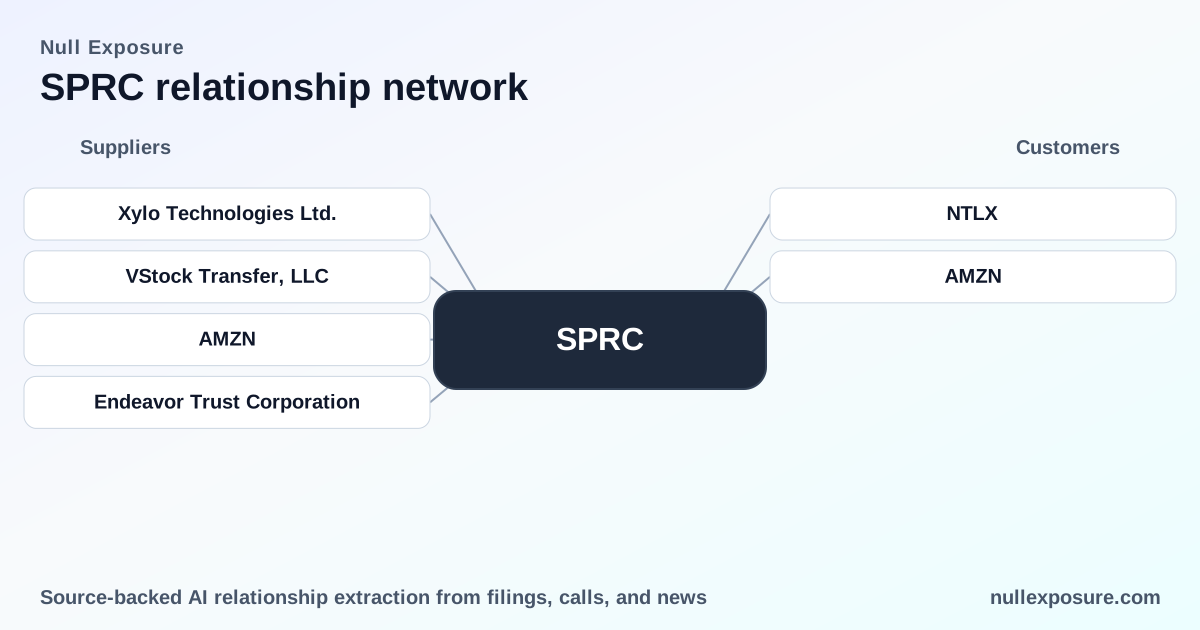
SciSparc (SPRC) — Supplier relationships and strategic implications for investors
SciSparc Ltd. operates as a clinical‑stage pharmaceutical company focused on developing cannabinoid‑based therapeutics and commercial opportunities through its majority‑owned subsidiary NeuroThera Labs Inc.; the company monetizes through drug development milestones and the commercialization or licensing of intellectual property and consumer health products (including marketplace sales). Recent transactions show SciSparc expanding into medical device IP while preserving consumer revenue channels, creating a hybrid model that blends clinical R&D with near‑term commercial levers. For an investor primer and ongoing supplier-exposure tracking, visit https://nullexposure.com/.
Overview: how the supplier network feeds the business model SciSparc’s supplier and counterparty relationships fall into two visible clusters: intellectual property acquisitions and corporate service providers/market channels. The acquisition of device IP (the MUSE™ endoscopic system) broadens the company’s technological scope beyond cannabinoid therapeutics into medical devices, while relationships with platform channels and transfer agents support liquidity, corporate actions and consumer product distribution. These relationships affect contracting posture (IP purchases and escrow arrangements), concentration (single strategic IP seller), criticality (ownership of IP that enables immediate commercialization), and maturity (newly acquired assets with short commercialization timelines versus legacy corporate services). For deeper supplier mapping and alerts, see https://nullexposure.com/.
Key financial context that frames supplier risk SciSparc is a small‑cap issuer listed on NASDAQ with modest trailing revenue (approximately $1.3M TTM) and negative operating margins, indicating a reliance on non‑organic value creation such as IP acquisitions, licensing, and consumer product sales to bridge to profitable scale. Supplier and IP counterparties are therefore strategically material to near‑term revenue generation and cash‑flow signaling rather than ancillary administrative relationships.
What we found: every named relationship and why it matters Below are the supplier and counterparty relationships surfaced in public reporting. Each is summarized in plain English with the cited source.
-
Xylo Technologies Ltd. SciSparc executed a sequence of transactions to acquire patents, trademarks and related IP tied to the MUSE™ endoscopic system from Xylo, progressing from a binding term sheet in late 2025 to a completed closing and transfer of the IP in January 2026; the IP package is positioned for immediate commercialization by SciSparc/NeuroThera. This acquisition represents a strategic shift into reusable/single‑use endoscopic devices and complements SciSparc’s clinical pipeline by adding a device commercialization pathway (GlobeNewswire press release, Jan 26, 2026; earlier term‑sheet notices in late 2025 published via QuiverQuant and news outlets).
-
VStock Transfer, LLC VStock Transfer is listed as SciSparc’s transfer agent and the point of contact for shareholder communications related to a 1‑for‑9 reverse share split announced in March 2026, which affects share exchange logistics and investor record‑keeping. The transfer agent relationship is operationally critical for executing corporate actions and maintaining shareholder trust during capital structure changes (GlobeNewswire press release, Mar 2, 2026).
-
Amazon.com (marketplace channel) NeuroThera Labs Inc., the majority‑owned subsidiary of SciSparc, operates a revenue channel selling hemp seed oil–based products on the Amazon.com Marketplace, providing an active consumer revenue stream that supplements R&D activities and possibly mitigates short‑term funding pressure. This is described in corporate communications tied to Nasdaq notification filings concerning minimum stockholders’ equity (Sahm Capital coverage citing the company, Jan 13, 2026).
-
Endeavor Trust Corporation At closing of a transaction disclosed in 2025, SciSparc entered an escrow agreement naming Endeavor Trust Corporation as escrow agent, placing certain transaction securities into escrow under TSXV Policy 5.4; this formal escrow arrangement governs resale restrictions and reflects a structured capital‑markets compliance posture. The escrow agent role constrains immediate liquidity of issued securities and imposes resale mechanics that investors should consider (SEC filing posted on EDGAR, 2025).
What these relationships collectively signal to investors
- Strategic diversification into device IP: The Xylo acquisition is the most consequential supplier event — it converts SciSparc from a narrowly defined cannabinoid‑therapeutics developer into an IP holder with a device commercial pathway that could produce earlier revenue if commercialization proceeds as described (GlobeNewswire and multiple press items, Jan–Mar 2026).
- Operational and corporate housekeeping: The VStock and Endeavor arrangements reflect standard corporate infrastructure for transfers, reverse splits, and escrowed securities; they do not create technical business upside but are critical for governance, investor relations, and capital structure execution (GlobeNewswire, SEC filing, 2025–2026).
- Channel diversification reduces near‑term liquidity pressure: Marketplace sales through Amazon provide tangible consumer revenue lines managed by NeuroThera, improving cash‑flow optionality while R&D and device commercialization progress (company disclosures cited in Sahm Capital coverage, Jan 2026).
Risk and contracting posture — concise, investor‑oriented constraints
- Concentration and single‑seller dependency: The Xylo transaction is material and concentrated; a single IP acquisition supplier created a new business leg, so integration and IP commercialization execution are high‑impact outcomes for valuation.
- Escrow and resale restrictions: The escrow with Endeavor Trust places near‑term limitations on the liquidity of transaction securities, which can impact trading supply and secondary market dynamics until escrow conditions lapse (SEC filing, 2025).
- Corporate action operational risk: The 1‑for‑9 reverse split handled via VStock creates a short window of execution‑risk for shareholders and potential float compression; investor communications and transfer‑agent responsiveness matter.
- Channel maturity asymmetry: Amazon sales are an existing, mature channel for consumer products, while the MUSE™ IP is a newly acquired asset requiring commercialization investments; maturity mismatch implies different timelines for revenue realization.
No explicit supplier constraints were listed in the source material as discrete constraint lines; absence of constraints in the public relationship dataset should be read as a company‑level signal rather than as evidence of zero operational risk.
Mid‑report action item For investors modeling scenario outcomes — regulatory path for device commercialization, potential licensing revenues from MUSE™, and the cadence of escrow releases — track SciSparc’s SEC filings and commercialization updates. For subscription monitoring and supplier risk scoring, consult https://nullexposure.com/.
Bottom line and tactical takeaways
- Xylo’s IP acquisition is a game‑changer for SciSparc’s near‑term commercial strategy; it materially changes strategic optionality.
- Operational arrangements with VStock and Endeavor are governance‑critical but not revenue‑generating; Amazon sales provide a modest but real consumer revenue buffer.
- Investors should prioritize updates on commercialization timelines for the MUSE™ assets, escrow release schedules, and consumer‑channel performance as primary drivers of re‑rating.
Final call to action To track future supplier disclosures, IP monetization milestones, and escrow/resale developments for SciSparc, go to https://nullexposure.com/ for continuous supplier exposure monitoring and tailored alerts. For a comparative view of peer supplier strategies in clinical and device transitions, start your analysis at https://nullexposure.com/.