Spero Therapeutics (SPRO): supplier posture, competitive mentions, and what investors should price in
Spero Therapeutics is a clinical-stage biopharmaceutical company that develops treatments for multidrug-resistant Gram-negative infections and certain rare disease targets. The company monetizes through licensing, strategic collaborations and, ultimately, product commercialization once clinical programs reach approval—while today its balance sheet and valuation reflect biopharma-stage economics: negative margins, limited revenue, and a heavy reliance on partners and third‑party manufacturers to deliver clinical and commercial supply. Investors evaluating SPRO as a supplier counterparty or supplier-dependent investment must weigh its outsourced manufacturing model and sparse supplier base as primary operational risk factors. For more background on supplier-level intelligence, visit https://nullexposure.com/.
How Spero runs its supply chain and why it matters to investors
Spero operates with an explicit outsourcing-first posture: it does not own manufacturing plants and contracts out virtually all drug substance and finished product production to third-party contract manufacturing organizations (CMOs). According to Spero’s 2024 Form 10‑K, the company “does not own or operate manufacturing facilities” and “relies on a limited number of third‑party contract manufacturers” for raw materials, drug substance, and finished product for preclinical and clinical needs. That contracting posture creates concentrated counterparty risk, operational dependency on a small set of suppliers, and geographic exposure tied to Asia-based manufacturers.
- Concentration: The company discloses a limited supplier base, including two suppliers for tebipenem HBr’s active pharmaceutical ingredient; that is a material dependency that raises single‑point failure risk for key programs.
- Geographic exposure: Third‑party manufacturers are based in Asia, and Spero reports these vendors have been subject to supply‑chain disruptions—an explicit geographic risk vector.
- Outsourced maturity: Spero’s operating model reflects a typical clinical-stage biotech cadence: externalize manufacturing and development services to CMOs and CROs, which compresses capital requirements but increases vendor management and continuity risk.
These characteristics should influence procurement diligence, contract structuring, and any premium finance underwriting for counterparties tied to SPRO’s supply chain. Learn more about how we map supplier risk at https://nullexposure.com/.
Contracting posture and operational implications
Spero’s reliance on CMOs and contractors for preclinical and clinical supplies means its primary levers are contract terms, inventory strategy, and redundant supplier qualification. The 10‑K emphasizes costs tied to consultants, CMOs and CROs, and states the company “expects to continue” outsourcing for any future commercialization. For investors, that implies commercial ramp scenarios will require robust supplier qualification and scalable manufacturing agreements long before material revenue accrues.
What the company’s documents and coverage list as related firms
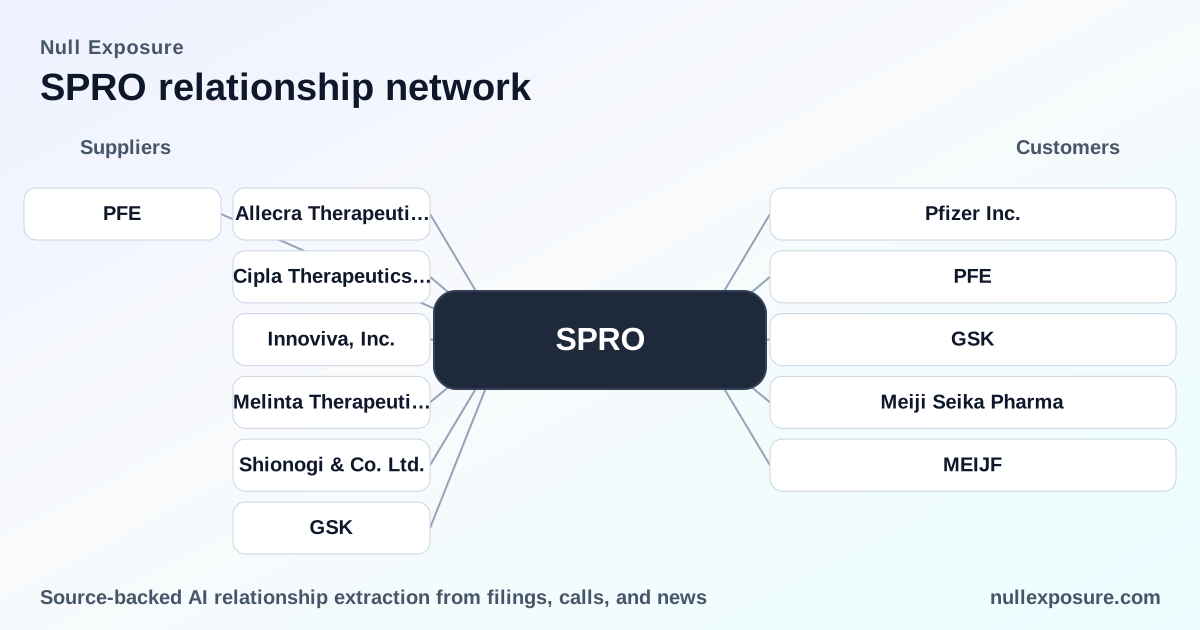
Below I cover every relationship extracted from Spero’s public materials and related press coverage in the provided results. Each entry is a plain‑English investor note with the source cited.
-
Allecra Therapeutics — Spero’s 2024 Form 10‑K cites Exblifep (cefepime/enmetazobactam) from Allecra as one of several IV treatments for Gram‑negative infections that are positioned against first‑line resistance. This mention situates Allecra’s product as part of the broader competitive landscape for Spero’s IV and Gram‑negative programs (Spero 2024 Form 10‑K, FY2024).
-
Cipla Therapeutics, Inc. — The 10‑K lists Zemdri (plazomicin) from Cipla as another IV‑administered option for resistant Gram‑negative infections, noting it among marketed comparators that inform Spero’s competitive assessment (Spero 2024 Form 10‑K, FY2024).
-
Innoviva, Inc. — Spero’s 2024 Form 10‑K names Xerava (eravacycline) from Innoviva as part of the set of IV products used for infections resistant to first‑line therapy, framing Innoviva’s offering as a market comparator (Spero 2024 Form 10‑K, FY2024).
-
Melinta Therapeutics, Inc. — The company’s 10‑K references Vabomere (meropenem‑vaborbactam) from Melinta in a list of IV options for Gram‑negative resistant infections, indicating Melinta’s product is a relevant clinical and commercial competitor in Spero’s analysis (Spero 2024 Form 10‑K, FY2024).
-
Shionogi & Co. Ltd. — Fetroja (cefiderocol) from Shionogi is cited in Spero’s 10‑K among IV‑administered products addressing drug‑resistant Gram‑negative infections, and is therefore positioned as a therapeutic alternative that investors should consider when modeling addressable market and competitive pricing (Spero 2024 Form 10‑K, FY2024).
-
GSK — A CityBiz article covering Spero’s leadership change (March 2026) notes the closing of Spero’s collaboration with GSK to advance tebipenem HBr as a strategic milestone and part of Spero’s growth strategy; this historical collaboration is relevant for revenue‑recognition and licensing precedent in modeling partnership value (CityBiz, March 2026).
-
Pfizer Inc. — The same CityBiz piece highlights that Spero secured strategic investments and licensing agreements involving Pfizer during the tenure of its management team, signaling prior transactional relationships that underpin Spero’s licensing and alliance capabilities (CityBiz, March 2026).
What the constraints signal about operational risk
Spero’s public constraints produce actionable, company‑level signals for investors and operators:
- APAC geography exposure is material. The 10‑K explicitly states third‑party CMOs are based in Asia and have faced disruptions, creating geopolitical and logistics risk that can affect clinical timelines and cost.
- Critical supplier concentration exists. Spero discloses a limited number of CMOs and specifically two API suppliers for tebipenem HBr, which establishes a potential single‑point failure if a supplier interrupts supply.
- Outsourced manufacturing is the standing operational model. The company confirms it does not plan to develop in‑house manufacturing in the foreseeable future, meaning operational resilience depends on managing multiple vendor relationships and contractual protections.
- R&D and clinical costs are intensely externalized. Direct R&D expense line items are dominated by fees to consultants, CMOs and CROs, indicating that cash burn and program progress are tightly coupled to third‑party performance.
These are not theoretical issues; they are structural constraints that investors must price into timelines, financing needs, and underwriting of supplier exposures.
How investors and operators should act
For investors underwriting supplier risk or operators negotiating with Spero, prioritize contract clauses that address supply redundancy, inventory build‑outs, and IP/continuity protections. Stress‑test models for a six‑to‑12‑month manufacturing disruption in APAC and require evidence of qualified backup CMOs or technology transfer plans. For strategic diligence, request current supply agreements, inventory positions tied to pivotal trials, and contingency timelines from Spero’s management.
If you need a structured supplier risk brief or counterparty screening on Spero’s manufacturing footprint, start here: https://nullexposure.com/.
Bottom line: Spero is a classic clinical‑stage biotech that trades operational capital efficiency for supplier dependency risk. That tradeoff compresses near‑term capital needs but elevates counterparty and geographic supply risk—factors that must be central to any investment or procurement decision involving SPRO. For deeper supplier mappings and to commission tailored diligence, visit https://nullexposure.com/.