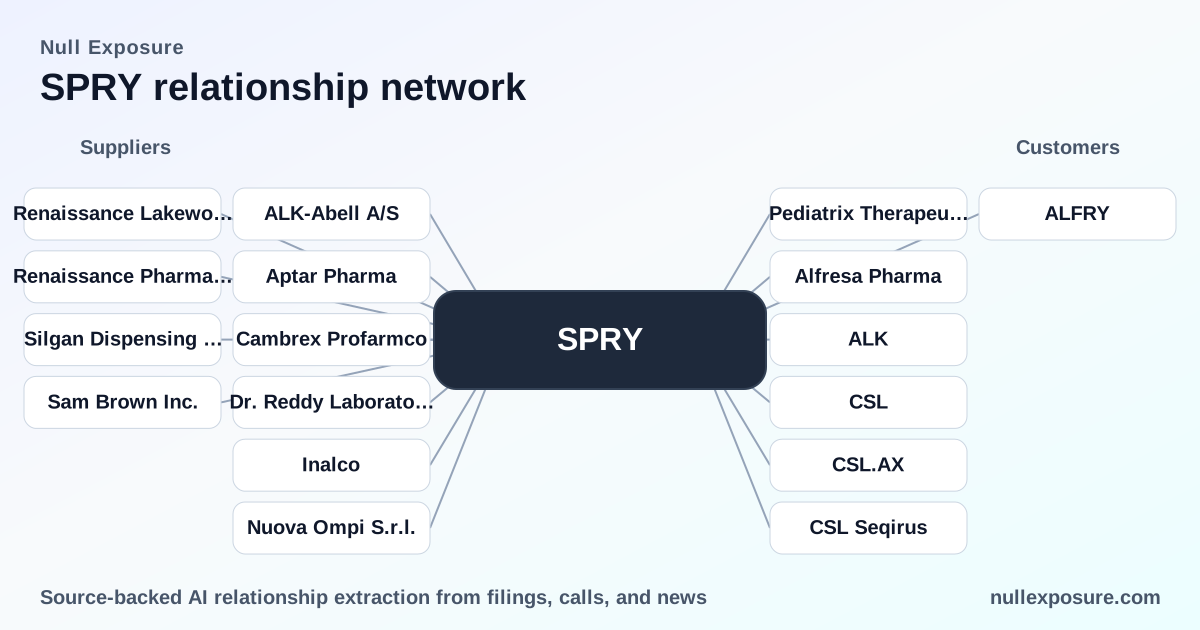
ARS Pharmaceuticals (SPRY): Supplier Map, Risk Profile, and Operational Constraints
ARS Pharmaceuticals commercializes neffy, an intranasal epinephrine product, by outsourcing core manufacturing, packaging and device supply to third parties and monetizing through product sales and market adoption of its proprietary intranasal formulation and delivery system. The company does not own manufacturing assets; its revenue model depends on successful third‑party scale‑up, durable supply agreements, and distribution execution. Institutional ownership is high and analysts are bullish on upside, but the supplier posture drives concentrated operational risk that investors must price explicitly. For a concise supplier-risk dashboard and ongoing monitoring, visit https://nullexposure.com/.
How ARS organizes manufacturing and why that matters to investors
ARS has structured an asset‑light operating model: research, formulation and regulatory strategy are internal, while API sourcing, device components, vial supply, drug product manufacture and logistics are outsourced. This contracting posture reduces capital intensity and accelerates time‑to‑market, but creates concentration and criticality exposures because a small number of suppliers cover multiple critical inputs and long‑dated contractual commitments.
- Contracting posture: ARS relies on long‑term supply and manufacturing agreements rather than in‑house capacity, with at least one supplier agreement explicitly structured to run through 2035. (ARS FY2024 Form 10‑K.)
- Concentration and criticality: The company states it “relies completely on third parties” for manufacture and warehousing of domestic and international supply, which it identifies as material to commercialization. (ARS FY2024 Form 10‑K.)
- Maturity and spend: ARS reported $64.9 million of unconditional purchase obligations for raw materials as of Dec 31, 2024, indicating mid‑to‑high single-digit to low‑hundreds of millions annual supplier exposure during commercialization phases. (ARS FY2024 Form 10‑K.)
- Geography: Primary drug product production is concentrated in Lakewood, New Jersey, for U.S. supply, creating a regional clustering of manufacturing risk. (ARS FY2024 Form 10‑K.)
These characteristics produce a clear investor checklist: evaluate contract lengths and termination terms, assess single‑source components (vials, device), and confirm API redundancy and qualified second sources.
For an operational risk scorecard and supplier monitoring, see https://nullexposure.com/.
Supplier relationships you need to know (each cited)
Nuova Ompi S.r.l.
ARS entered a supply agreement with Nuova Ompi in October 2024 for glass microvials to support manufacture and commercialization of neffy; the Ompi Agreement runs through December 31, 2035 and includes standard termination and cure provisions. According to ARS’ FY2024 Form 10‑K, Ompi is the primary vial supplier and the contract is long‑term with an explicit 2035 expiry.
Renaissance Lakewood, LLC
Renaissance Lakewood is ARS’s primary contract manufacturer for neffy nasal unit dose sprays under a manufacturing agreement first executed September 2020 and amended in 2023 and 2024; Renaissance has been actively involved in both clinical and commercial scale manufacturing. ARS’ FY2024 Form 10‑K identifies Renaissance as the principal drug‑product manufacturer based in Lakewood, New Jersey, linking geography and manufacturing concentration.
Renaissance Pharmaceuticals, Inc.
Renaissance Pharmaceuticals performs manufacturing support and final packaging for neffy and ARS’s intranasal technology candidates; ARS describes Renaissance Pharma as an active partner in product manufacture and commercialization workstreams. The FY2024 10‑K cites Renaissance Pharmaceuticals, Inc. as a significant manufacturing collaborator for drug product manufacture and final packaging.
Cambrex Profarmco
ARS has a commercial supply agreement with Cambrex Profarmco to serve as one of its commercial sources for epinephrine API, and Cambrex holds a U.S. drug master file for epinephrine produced at its Italian facility. The FY2024 Form 10‑K states Cambrex’s manufacturing process is fully validated and that ARS intends to use Cambrex as a commercial API source.
Aptar Pharma
Aptar Pharma supplies one of the unit‑dose sprayer devices used to deliver neffy product, providing an externally sourced device component critical to the user experience and dosing consistency. ARS’ FY2024 10‑K specifically names Aptar as a manufacturer of the unit‑dose sprayer used in neffy.
Silgan Dispensing Systems
Silgan is the co‑supplier of the unit‑dose sprayer device alongside Aptar and provides critical dispensing hardware for neffy’s delivery system. The FY2024 10‑K lists Silgan Dispensing Systems as a device supplier for the unit‑dose sprayer used in neffy.
Dr. Reddy Laboratories
Dr. Reddy supplies dodecyl maltoside (Intravail) under ARS’s license agreement with Aegis Therapeutics, as one of two manufacturers sourcing this excipient. ARS’ FY2024 Form 10‑K notes that Dr. Reddy (India) is a manufacturer for Intravail used in ARS formulations.
Inalco
Inalco, based in Italy, is named as the second manufacturer of dodecyl maltoside (Intravail) alongside Dr. Reddy under ARS’s licensing arrangement with Aegis Therapeutics. The FY2024 10‑K identifies Inalco (Italy) as the other source for this excipient.
ALK‑Abell A/S
ARS disclosed a supply agreement dated November 9, 2024 with ALK‑Abell A/S in its FY2024 filings; the agreement is listed among the company’s supply contracts supporting commercialization. The FY2024 Form 10‑K references a Supply Agreement with ALK‑Abell A/S executed in November 2024.
Sam Brown Inc.
Sam Brown Inc. is listed as ARS’s media contact via a GlobeNewswire press release about investor conferences, indicating an external public relations/IR engagement rather than a manufacturing or raw‑material relationship. A GlobeNewswire release (Nov 26, 2025) cites Sam Brown Inc. as media contact for ARS participation in a Piper Sandler healthcare conference.
Synthesis: risks that should be priced and monitored
Concentration risk is explicit: ARS explicitly relies on a small set of CMOs and component suppliers for vial supply, device assemblies and API. Investors should view revenue upside through the lens of supply resilience: a manufacturing disruption in Lakewood, a device supplier failure, or a critical excipient shortage would directly impair commercialization. The company’s disclosure of $64.9 million in unconditional purchase obligations underscores material spend committed to suppliers as ARS transitions to commercial scale.
Contract tenor reduces some renegotiation risk: the Nuova Ompi agreement runs through 2035, evidencing long‑term procurement commitments that protect supply continuity while creating lock‑in and dependency on counterparties’ operational health. (ARS FY2024 Form 10‑K.)
Mitigants to monitor: validated API sources (Cambrex’s US DMF and validated process), multiple suppliers for critical excipients (Dr. Reddy and Inalco), and multiple device suppliers (Aptar and Silgan) reduce single‑point failures, but do not eliminate site‑level or logistics concentration in New Jersey.
For active supplier tracking and impact modeling, check our monitoring tools at https://nullexposure.com/.
Investment takeaway and next steps
ARS’s asset‑light model accelerates capital efficiency and leverages specialist manufacturers, but material supplier concentration and long‑term purchase commitments create execution risk that must be valued into the stock. Investors should prioritize diligence on: (1) the operational health and audit history of Renaissance Lakewood; (2) Ompi’s capacity and contractual protections through 2035; (3) API redundancy beyond Cambrex; and (4) supply‑chain contingency planning for device and excipient suppliers.
If you are evaluating SPRY for portfolio inclusion or counterparty exposure, conduct targeted supplier due diligence using the relationships and contract details summarized above, and subscribe for continuous supplier-event alerts at https://nullexposure.com/.