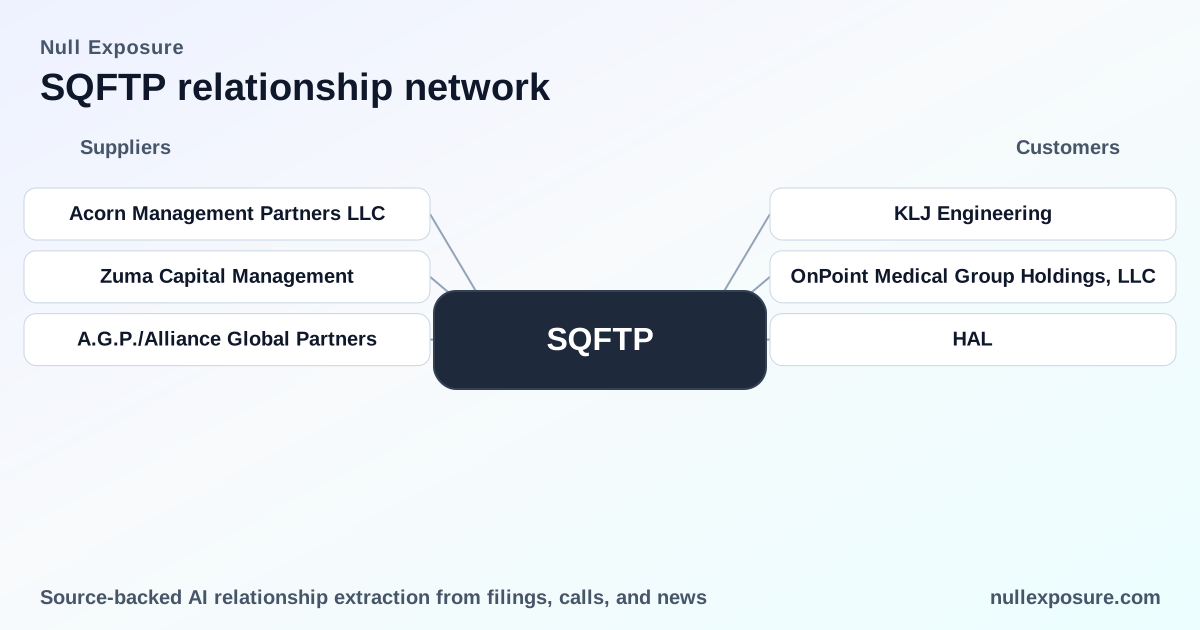
Presidio Property Trust (SQFTP) — supplier relationships that move the needle
Presidio Property Trust is an internally managed, diversified REIT that monetizes its asset base through property-level cash flows and leverage structures — principally mortgage financing on individual properties and capital market transactions to fund and recycle the portfolio. The preferred security SQFTP captures capital-structure positioning; supplier relationships disclosed in filings and press releases reveal how Presidio sources capital, runs portfolio operations, and outsources non-core IT and management functions, which directly affect liquidity, cost of capital, and operational resilience. For a consolidated view of counterparties and risk exposure, see https://nullexposure.com/.
Why supplier relationships matter for a REIT with an internally managed model
Presidio’s internally managed structure concentrates operational control and increases the importance of a small set of external advisors and service providers. Capital-raising partners, asset managers and managed IT services are not peripheral — they are operational levers that affect share-level dilution, debt pacing and day-to-day uptime. Investors evaluating SQFTP should treat these suppliers as extensions of corporate capability rather than incidental vendors.
Visit https://nullexposure.com/ for vendor exposure profiles and relationship tracing.
Who Presidio is working with (each relationship covered)
The disclosed supplier relationships in recent public materials are limited but strategically relevant. Below are plain-English summaries of every relationship found in the public results.
Acorn Management Partners LLC
Presidio engaged Acorn Management Partners LLC in early 2026 to provide advisory or management services, a relationship announced in a company press release. According to the Globe and Mail press posting (March 10, 2026), the engagement signals Presidio’s use of external management expertise for specified asset or corporate tasks.
Source: press release reported on The Globe and Mail, March 10, 2026.
Zuma Capital Management
Presidio’s Q3 earnings disclosure itemizes costs associated with Zuma Capital Management (reported for FY2025), showing an expense line of approximately $469,552 tied to Zuma. This indicates a fee-bearing engagement with an asset or capital advisor whose activities create measurable operating expense for the REIT.
Source: earnings announcement syndicated via AccessNewswire / Newswire (FY2025 disclosures, reported March 2026).
A.G.P. / Alliance Global Partners
A.G.P./Alliance Global Partners acted as the sole placement agent for a registered direct offering Presidio priced in mid‑2025, demonstrating reliance on an external investment bank for equity placement and capital markets execution. This placement-agent role materially affects capital access and the terms under which equity is issued.
Source: GlobeNewswire press release, July 14, 2025.
What the disclosed constraints tell us about Presidio’s operating model
The company-level constraint excerpts in filings create a consistent portrait of Presidio’s contracting posture and vendor governance.
-
Long-term debt posture: Presidio states it uses mortgage loans with typical terms of five to ten years to maximize stockholder return. That signals a portfolio financing strategy built on medium-term lender relationships and refinancing cycles that create predictable interest-rate and maturity risk windows. This is a company-level operating design rather than a single‑vendor characteristic.
-
SaaS-first IT governance: The firm operates almost exclusively in a SaaS IT environment and requires SOC 1/SOC 2 documentation and quarterly user access reviews from SaaS vendors. This is a signal of mature vendor security controls and formalized third-party risk management at the company level — a positive for operational continuity and diligence when selecting critical providers.
-
Third-party managed services in security and infrastructure: Presidio engages a managed service provider for server, network and email security with continuous monitoring and industry-leading antivirus software, which indicates outsourced infrastructure operations and a reliance on a small set of service providers to preserve uptime and compliance.
-
Spend profile is modest-to-midscale: Disclosures include repurchases and small-dollar preferred-stock activity that lead to inferred spend bands between under $100k and $100k–$1m for specific activities and programs. As a company-level signal, this suggests supplier spend is concentrated and generally limited in scale, reducing the chance of very large single-supplier financial exposure but increasing the relative importance of each vendor relationship.
Together these constraints produce a predictable operating footprint: medium-term financing commitments, disciplined vendor security requirements, outsourced operational execution, and focused spend.
Risk and opportunity map for investors
Presidio’s supplier mix creates clear implications for investors:
-
Capital markets dependency is a material risk/opportunity. The appointment of A.G.P./Alliance Global Partners as sole placement agent shows Presidio relies on third-party execution to access equity — this affects dilution timing and pricing. A successful placement relationship improves liquidity and reduces funding stress; a breakdown would tighten capital access.
-
Fee-bearing advisory relationships increase fixed operating cost. Costs tied to Zuma Capital Management are non-trivial for a company of Presidio’s size and can compress earnings if asset-management fees or advisory costs rise relative to portfolio revenue.
-
Operational outsourcing reduces internal run-rate but concentrates operational criticality. Engaging a managed service provider and requiring SOC reports reduces internal headcount needs while placing continuity risk with a smaller set of vendors; this is manageable if governance stays rigorous.
-
Concentration upside — agile partner changes can improve outcomes. Because spend and partnerships are not massive in scale, strategic swaps (new placement agents or asset managers) can materially improve capital terms or cost structure without multi-year lockups.
Key takeaway: supplier relationships are strategically material but not overly dispersed — they can swing liquidity and margin outcomes meaningfully.
For forward-looking relationship analytics and to track changes in Presidio’s partner roster, go to https://nullexposure.com/.
Tactical investor steps and monitoring checklist
- Track future press releases and earnings notes for additional placement-agent assignments or changed fee lines; those items inform near-term dilution risk and capital pacing.
- Prioritize verification of SOC reports and MSP contracts when assessing operational continuity and cyber risk exposure.
- Monitor fee trends tied to external managers (e.g., Zuma) across quarterly filings to assess margin pressure.
Bottom line and recommended next moves
Presidio’s supplier disclosures show a targeted, capital-market–centric set of relationships: placement agents for equity raises, external capital or asset managers with fee exposure, and outsourced IT/security services governed by SOC requirements. These relationships are operational levers that drive financing flexibility, recurring expense structure, and operational resilience.
For a consolidated intelligence feed and ongoing monitoring of counterparty exposures, visit https://nullexposure.com/. Review filings, press releases and vendor governance artifacts quarterly to detect shifts in placement-agent reliance or increases in advisor fees that change the investment thesis.