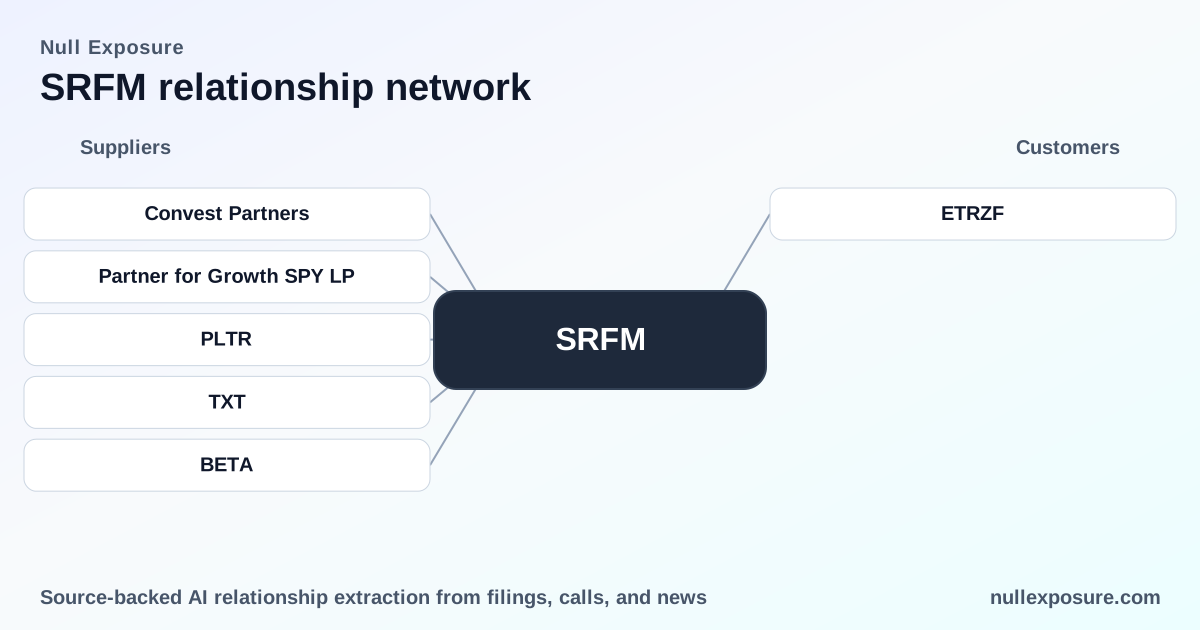
Surf Air Mobility (SRFM): Supplier Map and What It Means for Investors
Surf Air Mobility operates as a hybrid business: an airline operator scaling regional services while simultaneously commercializing SurfOS, an AI-enabled operating system for private and regional aviation. The company monetizes through ticketed airline operations, aircraft sales/leasing and — critically — software licensing and services tied to SurfOS, plus strategic financings that convert capital into product development and partner alignment. For investors, the supplier relationships behind SurfOS, fleet electrification and financing are direct drivers of revenue optionality and execution risk. Learn more about how we track supplier exposure at https://nullexposure.com/.
How these partnerships move the earnings needle
Surf Air’s narrative is built on three linked plays: operate regional flights profitably, roll out electrified Caravans with OEM partners, and sell SurfOS as a high-margin platform. That makes suppliers not peripheral vendors but operational and strategic partners. The company uses financing proceeds to retire related-party debt, relies on OEM exclusives for hardware strategy, and leans on an exclusive software partner to power its product roadmap — all of which compress or expand upside depending on execution.
For a deeper supplier risk assessment and historical supplier exposures, visit https://nullexposure.com/.
The full list of supplier relationships investors should know
Below are the supplier and partner relationships mentioned in company disclosures and the media coverage that move Surf Air’s business model.
-
Convest Partners
Management disclosed in the Q3 2025 earnings call that a portion of proceeds will repay $51 million due under a four‑year credit agreement with affiliates of Convest Partners, signaling that Convest is a material bilateral lender to Surf Air’s capital structure (Q3 2025 earnings call, March 2026). -
Partner for Growth SPY LP
The same Q3 2025 earnings call noted the company will use proceeds to pay $8 million outstanding under a secured convertible note with Partner for Growth SPY LP, marking this entity as a financing counterparty tied to convertible debt (Q3 2025 earnings call, March 2026). -
Palantir (Palantir Technologies Inc., PLTR)
Surf Air has an expanded, multi‑year exclusive software partnership with Palantir: Palantir Foundry and AIP power SurfOS, the agreement includes enterprise implementation and go‑to‑market support and was tied to a strategic equity/warrant transaction (coverage across Dec 2025–Mar 2026; Q3 2025 earnings call and multiple news reports January–March 2026). News reports also reference a $100 million strategic transaction and that Surf issued common stock as a prepayment for continued services. -
Textron / Textron Aviation (TXT)
Management stated an exclusive agreement with Textron Aviation for the Cessna Caravan: Surf Air will be the largest passenger operator of the Grand Caravan and the exclusive supplier partner for electric and hybrid-electric powertrains, with Textron providing global marketing, sales and distribution for the electrified aircraft (Q3 2025 earnings call, March 2026). -
BETA Technologies (BETA)
Surf Air announced a collaborative application with the Hawaii Department of Transportation and BETA Technologies to integrate BETA’s ALIA eVTOL into Hawaii’s short‑haul network via Mokulele Airlines operations under the federal eVTOL integration pilot program (news coverage January 2026).
What these relationships imply about Surf Air’s operating model
-
Contracting posture — long-term, strategic deals: Company filings and disclosures show multi‑year licensing and purchase agreements (Palantir licensing terms and a seven‑year aircraft purchase option referenced in filings), indicating Surf Air pursues multi‑year lock‑ins for core software and airframe supply. Where agreements are long-term, Surf Air gains predictability for product rollout but increases execution concentration. The Palantir licensing evidence is explicit; the aircraft purchase options naming TAI (Textron Aviation) are likewise multi‑year company-level signals (company filings and Form 10-Q exhibits, referenced in company disclosures).
-
Concentration and criticality — few, high‑impact partners: Surf Air’s strategy centralizes around a small set of partners: a single exclusive software partner (Palantir), a primary OEM relationship (Textron), and targeted electric aviation partners (BETA). This concentration increases execution risk but, if successful, raises the value of SurfOS and electrified fleet economics.
-
Commercial maturity — software ramp plus hardware pilots: SurfOS is moving from development to commercial rollout (SurfOS slated for 2026 launch and backed by Palantir’s platforms), while electrified and eVTOL programs are in pilot or early commercialization stages (Textron powertrain plans and the Hawaii pilot with BETA). That combination yields near‑term software revenue potential and longer‑term fleet transformation risk.
-
Supplier role mix — manufacturers and service providers: The company signals a dual reliance on manufacturers for powertrains and aircraft and service providers for advisory and operations (company‑level disclosures show plans to outsource production and reference advisory agreements and a broad operator base). This mix increases operational complexity but diversifies avenues to scale SurfOS across operators.
Key investment takeaways — what to watch next
- Execution on Palantir and SurfOS is the single largest catalytic pathway for Surf Air to convert low‑margin airline revenue into recurring software revenue; monitor implementation milestones, go‑to‑market deals, and services prepayments reported in quarterly filings (news coverage Dec 2025–Mar 2026).
- OEM delivery and powertrain sourcing are critical: the electric/hybrid Caravan program requires timely supplier selection and scale to improve unit economics; lack of supplier agreements for certain components is a headline risk documented in company disclosures.
- Capital structure actions matter: use of proceeds to retire related-party debt (Convest; Partner for Growth) reduces near-term financing strain but ties liquidity to successful strategic transactions.
If you want a concise supplier risk scorecard for SRFM, check our analysis at https://nullexposure.com/.
Final thoughts and next steps for investors
Surf Air’s supplier relationships are not back‑office details — they define product capability, capital cadence and the path to higher-margin software revenue. Palantir and Textron are strategic fulcrums; BETA and structured financings are optionality plays. Investors should prioritize monitoring milestone delivery on SurfOS implementation, aircraft electrification supplier commitments, and the company’s quarterly disclosures on how strategic capital is allocated.
For a deeper dive into Surf Air Mobility’s supplier-level exposures and comparable supplier maps across transportation companies, visit https://nullexposure.com/ and explore our supplier intelligence tools.