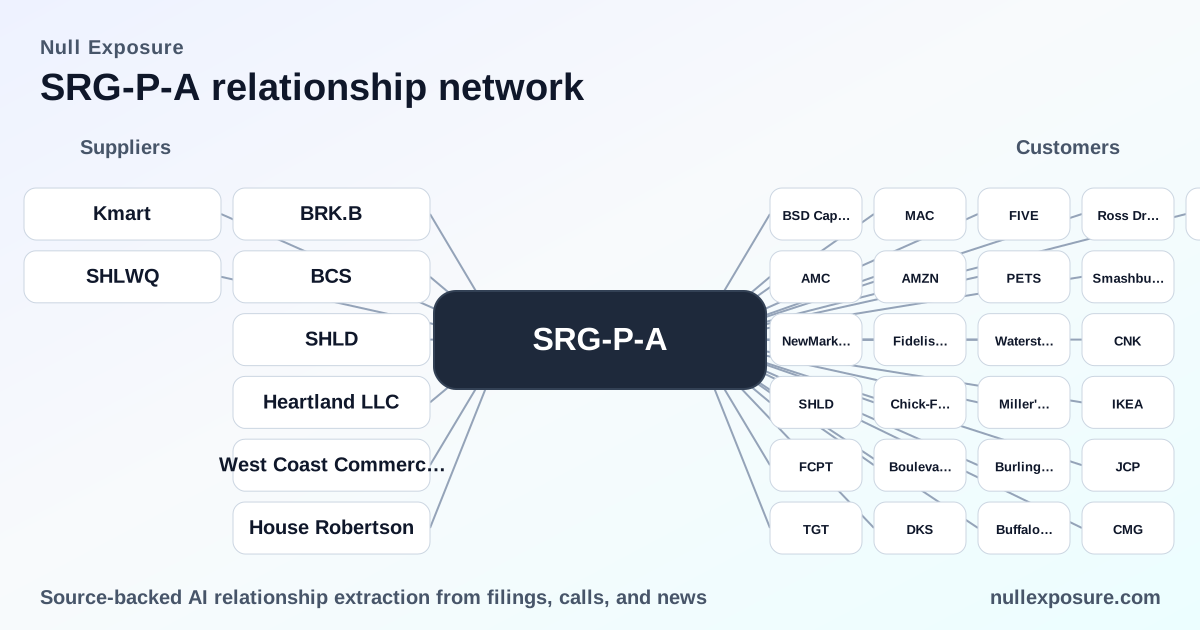
SRG-P-A: Counterparty Map and Strategic Implications for Preferred Share Investors
Thesis — Seritage Growth Properties monetizes through active real-estate repositioning and recurring preferred distributions: the company acquires and repositions retail and mixed‑use assets (many originated from Sears), monetizes through redevelopment, leasing, and selective asset sales, and funds operations with a mix of secured loans and preferred equity like the 7.00% Series A cumulative preferred. For investors and operators assessing SRG-P-A, the relevant questions are counterparty strength, lender relationships, and execution partners that convert redevelopment optionality into durable cash flow. Learn more about how we map supplier risk at NullExposure: https://nullexposure.com/
How Seritage makes money and the supplier posture investors should track
Seritage’s operating model is asset‑heavy, project‑driven and lender‑sensitive. Cash returns to preferred holders depend on predictable property-level income, successful redevelopments, and access to capital markets or bilateral lenders to bridge redevelopment cycles. That profile creates a contracting posture that is transactional and milestone-linked (development and disposition agreements, loan covenants, servicing relationships) rather than long-term supplier dependency on a single vendor. Key business drivers are tenant leasing velocity, execution partners for redevelopment, and the stability of secured lenders.
- Concentration: Historically high exposure to a legacy Sears portfolio that has been progressively monetized; counterparty concentration now shifts toward large lenders and select brokers/advisors.
- Criticality: Lenders and major advisors are critical in the near term where debt maturities and repayment strategies determine cash allocation for preferred distributions.
- Maturity: Relationships are a mix of legacy (Sears originations) and recent commercial engagements (brokers, marketing firms, and lenders), reflecting a company in active transition.
If you want a structured supplier-risk view and model of Seritage’s counterparties, start here: https://nullexposure.com/
Direct relationships and what they mean for SRG-P-A holders
Berkshire Hathaway Life Insurance Company of Nebraska — lender and term‑loan provider
Seritage executed a $130 million voluntary prepayment against a $1.6 billion term loan facility provided by Berkshire Hathaway Life Insurance Company of Nebraska, reducing near‑term leverage on the balance sheet and demonstrating active debt management. According to a Yahoo Finance report in March 2026, Seritage announced the prepayment as part of its capital reduction strategy.
Barclays — strategic sell‑side advisor in corporate sale process
Seritage engaged Barclays to run a sale process for the company, signaling that management pursued a full‑company liquidity path for shareholders and creditors. The Real Deal reported in October 2022 that Barclays was retained to find a buyer for the entire company, reflecting a strategic exit option pursued during the asset‑monetization phase.
Berkshire Hathaway — major creditor with a large secured loan
Money from asset sales was explicitly allocated to pay outstanding liabilities, including a ~$1.4 billion loan from Berkshire Hathaway that was scheduled to mature in June, illustrating the central role of Berkshire as a secured creditor in Seritage’s capital structure. The Real Deal noted this liability in its October 2022 coverage of Seritage’s asset sale approvals.
Sears Holdings — origin of the core asset base and legacy counterparty
Seritage was formed via a spin‑out of retail properties acquired from Sears Holdings, which created the initial asset base that underpins Seritage’s redevelopment pipeline. CBS News documented the 2015 transaction where Seritage acquired about 254 Sears and Kmart properties, establishing the firm’s initial scale and redevelopment optionality.
Heartland LLC — local marketing and advisory role on Overlake site
Heartland LLC is acting as the marketing and investment‑advisory representative for Seritage’s Overlake master‑planned, transit‑oriented site, a signal that Seritage relies on regional specialists to market high‑profile redevelopment parcels. A 425 Business report in 2026 describes Heartland representing Seritage on the Overlake property offering.
West Coast Commercial Realty — retail brokerage adviser for Overlake Seritage
West Coast Commercial Realty is serving as Seritage’s retail‑brokerage adviser, underwriting retail leasing strategy and local tenant placement for the Overlake project, which is central to realizing retail income and placemaking. The 425 Business article (2026) quoted the firm’s president on the retail vision for Overlake Seritage.
Sears Holdings (Mesa redevelopment) — local permitting and redevelopment engagement
Seritage submitted preliminary redevelopment paperwork for a former Sears site in Mesa, reflecting its conversion pipeline from big‑box retail to multifamily or mixed‑use projects. The Mesa planning filing and local coverage were reported by The Mesa Tribune in 2022, indicating ongoing municipal engagement tied to Seritage’s redevelopment strategy.
Sears (corporate identity) — repeated references to the company’s formation history
Multiple local and industry articles reiterate that Seritage was created in 2015 through the acquisition of Sears real estate, reinforcing the structural legacy of those assets in the REIT’s strategy. The Real Deal (2021) and other local reporting reference this foundational transaction that continues to define asset inventories and dispositions.
House Robertson — design and adaptive‑reuse architect on Santa Monica project
House Robertson is identified as the designer for a Santa Monica project where Seritage’s redevelopment preserved historic exteriors while converting interiors, demonstrating Seritage’s use of architecture partners to extract premium uses from legacy properties. Urbanize LA covered the project in 2017, noting the design approach.
Kmart — related legacy tenant and redevelopment context
Kmart properties included in the 2015 transfers created additional redevelopment potential on parking and outparcels, giving Seritage optionality for multifamily and mixed‑use conversion beyond anchor store footprints. Urbanize LA and Los Angeles Times coverage in 2020 framed these opportunities as part of long‑term site evolution.
Sears (alternate listings) — additional local project mentions and redevelopment notes
Local reporting and project chronicles reference former Sears locations in the context of adaptive reuse and leasing repositioning, reinforcing that multiple former Sears assets remain conversion candidates across geographies. Urbanize LA and other local outlets in 2020 and 2022 discussed specific conversions and planning filings.
What the relationship map implies for investors and operators
- Lender dominance is central. The recurrent role of Berkshire Hathaway—both as a lender and as a focal point for repayments—makes debt strategy the primary operational constraint for preferred shareholders; servicing and prepayment terms directly affect distributable cash.
- Advisors and brokers are execution-critical. Firms like Barclays, Heartland LLC and West Coast Commercial Realty are not ancillary; they drive timing and value realization of major parcels, which in turn determines the company’s ability to fund preferred dividends.
- Legacy assets continue to define optionality. The Sears/Kmart origin story is not just historical context; it creates a pipeline of redevelopment projects that require multidisciplinary suppliers (architects, brokers, regional marketers) to convert into cash flow.
Company-level signal: there are no discrete external constraints listed in the available supplier records; instead, capital access and execution partnerships provide the primary levers and risks for SRG-P-A holders. For a structured supplier‑risk assessment and counterparty scorecard, visit our homepage: https://nullexposure.com/
Final read for investors
Seritage’s supplier ecosystem is conventional for an asset‑repositioning REIT: large secured lenders set the tempo, strategic advisors convert optionality into liquidity, and local brokers/architects execute site‑level value capture. For preferred holders, track lender covenants, scheduled maturities, and the progress of marquee redevelopment assets—these elements dictate the stability of the 7.00% Series A payout. For further counterparty analysis and regular updates on SRG-P-A counterparties, see NullExposure’s research portal: https://nullexposure.com/