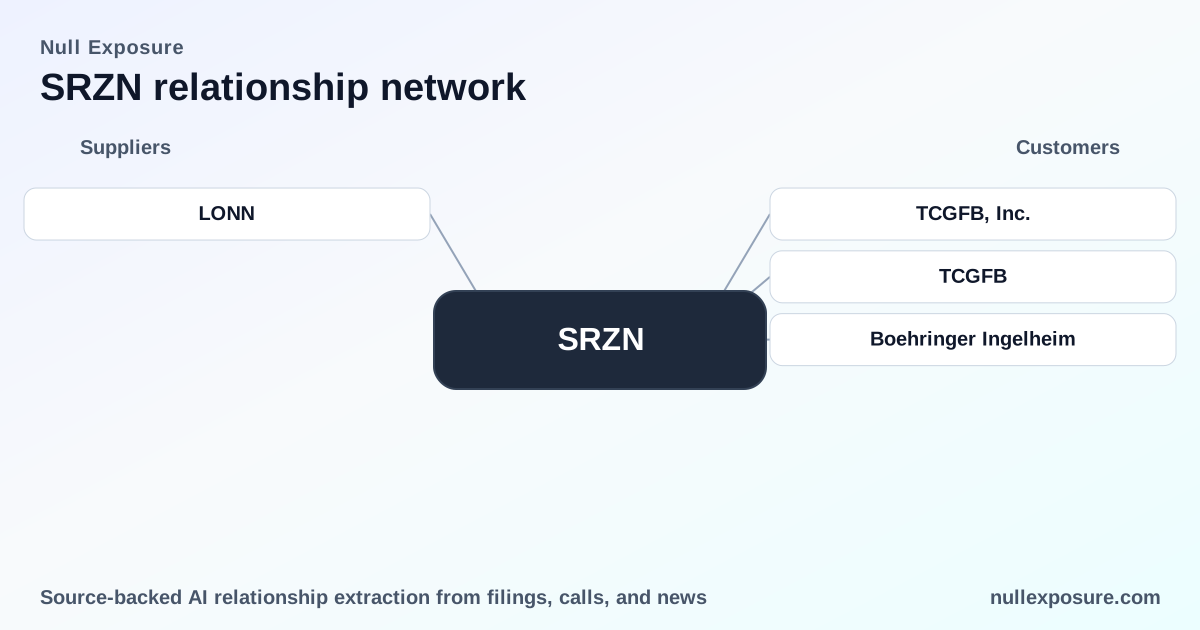
Surrozen (SRZN): Supplier relationships that will make-or-break a commercial biotech pivot
Surrozen is a clinical‑stage biopharmaceutical company that advances antibody therapeutics through discovery and clinical development, monetizing primarily via licensing, strategic partnerships and eventual product sales once candidates reach approval and commercialization. The company depends on third‑party manufacturing and clinical service partners to translate lab‑scale molecules into clinical‑grade material and data packages—an operating model that puts supplier relationships at the center of both execution risk and value creation. For investors evaluating SRZN supplier counterparties, the supplier roster and the contractual posture around manufacturing are as consequential as clinical readouts. Explore further at the NullExposure homepage: https://nullexposure.com/
Why suppliers determine Surrozen's execution profile
Surrozen runs an asset‑centric biotech model: small balance sheet, advanced R&D spend, limited product revenue (Revenue TTM $3.6M, Market Cap ~$218.6M). That profile creates outsized dependence on external manufacturers and CROs for producing clinical‑grade material, running trials and generating regulatory‑grade data. Company disclosures explicitly recognize this dependence: “Because we may rely on third parties for manufacturing and supply of our product candidates, some of which may be sole source vendors, for preclinical and clinical development materials and commercial supplies, our supply may become limited or interrupted or may not be of satisfactory quantity or quality.” That risk language frames several operating constraints:
- Contracting posture: Surrozen operates predominantly as a buyer of specialized manufacturing and clinical services; negotiating leverage is constrained by stage and scale.
- Concentration and criticality: The company accepts single‑source or limited‑source arrangements for complex biologics, making supplier continuity a critical single‑point risk.
- Maturity and stage: Relationships are largely in the development phase—active but not yet transitioned to routine commercial supply—so supplier performance and scale‑up are immediate gating factors.
Company filings further disclose reliance on contract manufacturers and CROs to produce and test materials and to run clinical trials, establishing that supplier performance is a direct determinant of milestone timing and cash burn.
What we see in Surrozen’s supplier relationships today
Lonza — manufacturing partner with demonstrable formulation progress
Surrozen has been working with Lonza on formulation and manufacturing for its intravitreal program; CEO commentary in February 2026 highlighted that the 220 kDa molecule has proven “extremely easy to manufacture and to concentrate,” with concentrations above 100 mg/mL and low viscosity suitable for intravitreal injection, signaling a meaningful technical milestone for ophthalmic delivery. This was reported in an instant‑alert covering the company presentation on February 15, 2026 (MarketBeat). Source: MarketBeat instant‑alert covering Surrozen CEO presentation, February 15, 2026 — https://www.marketbeat.com/instant-alerts/surrozen-conference-ceo-details-wnt-fzd4-eye-disease-bet-2026-ind-plans-for-szn-8141-2026-02-15/
(Disclosure note: the company’s risk language identifies contract manufacturers and CROs as core external dependencies; those disclosures are company‑level signals and not tied to Lonza by the wording of the filings.)
How each relationship influences valuation and operational risk
Lonza’s work is highly value‑relevant: successful high‑concentration formulation reduces formulation and delivery risk for an intravitreal candidate, shortens timelines to pivotal studies, and materially increases the probability that downstream commercial manufacturing is achievable. But formulation success does not eliminate supplier concentration risk: the firm still depends on third‑party capacity, regulatory compliance and long‑term supply agreements to convert technical feasibility into durable commercial supply.
Constraints that define Surrozen’s operating model
Surrozen’s public disclosures and risk statements draw a clear map of supplier constraints that investors must factor into models:
- Criticality: The company explicitly acknowledges that third‑party vendors can be sole‑source and that interruptions or quality failures could materially impair development timelines.
- Manufacturer and service provider roles: Filings state Surrozen “relies on third‑party contract manufacturers for our preclinical and future clinical trial product materials and supplies” and on CROs and clinical investigators for study execution—so the company’s operating model is heavily outsourced across manufacturing and clinical functions.
- Active relationship stage: The firm describes these third‑party engagements as active and central to ongoing preclinical and clinical programs, underscoring near‑term execution dependence rather than purely future contingency.
These constraints translate into negotiation leverage risk, milestone timing risk, and execution conditionality that should be embedded into any investment thesis about SRZN.
Practical investment implications and what to watch
- Supplier performance is a timeline lever. Manufacturing scale‑up or an adverse supplier event will compress or extend timelines that are driving valuation today.
- Lonza’s technical progress is a positive signal, but investors should require documented supply agreements, capacity commitments and regulatory compliance evidence before extrapolating formulation success into commercial readiness.
- Cash runway and milestone funding matter. With negative EBITDA and minimal revenue, Surrozen needs to convert technical wins into financings, partnerships or license revenue; supplier obligations and manufacturing scale‑up will drive near‑term capital needs.
If you track SRZN’s supplier risk profile, prioritize contract disclosures in upcoming SEC filings, public partnership announcements, and formal supply agreements that confirm long‑term capacity.
Explore supplier risk coverage tools and ongoing updates at NullExposure: https://nullexposure.com/
Checklist: immediate items for due diligence
- Obtain copies or summaries of manufacturing and supply agreements with Lonza (capacity, exclusivity, termination, quality liabilities).
- Monitor regulatory filings for chemistry, manufacturing and controls (CMC) details that confirm process robustness at scale.
- Track cash runway and partner‑funded milestones that hinge on supply performance.
Bottom line and next steps
Surrozen’s business model is innovation‑driven but supplier‑dependent. Lonza’s formulation progress is a constructive operational datapoint; however, company filings show that third‑party manufacturing and CRO relationships are critical and concentrated—factors that amplify implementation risk even as scientific milestones clear. Investors should underwrite both the upside of successful technical development and the downside of supplier interruption when sizing exposures or structuring engagement.
For ongoing supplier relationship intelligence and to monitor how these counterparties affect SRZN’s risk/return profile, visit NullExposure: https://nullexposure.com/