Simpson Manufacturing (SSD): supplier posture, credit relationships, and what investors should price in
Simpson Manufacturing is a specialized building-products manufacturer that designs, manufactures and sells connectors, fasteners and engineered products for wood and concrete construction, monetizing through product sales to construction suppliers and contractors and steady aftermarket replacement demand. Steel is the principal raw material, the company purchases raw materials on the open market, and financing relationships support working capital and capital allocation. This profile makes margins sensitive to commodity moves and liquidity architecture central to near-term risk management. For a focused supplier-relationship review and monitoring tools, visit https://nullexposure.com/.
How Simpson's operating model translates into supplier risk and pricing power
Simpson operates a vertically concentrated input model: products are manufacturing-intensive, and steel is the dominant raw material input. The company reports $2.33bn in trailing revenue and a gross profit of ~$1.07bn, with operating margin and return-on-equity consistent with a mid-cycle industrial (company financials, latest fiscal reports). Because the firm purchases steel at market prices and historically does not hedge those inputs, procurement is effectively a spot, pass-through exposure that directly impacts gross margins and pricing decisions.
This operating posture creates a predictable commercial logic: Simpson retains product pricing power driven by engineering, brand, and distribution, but its near-term margin elasticity tracks steel price volatility. That dynamic elevates the importance of supplier sourcing strategies and working-capital financing; both are material to free cash flow variance.
The single external relationship investors should be aware of today
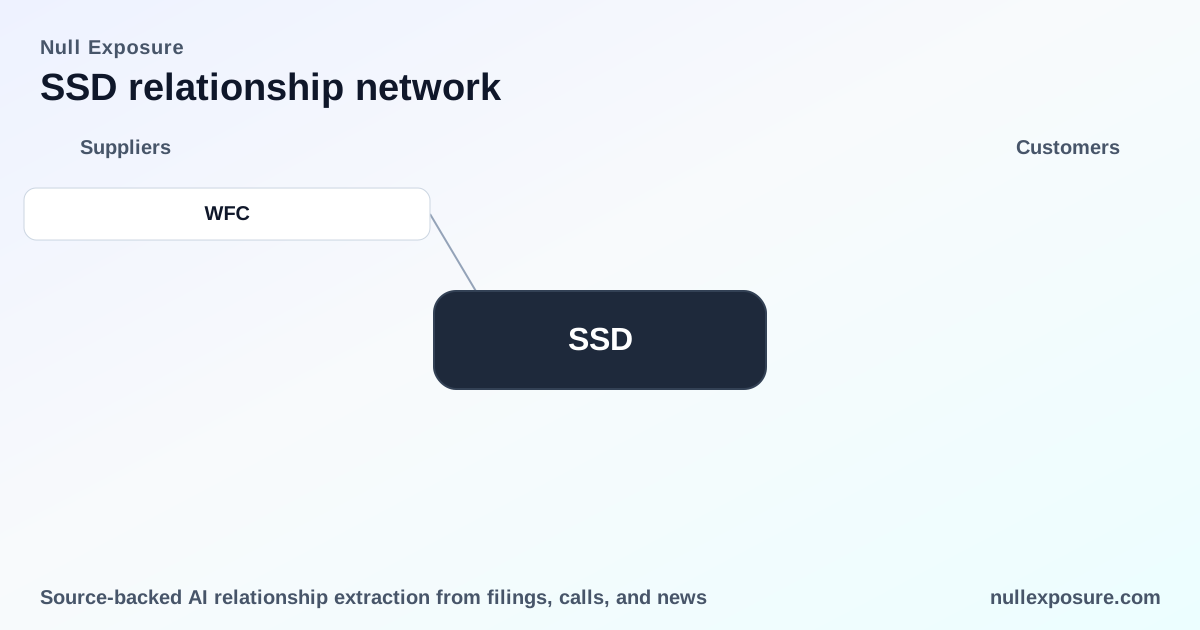
- Wells Fargo: TradingView reported that Simpson signed a second amended and restated credit agreement with Wells Fargo as administrative agent and other lenders (news post first seen March 10, 2026). This is a financing relationship that governs Simpson’s syndicated credit capacity and working-capital runway, not a raw-material supply agreement. (TradingView, March 10, 2026: https://www.tradingview.com/news/tradingview:321210045d497:0-simpson-manufacturing-signs-second-amended-and-restated-credit-agreement-with-wells-fargo/)
What the constraint signals tell investors about Simpson’s supplier posture
Company-level disclosures provide three clear, actionable signals:
- Contract type — spot: Simpson purchases steel at market prices and does not hedge most raw-material exposures, signaling a spot-oriented procurement posture rather than long-term fixed-price supply contracts (company filings).
- Counterparty profile — diverse/unknown: The company sources raw materials “from a variety of commercial sources,” indicating low counterparty concentration on the supplier side and a trading-style procurement mix rather than deep strategic supplier partnerships (company filings).
- Materiality — critical: Steel is the principal raw material and therefore critical to product cost and gross margin, making raw-material price moves a first-order driver of earnings variance (company filings).
These constraints are company-level signals, not attributes of any single lender or bank. They imply Simpson’s supply chain is operationally mature but exposed to commodity price cycles, while supplier concentration is low enough that idiosyncratic vendor failure is not the principal risk.
Why the Wells Fargo credit relationship matters to suppliers and investors
The Wells Fargo-led amended credit agreement is shorthand for Simpson’s liquidity and capital runway. For a manufacturer with spot exposure to steel prices, access to revolver capacity and covenant flexibility is essential to absorb input price swings and fund inventory build or demand shocks. Credit terms influence procurement choices: a weaker liquidity position forces shorter payables cycles and higher working-capital strain; a robust credit facility enables opportunistic inventory purchases when steel prices are favorable. (TradingView report, March 10, 2026.)
What this means for margins, valuations and capital allocation
Investors should price Simpson as a structurally profitable industrial with sensitivity to steel prices and an interest-rate/credit-profile overlay:
- Valuation anchors: Market cap roughly $7.39bn, trailing revenue $2.33bn, EV/EBITDA ~14x; earnings quality is supported by ~14% operating margin and consistent ROE (company financials).
- Margin leverage: Because the firm does not hedge steel, gross margin and operating margin move with steel, not with financial engineering.
- Capital structure: The Wells Fargo facility defines the company’s short-term liquidity; changes to covenant headroom or pricing will directly affect capex and dividend optionality.
For providers evaluating commercial terms with Simpson, that combination — spot procurement, low supplier concentration, and reliance on bank liquidity — drives negotiations around payment terms, inventory financing, and price adjustment clauses.
If you want an ongoing feed of supplier relationship signals and credit-change alerts for industrials like Simpson, visit https://nullexposure.com/ for tailored monitoring and intelligence.
Practical risk map for diligence: what to look for when operationally engaging Simpson
- Commodity exposure: Monitor steel price trends and Simpson quarterly gross-margin disclosures to detect margin pressure early.
- Payment dynamics: The firm’s payment terms and working-capital days will reveal how credit availability is being used to smooth procurement cycles.
- Contract mechanics: Suppliers should seek explicit pass-through price clauses or short-term indexing where feasible given Simpson’s spot procurement posture.
- Financing covenants: Lenders and counterparties should track amendments to credit agreements — they directly influence procurement flexibility and inventory financing.
The relationships covered (concise, one-by-one)
- Wells Fargo — Simpson executed a second amended and restated credit agreement listing Wells Fargo as administrative agent and other lenders; the agreement governs Simpson’s syndicated credit facilities and working-capital liquidity needs (TradingView news report, March 10, 2026: https://www.tradingview.com/news/tradingview:321210045d497:0-simpson-manufacturing-signs-second-amended-and-restated-credit-agreement-with-wells-fargo/).
Bottom line and investor action
Simpson is a capital-light product manufacturer with concentrated input risk: steel is critical and purchased on the spot market, and working-capital management rides on a bank-led revolver structure — currently represented by the Wells Fargo administrative facility. Investors and contract counterparties should price in commodity-driven margin volatility and the operational importance of liquidity availability.
If you need more granular supplier exposure analysis or real-time alerts on credit amendments and supplier constraints, start with https://nullexposure.com/ for subscription-grade monitoring. For bespoke competitive and counterparty diligence on Simpson and its sector peers, sign up at https://nullexposure.com/ and test the platform against your portfolio assumptions.