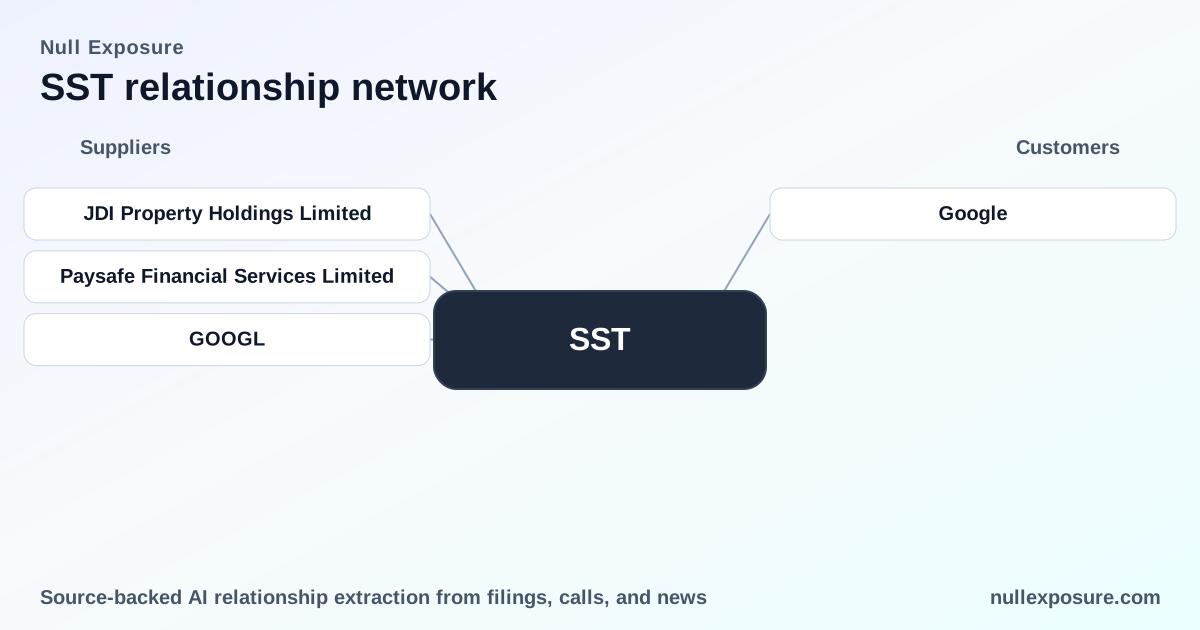
System1 (SST) — supplier map that matters for investors
System1 operates a data‑driven acquisition marketing platform: it acquires traffic, applies proprietary models and machine learning to convert visits into advertiser leads and sales, then monetizes by selling lead‑generation and media performance to advertisers and by licensing certain data inputs. Revenue flows from marketing services and performance advertising, while cost structure is heavily shaped by third‑party ad channels, payment processors, licensed data and a small number of contractual vendor commitments. For investors evaluating supplier relationships, the commercial dependencies and multi‑year spend commitments embedded in the company’s filings drive both operational volatility and the path to margin recovery. Visit the full supplier map at https://nullexposure.com/ to see the underlying references and tracking tools.
Why supplier analysis changes the investment thesis
System1’s business is a two‑sided operating model: it is a buyer of digital inventory, payments and licensed data, and a service provider to advertisers through its owned & operated sites and proprietary conversion stack. That dual posture creates concentrated exposure where a few vendor decisions can swing marketing efficiency and revenue.
- Concentration risk is explicit: the company cites product changes at its largest advertising partner as a material headwind, demonstrating that a single platform shift can compress returns quickly.
- Contractual rigidity exists: System1 carries multi‑year contractual obligations for service spend and relies on licensed inputs for its models, which constrains flexibility during revenue shocks.
- Corporate complexity adds governance signals: related‑party property arrangements and subsidiary guarantor structures show the company negotiates bespoke commercial terms that affect cash flow and related‑party scrutiny.
According to the company’s FY2024 Form 10‑K, these supply relationships and contractual commitments are central to near‑term operational risk and to how cost reductions translate into margin recovery. If you evaluate vendor concentrations, prioritize monitoring ad partner policies, data license renewals, and large multi‑year vendor spend commitments. Learn more on supplier exposure and monitoring at https://nullexposure.com/.
The relationships you need to know — what the filings and press releases say
JDI Property Holdings Limited
System1 has a related‑party property agreement with JDI Property Holdings Limited that allows use of space in exchange for an annual fee of GBP 0.1 million; JDI is controlled by a former director of the company. This is disclosed in the company’s FY2024 Form 10‑K and highlights a modest but material related‑party occupancy arrangement that investors should flag for governance review. (Source: System1 FY2024 10‑K)
Paysafe Financial Services Limited
System1’s payments stack for its “Protected” offering uses multiple credit card processors, including Paysafe Financial Services Limited, which positions Paysafe as a key payments vendor for transaction routing and settlement. This vendor relationship is disclosed in the FY2024 Form 10‑K and speaks to operational dependency on third‑party payment rails for consumer‑facing purchases. (Source: System1 FY2024 10‑K)
Google (Alphabet Inc., GOOGL)
Google is identified as the company’s largest advertising partner and a recent product change at Google materially challenged System1’s marketing performance; management reports it is pivoting to a newer Google product where System1 believes it holds a leading position. The observation comes from System1’s Q3 2025 results announcement covered on Yahoo Finance and signals high strategic dependency on Google’s ad product roadmap and auction dynamics. (Source: System1 Q3‑2025 press release as reported by Yahoo Finance)
What the constraints tell investors about operating levers
The disclosures go beyond named vendors to reveal structural constraints that shape financial sensitivity:
- Long‑term contractual posture: the filings show subsidiary guarantor and term‑loan arrangements that embed the operating companies in broader credit covenants and restrict unilateral maneuvering of capital and asset sales. This is a company‑level signal about financial flexibility and contractual constraints rather than a supplier‑specific attachment.
- Licensing dependence: System1 states that certain data used in its machine learning is licensed from third parties and that continued access on commercially reasonable terms is essential. Licensed data is a strategic input, and loss or repricing of those licenses would raise customer acquisition costs and reduce model effectiveness.
- Buyer and service provider roles: the company functions both as a major buyer of advertising inventory and licensed data and as a service provider to advertisers, meaning vendor outages or price shocks affect both cost of goods sold and revenue generation channels.
- Spend commitments: the 10‑K documents a multi‑year agreement that obligated System1 to spend $5.0 million annually between July 2023 and June 2026 and left $6.2 million remaining as of December 31, 2024, placing mid‑single digit millions of committed outflows on the ledger. This indicates material but not transformational vendor spend concentration in the $1m–$10m band.
These signals collectively point to operational leverage concentrated in a few vendor relationships and contractual lines that can accelerate margin erosion or recovery depending on ad product behavior and license renewal outcomes.
Risks and monitoring priorities for investors
Focus your monitoring on three things. First, ad platform exposure — Google’s product decisions already affected results and remains the largest single operational risk for marketing efficiency. Second, data licensing renewals and pricing — because the company’s machine learning models require licensed inputs, renegotiations could be a binary driver of model performance. Third, contractual cash outflows and governance — multi‑year spend commitments and related‑party property arrangements are small‑cap governance flags that can influence cash flow and investor perception.
- Track subsequent quarters for signs of improved unit economics as System1 shifts to the newer Google product.
- Watch contract renewal language and term lengths on key data licenses for signs of increased pricing power or pass‑through protections.
- Monitor changes in related‑party arrangements and any disclosures about occupancy or intercompany pricing that affect free cash flow.
For a consolidated view of these supplier exposures and to receive alerts when filings or press releases update, go to https://nullexposure.com/.
Bottom line and investor actions
System1’s supplier footprint is simple but concentrated: a dominant advertising platform, a set of licensed data providers, critical payment processors and a handful of multi‑year vendor commitments. That mix creates asymmetric risk — limited vendor sets can produce sharp revenue swings but also give the company clear levers to renegotiate or diversify.
Investors should treat supplier monitoring as a first‑order input to valuation: prioritize forward‑looking ad partner metrics, contract renewal cadence for licensed data, and any changes to committed spend. For a practical next step, set up supplier‑level alerts and integrate the company’s 10‑K supplier disclosures with quarterly marketing efficiency metrics to spot trends early.
Want continuous supplier tracking and attribution for small‑cap names like System1? Explore the full supplier intelligence and get notified on updates at https://nullexposure.com/.