Shutterstock (SSTK) — Supplier Relationships and Operational Constraints that Drive Value
Shutterstock monetizes a two-sided marketplace: it licenses creative content and bundles tools and services to creatives and enterprise customers, earning revenue from subscriptions, on-demand downloads, and value-added services. Revenue depends on scale of content supply, stability of third-party technology integrations, and the economics of royalty and vendor commitments. For investors and operators evaluating Shutterstock as a supplier partner or counterparty, the critical questions are how the company structures its licensor payments, how it contracts with cloud and service vendors, and how strategic third‑party integrations shift subscriber economics. Learn more about supplier intelligence and supplier risk at https://nullexposure.com/.
Executive snapshot: how suppliers move the needle
Shutterstock’s product shelf is content-first: contributors upload images, video, audio, GIFs and stickers and receive royalty payments; Shutterstock in turn aggregates that supply into subscription and enterprise products. That chain makes contributor relationships and a small set of strategic platform partners both a cost center (royalties, minimum guarantees) and a competitive moat (scale and variety of content). The company also treats some external partners as service providers for cloud and infrastructure, subject to contractual privacy and cybersecurity obligations.
Supplier and partner relationships uncovered (complete list)
Below I cover every supplier relationship included in the available records, with a concise plain-English summary and the source for each.
-
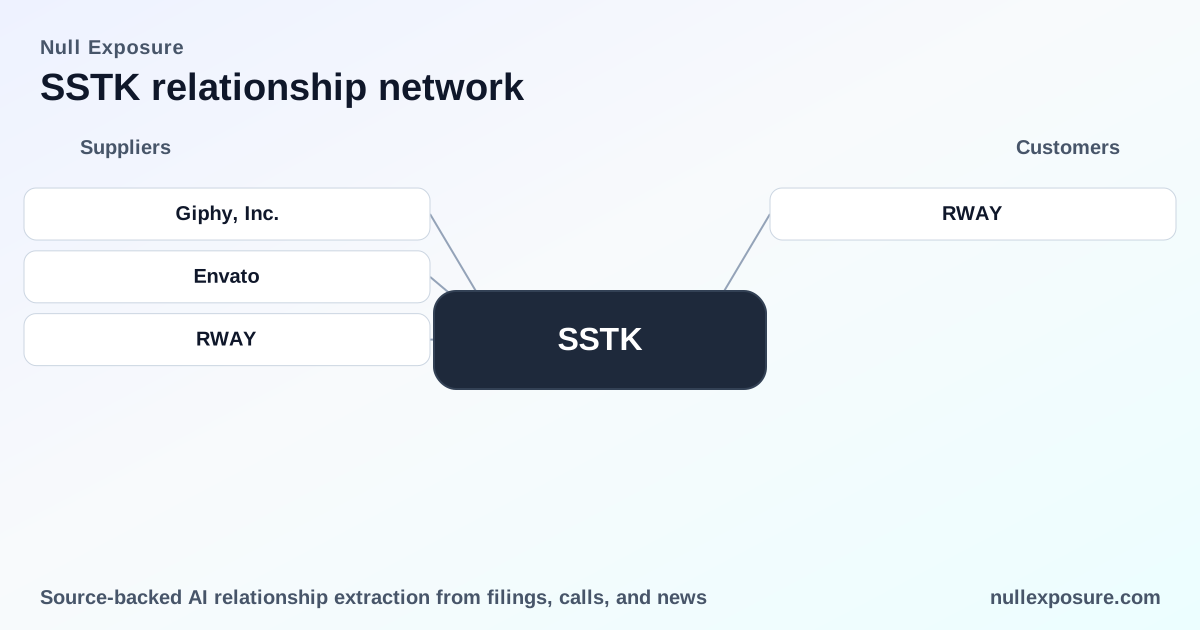
Giphy, Inc. — Giphy supplies GIFs and stickers that Shutterstock leverages for casual conversational content across its properties; this relationship represents a content licensor tie-in that broadens appeal in short-form and messaging use cases. According to Shutterstock’s 2024 Form 10‑K, Giphy is described as a New York‑based collection that supplies casual conversational content (FY2024 10‑K disclosure).
-
Envato — Shutterstock integrated Envato’s unlimited, multi-asset subscription service into its offering, increasing the number of paying subscribers by expanding the breadth of multi-asset bundles available to customers. A Sahm Capital note discussing FY2025 results observed that Shutterstock’s integration of Envato’s subscription service has driven up the number of paying subscribers (Sahm Capital, November 6, 2025).
-
Runway (RWAY) — Shutterstock extended its partnership by integrating Runway’s ML/creative tooling via Runway’s API to enhance the company’s creative toolset and workflow capabilities for customers and contributors. Runway’s customer page documents that integrating Runway’s tools and API was a “natural step” to extend the relationship with Shutterstock (Runway customer materials, FY2025).
What the constraints tell investors about operating posture
The company-level constraints extracted from disclosures provide a clear picture of how Shutterstock treats suppliers and contributors operationally:
-
Counterparty mix is individual-first. Shutterstock explicitly states its contributor base consists of photographers, videographers, illustrators, designers and musicians ranging from part-time enthusiasts to full-time professionals. This is a supply model built on a very large, distributed population of individuals rather than a small group of enterprise content providers — a structural signal of low single‑counterparty concentration for creative supply.
-
Geographic breadth is global. Shutterstock licenses content from contributors in over 100 countries, which spreads geopolitical and single-market concentration risk but requires robust cross-border contract and tax handling.
-
Primary relationship role is licensor. The company repeatedly describes contributors as licensors of content who upload material and receive royalty payments based on customer downloads — a revenue model that converts usage into variable royalty expense.
-
Service provider relationships are formalized and contractually guarded. Shutterstock obligates third‑party service providers to meet privacy and cybersecurity standards and performs vendor risk assessments; it also discloses unconditional purchase obligations related to cloud and infrastructure services and minimum royalty guarantees. This demonstrates a contracting posture that treats vendors and platform partners as critical operational inputs subject to compliance, SLAs, and commercial guarantees.
-
Supplier spend sits in the mid-range band. The extraction flagged total non‑lease unconditional obligations at a reported amount of $55,700 and classified supplier commitments in the $10–$100 million spend band; taken together, these disclosures indicate meaningful recurring spend on services, cloud infrastructure and minimum royalty guarantees rather than trivial operational outlays.
Together these signals show an operating model that balances a highly distributed licensor base (low concentration, high scale) with mid-sized, mission-critical service contracts (higher concentration and operational importance in cloud and AI/tool partners).
Risk and strategic implications for investors and operators
-
Royalty economics are a variable cost lever. Because contributors are paid on download activity, gross margins are sensitive to mix shifts between subscription and enterprise deals and to any negotiated minimum royalty guarantees. Investors should monitor royalty outflows and minimum guarantees disclosed in periodic filings.
-
Integration partners are strategic, not peripheral. The Envato and Runway integrations are examples of how third‑party products can materially alter subscriber growth and product value. These integrations increase product stickiness but create vendor dependency for capability roadmaps.
-
Vendor contracting and cyber obligations are non-negotiable. The company’s vendor risk assessments and contractual privacy/cyber requirements indicate a mature contracting posture; operational continuity depends on cloud and service partners meeting those standards.
-
Global contributor footprint reduces supplier concentration but raises compliance complexity. Licensing from over 100 countries diversifies supply risks while increasing legal, tax and IP management workload.
If you need a deeper supplier risk profile or a custom mapping of contractual obligations and concentration for SSTK, start with a review at https://nullexposure.com/.
Practical takeaways for deal teams and portfolio managers
- For diligence teams: prioritize review of minimum royalty guarantees, cloud/infrastructure obligations, and the commercial terms of strategic integrations (Envato, Runway) because these items drive near-term margin and product capability.
- For operators evaluating partnerships: structure SLAs and data-protection covenants upfront when integrating with tooling partners to protect customer experience and intellectual property.
- For investors: track quarterly disclosures on unconditional obligations and contributor payout trends as early indicators of margin pressure or subscriber monetization lift.
Explore supplier-focused due diligence frameworks and case studies at https://nullexposure.com/ to convert these signals into actionable monitoring and negotiation strategies.
Closing perspective
Shutterstock’s supplier model combines a distributed, low-concentration contributor base with a smaller set of strategic, high‑impact service and platform partners. That hybrid creates a predictable content supply engine while making margin and product trajectory dependent on how the company structures royalties, minimum guarantees and integration agreements. For investors and operators, the priority is to quantify contractual commitments and monitor partner-driven product lift versus cost inflection. For tailored supplier-risk analysis and to benchmark SSTK’s partner posture against peers, visit https://nullexposure.com/.