STEN: Supplier Profile and the Strategic Implications of the BlueRing Combination
StenTech (STEN) operates as a specialist supplier of surface-mount technology stencils, pallets, tooling, and related factory floor components that enable printed circuit board assembly. The company monetizes by selling precision manufacturing consumables and tooling directly into electronics contract manufacturers and OEM lines, and it drives value through product consolidation and scale in a highly specialized niche. The recent combination with BlueRing Stencils represents an explicit inorganic step to extend footprint and product breadth in the stencil market. For further supplier intelligence and tracking, visit https://nullexposure.com/.
The transaction that matters: Dallas-based StenTech combines with BlueRing Stencils
A March 10, 2026 article in Dallas Innovates reported that Dallas-based StenTech has combined with New Jersey’s BlueRing Stencils, bringing together two boutique suppliers of SMT stencils and related tooling. The public reporting frames this as consolidation within a specialized manufacturing input market, not a horizontal expansion into unrelated end markets. (Dallas Innovates, March 2026)
This combination directly affects STEN’s supplier map by folding BlueRing’s capabilities and customer access into StenTech’s platform. For investors, the key read is that STEN is executing consolidation-driven growth rather than relying solely on organic share gains in a mature manufacturing-adjacent segment.
All relationships in the public results (one entry)
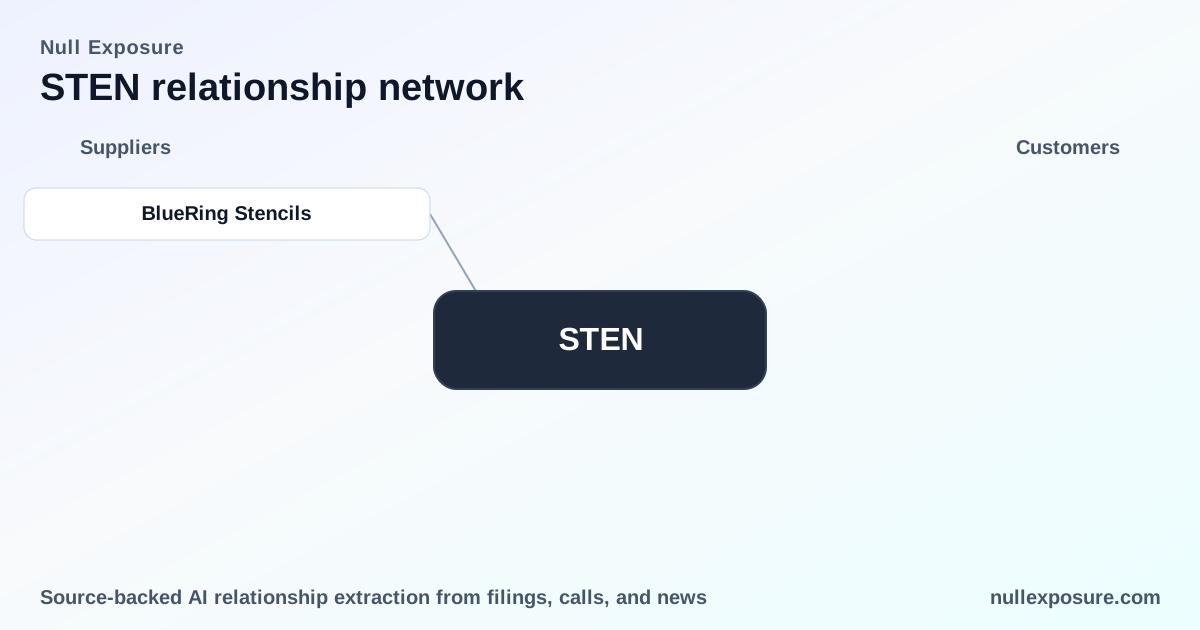
BlueRing Stencils — Dallas-based StenTech combined with New Jersey’s BlueRing Stencils, consolidating two providers of SMT stencils, pallets, tooling and related components; reported March 10, 2026 in Dallas Innovates. This transaction is documented publicly and is the only supplier relationship surfaced in the available results. (Dallas Innovates, March 2026)
What this relationship concretely means for supply and operations
- Product breadth and redundancy: The BlueRing combination increases STEN’s range of stencil geometries and tooling options, creating cross-sell opportunities into overlapping customer bases and reducing single-source exposure for specific stencil types.
- Geographic coverage: Bringing a New Jersey-based provider into a Dallas-based organization improves East Coast serviceability for time-sensitive OEMs and contract manufacturers, sharpening logistics and lead-time competitiveness.
- Integration focus: Operationally, the integration will center on harmonizing production tolerances, quality standards, and lead-time SLAs to preserve customer relationships during transition. The public note emphasizes the combination rather than an acquisition price or terms, signaling strategic consolidation as the driver. (Dallas Innovates, March 2026)
Operating-model characteristics and company-level signals
Given STEN’s product set and the documented combination, several company-level signals shape how investors and operators should view supplier risk and contractual posture:
- Contracting posture: direct supplier, transactional and recurring: Stencils and tooling are sold via purchase orders and standing replenishment agreements rather than multi-year exclusive contracts; revenue is therefore largely transactional but recurring from repeat production runs.
- Concentration: niche but distributed: The market is narrow—specialized stencil suppliers service many electronics manufacturers rather than a few mega-customers—so customer concentration risk exists but is mitigated by breadth across assembly houses.
- Criticality: high for customers, moderate for STEN’s bargaining power: Stencils are critical inputs for PCB assembly—downtime is costly—giving STEN leverage on service levels and lead times, but price pressure exists from alternative suppliers and in-house capabilities at large OEMs.
- Maturity and scale: established niche with consolidation upside: The stencil tooling market is mature on a per-product basis, which makes consolidation (such as the BlueRing combination) the primary path to margin improvement and marginal share gains rather than disruptive growth.
These operating-model signals should guide diligence on contract terms, inventory commitments, and integration timelines rather than being treated as granular metrics.
Investor risks and upside to watch
- Upside — revenue synergies and improved fill rates. Consolidation should deliver higher SKU coverage and faster fulfillment for coast-to-coast customers, supporting modest top-line growth and margin leverage on fixed shop costs.
- Risk — integration and quality continuity. The criticality of stencils to OEM operations means any degradation in quality or delivery during integration will produce outsized customer churn and reputational damage.
- Risk — competitive pricing and in-house substitution. Large contract manufacturers sometimes internalize tooling or diversify suppliers aggressively; STEN must demonstrate service and quality differentiation to preserve pricing.
- Governance and transparency considerations. The public reporting is a concise combination notice without disclosed financial terms; investors should request integration metrics, customer retention rates, and expected synergies.
Practical next steps for investors and operators
- Request the integration playbook: obtain timelines for harmonizing quality control, lead times, and customer notifications.
- Validate retention commitments: ask management for customer-level retention targets and any contingent liabilities tied to the BlueRing legacy contracts.
- Re-assess supply risk modeling: update scenario analyses for lead-time improvement, potential customer churn, and margin expansion from consolidation.
For a systematic look across suppliers and to track similar consolidation events in real time, explore more at https://nullexposure.com/.
Final takeaways and recommended actions
StenTech is executing consolidation within a mature, mission-critical segment of electronics manufacturing supply chains through the BlueRing combination. This is a strategic move to expand product breadth and coast-to-coast serviceability, with clear upside in fill-rate improvements and margin leverage if integration is seamless. The primary risks relate to integration execution and competitive pressures from alternative suppliers and internalized tooling at large customers.
Investors should press for operational KPIs tied to quality, lead time, and customer retention as the next disclosure items. Operators should prioritize harmonizing manufacturing tolerances and customer communication to protect revenue during the transition. For ongoing supplier monitoring and analytical coverage, visit https://nullexposure.com/.