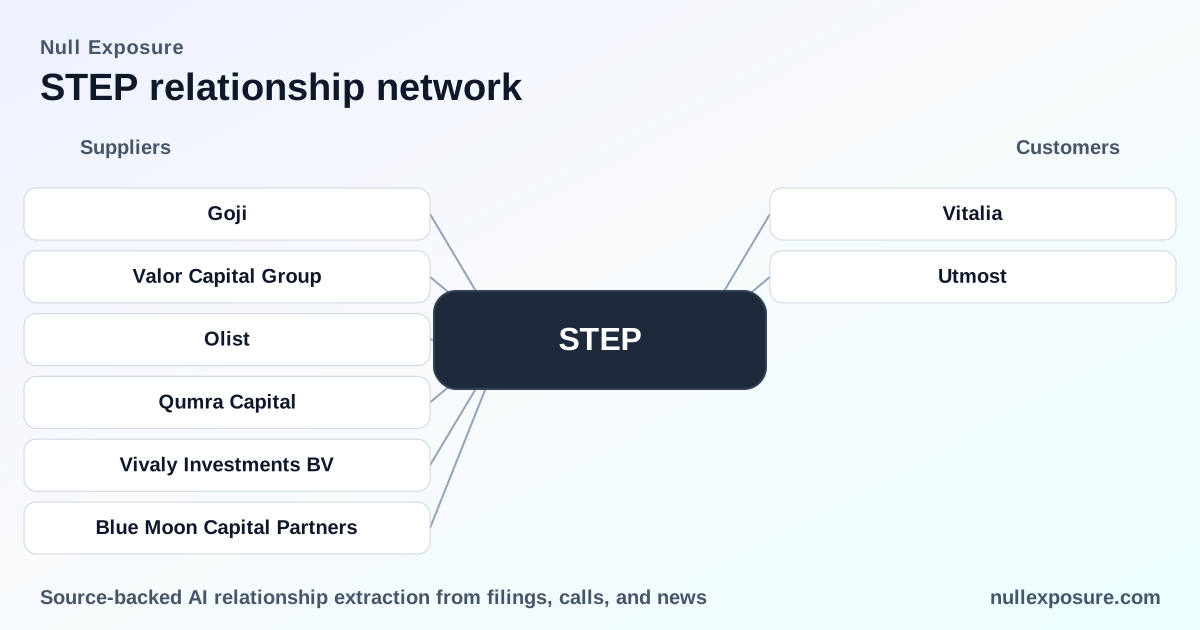
StepStone Group (STEP): Supplier and partner relationships that move private markets
StepStone Group is a global private markets investment firm that builds value by originating, acquiring and managing private equity, real estate, infrastructure and private debt exposures for institutional investors. The firm monetizes through management fees, carried interest and transaction-level economics created by continuation vehicles and co-investments, while leveraging partnerships and technology to scale access to evergreen and secondary positions. For investors, the commercial relationships StepStone forges—technology partners, GP stakes and co-invest vehicles—drive fee-bearing assets and create concentrated capital commitments that materially affect future cashflows.
Explore supplier intelligence at https://nullexposure.com/
How StepStone’s supplier posture shapes its economics
StepStone operates with a clear contracting posture and global reach. The company’s public disclosures show long-term contracting behavior—including commitments to acquire remaining equity interests in asset entities—and an office footprint across 28 cities worldwide, underscoring a permanent, global operating model. Materiality is explicit in its filings: StepStone warns that counterparties and fund losses can have material impacts on results. Financial indicators show scale but also stress: revenue of roughly $1.78 billion TTM and negative operating and net margins highlight operating leverage and dependence on fee-bearing AUM. The firm’s liability disclosures imply large contingent cash exposures: estimated settlement ranges tied to awards reaching into the hundreds of millions.
Key company-level signals:
- Contracting posture: long-term agreements that create enduring economic linkages and acquisition options.
- Geography: global—operations and leases across 28 cities, reinforcing diversified sourcing and execution risk.
- Materiality: relationships are material to operating results and fund performance.
- Role: buyer/acquirer—StepStone often structures transactions where it acquires positions or stakes.
- Spend concentration: $100m+ scale implied by liability ranges and continuation vehicles.
If you are evaluating commercial counterparty exposure or partnership opportunity with StepStone, examine these structural constraints before underwriting transactions. For deeper supplier profiles visit https://nullexposure.com/
Relationship-by-relationship read: concise takeaways
Goji
StepStone announced it is utilizing Goji’s technology to improve access to several of its European private market evergreen funds, signalling an operational push to digitize investor access and scale evergreen product distribution in Europe. (Press release via Ritzau, March 10, 2026)
Valor Capital Group
StepStone acquired a portion of Valor Capital Group’s Fund II, reflecting StepStone’s active role in buying secondary slices of GP portfolios and expanding Latin America exposure. This transaction shows StepStone executing strategic purchases of LP positions as a route to deploy capital. (Bloomberg Línea report, referenced March 10, 2026)
Olist
Valor’s commentary notes a co-managed vehicle with StepStone where securities were placed into a separate fund and co-managed with StepStone, indicating the firm’s willingness to take operational co-management roles on transferred portfolio stakes. That structure underscores StepStone’s capability to convert large single-investor positions into fee-bearing vehicles. (Bloomberg Línea report, March 10, 2026)
Qumra Capital
StepStone previously acquired parts of other funds including an Israeli GP, Qumra Capital, demonstrating a precedent of GP stakes or fund-level acquisitions as part of its growth and diversification strategy. These GP-level purchases reinforce StepStone’s buyer profile and its strategy of owning parts of managers it works with. (Bloomberg Línea note on historical transaction, March 10, 2026)
Vivaly Investments BV / Vitalia
StepStone Real Estate and partner GREYKITE announced a planned recapitalization to acquire a majority interest in Vitalia and commit over €500 million in growth capital, signalling large-scale real estate control transactions and material capital commitments in European senior care assets. This is an example of StepStone originating and financing continuation or control deals. (QuiverQuant summary of press release, March 10, 2026)
Blue Moon Capital Partners
StepStone Real Estate completed a US$250 million continuation vehicle with Blue Moon Capital Partners to operate and expand a portfolio of Class A senior housing communities in the U.S., illustrating StepStone’s recurring use of continuation vehicles and large capital commitments to scale operating platforms. (Sahm Capital note, January 26, 2026)
What these relationships imply for investors and operators
Collectively, these partnerships reveal a repeatable StepStone playbook: acquire or co-manage sizable private positions, use continuation vehicles to create fee-bearing assets, and deploy concentrated capital to scale operating platforms (real estate and senior housing in the cited deals). The Goji integration signals an added emphasis on product distribution and investor access technology to increase retention of fee flows. The firm’s buyer posture and long-term contracts increase lock-in of cashflows but also raise counterparty and operational concentration risk.
Operational and financial risk factors to weigh:
- Concentration of capital and contingent liabilities: continuation vehicles and liability ranges cited in filings imply large cash commitments that can stress liquidity under adverse outcomes.
- Material downside from counterparty losses: StepStone explicitly acknowledges material impact from major counterparty defaults on funds.
- Profitability pressure despite scale: StepStone reported negative EBITDA and net margins in the latest TTM figures, underscoring sensitivity of earnings to AUM growth and fee mix. (Company filings, fiscal year to March 31, 2025; market data through FY2025–FY2026)
For operators thinking about selling into or co-managing with StepStone, expect long-term contractual terms and a buyer-led negotiation stance, plus the potential for significant capital scale if the asset fits StepStone’s sector priorities (real estate senior housing, Latin American tech positions, GP stakes).
Bottom line and recommended next steps
StepStone’s supplier and partner interactions are strategic and capital-intensive: they create fee-bearing assets but concentrate exposure in large, long-duration commitments. Investors should underwrite counterparty credit, legal terms of continuation vehicles, and track StepStone’s execution in converting acquired positions into recurring fees. Operators can view StepStone as a buyer capable of providing scale and operational capital but should factor in the firm’s long-term contractual posture and governance expectations.
For a granular supplier profile and to monitor evolving StepStone relationships, review our coverage at https://nullexposure.com/ — and if you need bespoke diligence support or ongoing supplier monitoring, visit https://nullexposure.com/ to start a tailored inquiry.