Steakholder Foods (STKH): supplier map and what it means for investors
Thesis — Steakholder Foods develops and commercializes 3D-printed cultured meat via B2B and B2B2C channels, monetizing by product licensing, hybrid-product co‑development with ingredient suppliers, and future direct product sales through its subsidiaries. The company uses third‑party cell and ingredient inputs to prototype and scale cultivated seafood and hybrid meat lines while positioning its Peace of Meat unit as the commercial front end; investors should evaluate supplier relationships as strategic enablers of commercialization rather than simple input purchases. For more supplier intelligence on alternative‑protein chains, visit https://nullexposure.com/.
How Steakholder runs the business and where revenue will come from
Steakholder Foods is a deep‑tech food company headquartered in Israel that builds cell‑based bio‑inks and 3D printing processes to recreate meat textures without slaughter. The near‑term monetization pathway is hybrid: co‑developed products (using mycoprotein or cell inputs from partners) sold B2B2C through Peace of Meat and licensing of printing/bio‑ink technology to food manufacturers. Financials show an early‑stage commercial profile—very limited revenue today, negative operating metrics, and a micro‑market capitalization—so supplier partnerships function as primary routes to validate product-market fit and accelerate commercialization.
Supplier relationships investors need on their radar
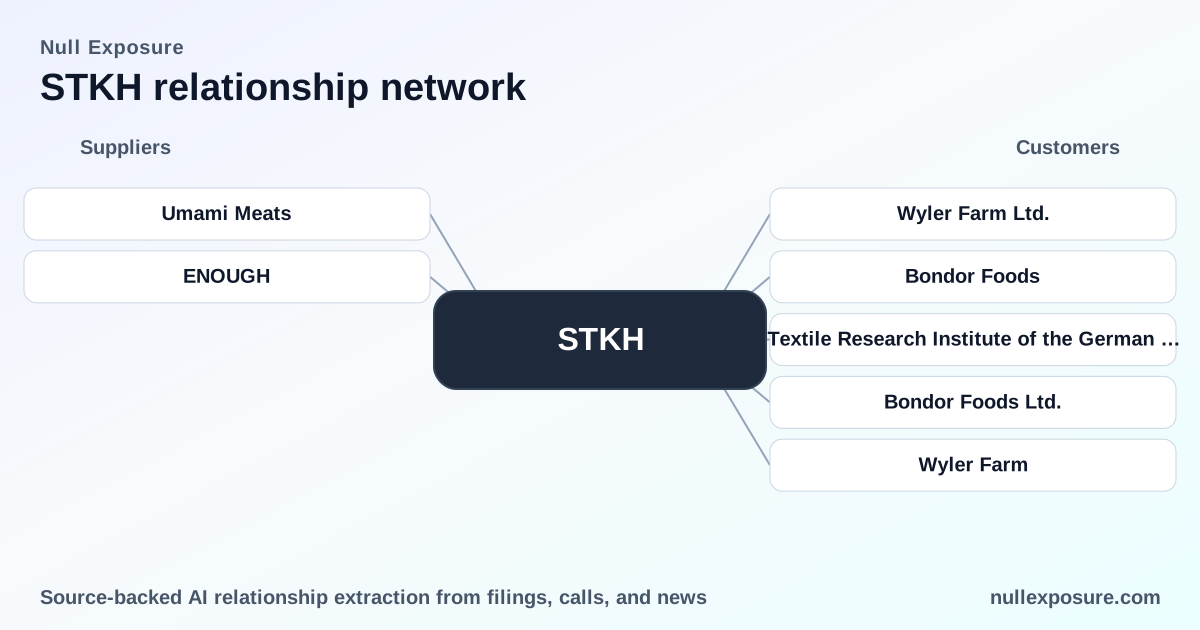
Umami Meats — cell provider for cultivated seafood
Steakholder has sourced grouper and other fish cells from Singapore’s Umami Meats to develop 3D‑printed cultivated seafood products; that relationship underpinned a ready‑to‑cook cultivated grouper prototype and texture development for a printed eel product. According to FoodNavigator‑Asia and FoodNavigator reporting (May 2023; Jan 2024) and coverage by IBTimes (2023), Umami supplied the cellular inputs used to create bio‑ink that reproduces flaky fish texture.
ENOUGH — mycoprotein partner for hybrid products via Peace of Meat
Steakholder is collaborating with B2B mycoprotein supplier ENOUGH through its Belgian subsidiary Peace of Meat to build hybrid products that combine cultivated cells and fungal mycoprotein as the first step toward commercialization. FoodNavigator covered this strategic pivot in August 2022, noting the company’s deliberate move from B2B to a B2B2C approach that leverages ENOUGH’s ingredient supply for consumer‑facing hybrids.
What these supplier ties imply for the business model and investor due diligence
The supplier footprint communicates a deliberate commercialization strategy: partner for inputs, co‑develop texture and product formulations, and push finished offerings through a branded subsidiary. From an investor perspective focus on four operating signals:
- Contracting posture — Steakholder’s engagements are collaborative R&D partnerships rather than simple vendor relationships; agreements emphasize cell selection, bio‑ink development and joint product trials rather than commodity procurement.
- Concentration — Public reporting identifies a small number of named partners (Umami Meats and ENOUGH), which concentrates execution risk: a few suppliers supply strategically critical inputs.
- Criticality — These suppliers are mission‑critical: cultured cells and mycoprotein are core to product feasibility and texture; interruption or degradation in access would materially slow prototype validation and go‑to‑market timelines.
- Maturity — Supplier relationships are early stage and product‑development focused, reflecting pre‑commercial pilots and texture optimization rather than high‑volume contracted supply.
These operating characteristics imply that investor focus should tilt toward partnership agreements (exclusivity, term, IP ownership), step‑in rights for tech transfer, and the track record of partners in scaling cell or mycoprotein production. For a comparative supplier risk view and deeper supplier signals, see https://nullexposure.com/.
Financial context that frames supplier risk
Steakholder’s public metrics frame supplier importance: tiny market capitalization (roughly $12.8M), negative EBITDA and negligible trailing revenue, which forces reliance on partner‑led commercialization and external funding to scale supply chains. With limited institutional ownership and small float, operational disruptions or unfavorable supplier terms have outsized balance‑sheet consequences. Investors should treat supplier relationships as de‑risking events when they include clear commitments to scale, transfer manufacturing know‑how, or provide anchor purchase agreements.
Company‑level constraints and signals for procurement posture
There are no supplier‑specific contractual constraints disclosed in the reviewed records. As a company‑level signal, however, Steakholder’s position shows:
- High dependence on collaborative R&D rather than long‑term supply contracts.
- Limited supplier diversification, implying counterparty concentration risk.
- Commercial immaturity, meaning supplier relationships are still validating product economics rather than supporting volume manufacturing.
These signals are companywide and not assigned to any single supplier unless explicitly stated in the underlying reporting.
What to watch next — concrete milestones and red flags
Investors should monitor three categories of near‑term evidence that would materially alter supplier risk and valuation:
- Commercial supply agreements or offtake contracts with named partners that move beyond pilot‑scale.
- IP and licensing terms buried in partnership announcements—particularly ownership of bio‑ink formulations and cell lines.
- Scale demonstrations from suppliers (Umami or ENOUGH) proving consistent, cost‑effective cell or mycoprotein output at food‑grade specs.
If those items surface, the supplier relationships will shift from strategic R&D enablers to revenue drivers.
Bottom line and next steps for investors
Steakholder Foods leverages a small number of strategic supplier partnerships to shortcut the hardest technical and supply‑chain problems in cultivated and hybrid meat. That approach concentrates execution risk but also accelerates product validation if partners scale. Given the company’s limited revenue and negative operating metrics, supplier agreements that include scale commitments, IP clarity, or purchase guarantees are the clearest path to de‑risking the investment case.
For more supplier intelligence and comparative analyses of alternative‑protein supply chains, explore https://nullexposure.com/. If you want a tailored briefing on STKH’s partner contracts and supplier risk, start with the coverage at https://nullexposure.com/ and request a focused review.
Sources referenced in this note: FoodNavigator‑Asia (May 2023) and FoodNavigator (Jan 2024) coverage of Steakholder product launches with Umami Meats; IBTimes reporting on the Umami collaboration (2023); FoodNavigator reporting (Aug 24, 2022) on the Peace of Meat and ENOUGH collaboration.