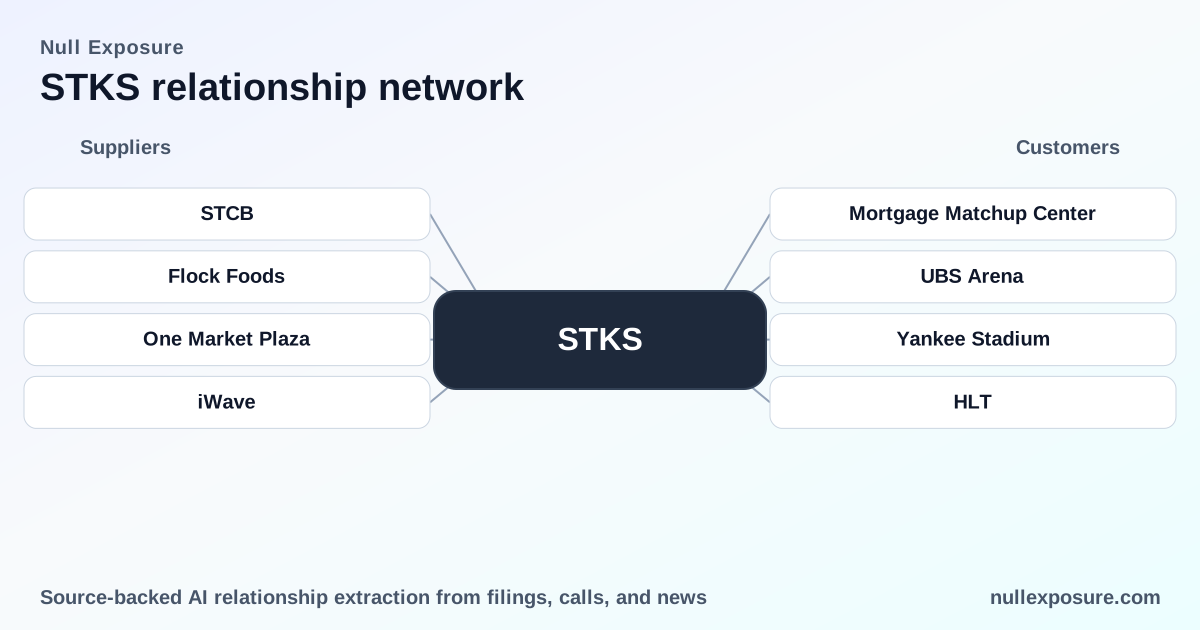
One Group Hospitality (STKS): supplier map and implications for operators and investors
One Group Hospitality (STKS) develops, owns, operates, manages and licenses upscale restaurants and lounges—most notably the STK Steakhouse and Kona Grill concepts—and monetizes through food and beverage sales, venue management and licensing/brand partnerships that augment menu assortment and drive traffic. With roughly $806 million in trailing revenue and a modest market capitalization, One Group leverages branded partnerships and national distribution relationships to add premium SKUs and experiential promotions while keeping fixed costs in restaurants relatively stable. For investors evaluating supplier risk and commercial upside, the supplier roster blends marketing-driven brand tie‑ins and operational vendors that affect day‑to‑day restaurant performance. Learn more about supplier exposures and what they imply at https://nullexposure.com/.
How to read One Group’s supplier posture — practical takeaways for investors
One Group’s supplier signals combine marketing collaborations and core foodservice logistics. Two company-level constraints surface in the supplier dataset: the company describes strong relationships with national and regional foodservice distributors, and it evaluates new suppliers regionally in a pilot phase before national rollouts. These are not isolated facts; they shape contracting posture, concentration, criticality and maturity of supplier relationships:
- Contracting posture: One Group negotiates pricing “on a national level,” indicating centralized procurement for scale, with regional pilots used to qualify new vendors. That creates bargaining leverage with large distributors while preserving the ability to iterate on innovative partners locally.
- Concentration: Relying on national/regional distributors signals operational concentration — disruptions at key distributors would have outsized effects on store operations, but centralized contracts also permit quick substitution across the estate when necessary.
- Criticality: Distributors are mission-critical suppliers for food supply continuity; marketing partnerships (e.g., limited‑run branded SKUs) are commercially important but operationally lower risk.
- Maturity: The explicit “pilot” stage language indicates a measured vendor onboarding process—innovative suppliers are trialed regionally before scale, which reduces rollout risk but delays revenue capture from new products.
These characteristics form the backdrop to the relationships below and should guide diligence on supplier agreements, termination rights, and contingency provisions.
Supplier-by-supplier: what each relationship signals
Starco Brands — Whipshots partnership lifts beverage/dessert novelty
According to a PR Newswire announcement in March 2026, Starco Brands partnered with One Group to introduce Whipshots, a vodka‑infused whipped cream product created by Cardi B, into STK Steakhouse and Kona Grill menus as a premium cocktail/dessert add‑on. This is a marketing‑led partnership intended to drive spend per cover and social media visibility at select venues. (PR Newswire, March 2026)
Flock Foods — branded snack innovation with Benihana tie
A December 2025 BizWire update distributed on FinancialContent noted a collaboration where One Group launched Benihana‑branded Teriyaki Flavored Crispy Chicken Chips in partnership with Flock Foods. This represents revenue diversification through co‑branded snack SKUs that can be sold in‑venue or as carryout merchandise, expanding non‑seat revenue streams. (BizWire / FinancialContent, Dec 29, 2025)
One Market Plaza — real estate leasing supports experiential positioning
Local media coverage reported STK signing a lease at One Market Plaza in downtown San Francisco, highlighting the chain’s continued focus on high‑profile, experiential urban locations with in‑house DJs and a nightlife orientation. Securing premium real estate supports higher average checks but increases exposure to urban traffic patterns and lease cost volatility. (SFist, Jan 27, 2022)
iWave — air‑quality hardware installed during openings
An article covering One Group’s Scottsdale opening referenced the use of iWave needle‑point bi‑polar ionization devices in HVAC units to filter airstreams and reduce pathogens. Investment in air‑quality hardware signals a physical‑operations emphasis on guest comfort and health standards, which can be a differentiator in higher‑end casual dining. (Arizona Foothills Magazine, 2021)
What these relationships mean for risk and upside
The supplier map mixes brand collaborations that increase guest spend and publicity with operational vendors that sustain daily service. Key implications for investors:
- Upside: Brand partnerships (Starco, Flock) have direct upside to average check and marginal margin if rolled out broadly under centralized procurement; successful pilot conversions can become recurring revenue drivers.
- Operational risk: The company’s dependence on national/regional distributors is a single point of operational continuity risk; investors should stress‑test distributor fallback plans and inventory buffers in diligence.
- Rollout discipline: The company’s practice of regional pilots before national adoption is a favorable operating control — it preserves brand integrity and reduces supply shocks while slowing time to scale for new SKUs.
Considerations to monitor include terms of distribution contracts (price escalation, exclusivity), the economics of brand partnerships (revenue share, promotional support), and the pace at which pilot partners graduate to national suppliers.
How to monitor progression and validate management’s claims
Track a handful of concrete signals to convert supplier visibility into investment signals:
- National roll‑out cadence: Watch press releases and quarterly commentary for announcements that Starco or Flock products moved from pilot markets to a national menu; that’s the moment revenue lift becomes measurable.
- Distributor stability: Monitor commentary around primary foodservice distributors and any procurement renegotiation disclosures; tightening terms or service incidents are material.
- Real‑estate execution: Lease openings in gateway cities (e.g., One Market Plaza) indicate the company’s commitment to experiential positioning and will show up in comps and margin mix.
- Operational upgrades: Continued investment in guest safety/comfort hardware (like iWave) signals capital allocation choices that influence margins and brand perception.
If you need continuous monitoring of supplier signals and commercial exposures, see actionable supplier intelligence and relationship mapping at https://nullexposure.com/.
Final assessment and recommended next steps
One Group balances marketing partnerships that drive per‑guest revenue with centralized distributor relationships that ensure operational continuity. The supplier posture—national contracting combined with regional pilot testing—reduces rollout risk while concentrating operational vulnerability in a small set of distributors. For investors, the critical due diligence items are contract terms with distributors, the scalability of brand partnerships, and the pace at which pilots convert to national programs.
For ongoing coverage and to track these supplier relationships in real time, visit https://nullexposure.com/ for supplier intelligence and relationship context.