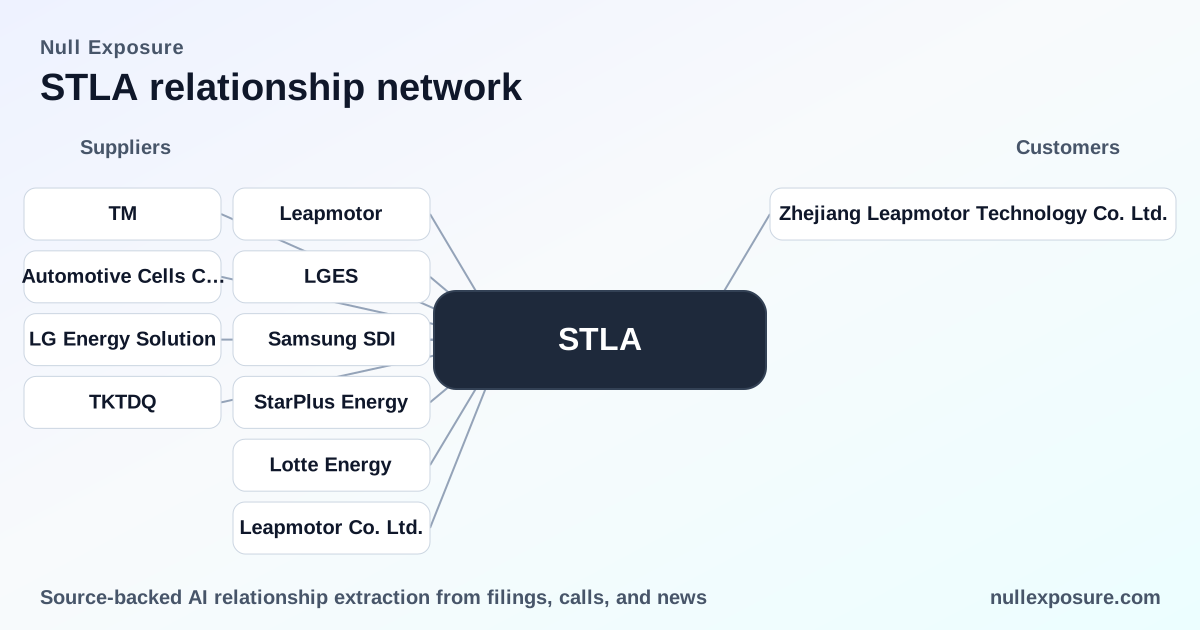
Stellantis (STLA): Supplier Map and What It Means for Investors
Stellantis operates as a global automotive manufacturer that designs, engineers, produces and sells passenger cars, trucks, SUVs and light commercial vehicles across multiple brands; it monetizes through vehicle and parts sales, brand licensing and captive-finance channels, with 2025 trailing revenue of roughly $153.5 billion. Recent supplier moves signal a deliberate shift from capital-intensive joint ventures toward asset-light procurement and selective technology partnerships, which directly affects capital allocation, supply-chain risk and margin trajectories for the auto group.
If you evaluate supplier risk or strategic sourcing for Stellantis, start here: explore the full supplier exposure and relationship history at https://nullexposure.com/ for underwriting and operational diligence.
Where Stellantis sits in the supply chain today
Stellantis runs a broad brand portfolio and a global dealer network that gives it scale in purchasing, but the company is re-prioritizing cash conservation and speed-to-market for electrified and hybrid vehicles. The balance sheet and margins show pressure—negative EBITDA and EPS on the last twelve months—so management is narrowing capital commitments to third-party supply arrangements and leaning on partners to deliver technology blocks rather than duplicating manufacturing investments.
This posture creates two practical implications for investors and operators: reduced long-term JV capex exposure and higher importance of supplier continuity for batteries and EV powertrains. For transaction-level supplier diligence or counterparty due diligence, see https://nullexposure.com/ for detailed supplier intelligence.
Supplier relationships that matter — plain-English summaries and sources
-
Leapmotor / Leapmotor Co. Ltd. Stellantis holds a controlling position in Leapmotor International after an October 2023 investment of about €1.5 billion and presently retails Leapmotor models such as the C10 SUV through its European dealer network; Bloomberg-sourced coverage reports Stellantis is also considering adopting Leapmotor EV technology for its mass-market European brands to cut unit costs. (Sources: Jiemian report on the 2023 investment; CNEVPost / Bloomberg reporting, Feb–Mar 2026; ClaimsJournal note on European sales, Feb 2026.)
-
LG Energy Solution / LG Energy Solution Ltd. Stellantis exited the Windsor, Ontario battery JV, selling its stake to LG Energy Solution for a nominal consideration (reported as $100), while contractual supply relationships continue so the plant will keep supplying Stellantis with EV batteries as LG scales production. (Source: The Detroit News, Feb 2026.)
-
Samsung SDI Stellantis is weighing withdrawal from a U.S. battery partnership with Samsung SDI as part of a broader scaling back of EV capital expenditure; the company has discussed selling its stake in related ventures and shifting to contractual battery purchases. (Source: Inkfreenews citing reporting on Feb 13, 2026.)
-
StarPlus Energy Stellantis has discussed an exit from StarPlus Energy — the joint venture vehicle associated with battery supply — though reports stress no final decision and that an exit could be lengthy and costly. (Source: Inkfreenews, Feb 2026.)
-
Lotte Energy Lotte Energy is reported to supply copper foil into the Samsung SDI–Stellantis battery supply chain, indicating the extended supplier ecosystem for cell materials remains active even as Stellantis revises JV exposure. (Source: The Korea Economic Daily / KEDGlobal, Feb 2026.)
-
Toyota (BlueNexus division) Stellantis is using a two-motor electric continuously variable hybrid transmission developed by Toyota’s BlueNexus division in the new Jeep Cherokee, reflecting a strategic pivot to hybrids and technology licensing to accelerate market entry and preserve capital. (Source: Intellectia.ai reporting on FY2026 announcements.)
-
Automotive Cells Company (ACC) Stellantis halted planned projects in Germany and Italy tied to Automotive Cells Company and has exited at least one related JV project, signaling retrenchment from certain European battery-capacity commitments. (Source: Inkfreenews, Feb 2026.)
-
Takata Stellantis issued a public “Do Not Drive” warning for roughly 225,000 older U.S. vehicles equipped with unrepaired defective Takata air bag inflators, highlighting legacy supplier-related safety and recall liabilities that still attract operational and reputational risk. (Source: The Detroit News, Feb 2026.)
What these relationships jointly tell investors
The pattern across these relationships is less about new supplier concentration and more about a strategic pivot in contracting posture:
- Stellantis is reducing equity exposure in battery manufacturing ventures and transitioning to commercial supply contracts where capacity is critical but capital ownership is optional.
- The company leverages minority/majority ownership selectively (Leapmotor investment) while outsourcing manufacturing and materials sourcing for cell components (e.g., Lotte Energy supplying copper foil).
- Technology partnerships (Toyota’s hybrid transmission) show pragmatic licensing and co-development to speed product cycles without heavy capital commitments.
These are company-level operating signals: there are no supplier-contract constraints explicitly reported in the public results payload, but the sequence of JV exits and product-technology tie-ups constitutes a clear operating thesis for investors and procurement teams.
Risk and opportunity framework for operators and investors
- Risk — supplier continuity for batteries: Even as Stellantis shifts to contractual purchases, batteries remain critical to vehicle architecture and margin; supplier disruptions or pricing shocks transmit directly to unit economics.
- Opportunity — lower capex, faster product cadence: Reducing JV ownership frees cash and reduces balance-sheet capital intensity, enabling the company to invest in product and go-to-market instead of plant builds.
- Operational headache — legacy safety liabilities: Takata-related recalls demonstrate that old supplier contracts and legacy parts can generate outsized legal and service costs that affect margins and brand value.
Middle-of-report action: if you are underwriting STLA exposure or negotiating supplier terms, get granular supplier continuity and product-liability intelligence at https://nullexposure.com/ to align contract language with this new asset-light posture.
Final takeaways and next steps
Stellantis is actively reshaping supplier relationships to prioritize capital efficiency and time-to-market: buy battery capacity when useful, own vehicle software/brands selectively, and license hybrid powertrains to avoid duplicated capex. For investors, that translates to a balance between reduced capital risk and sustained operational exposure to critical suppliers for batteries and selected technology stacks.
For a deeper supplier-by-supplier read and tailored counterparty assessments, visit https://nullexposure.com/ to access structured supplier profiles and monitoring tools that support investment and operational decision-making.
Contact your research desk or supplier-risk team to integrate these relationship updates into scenario models and procurement contingencies; the supplier landscape is now a strategic lever for Stellantis’ margin recovery and product rollout.