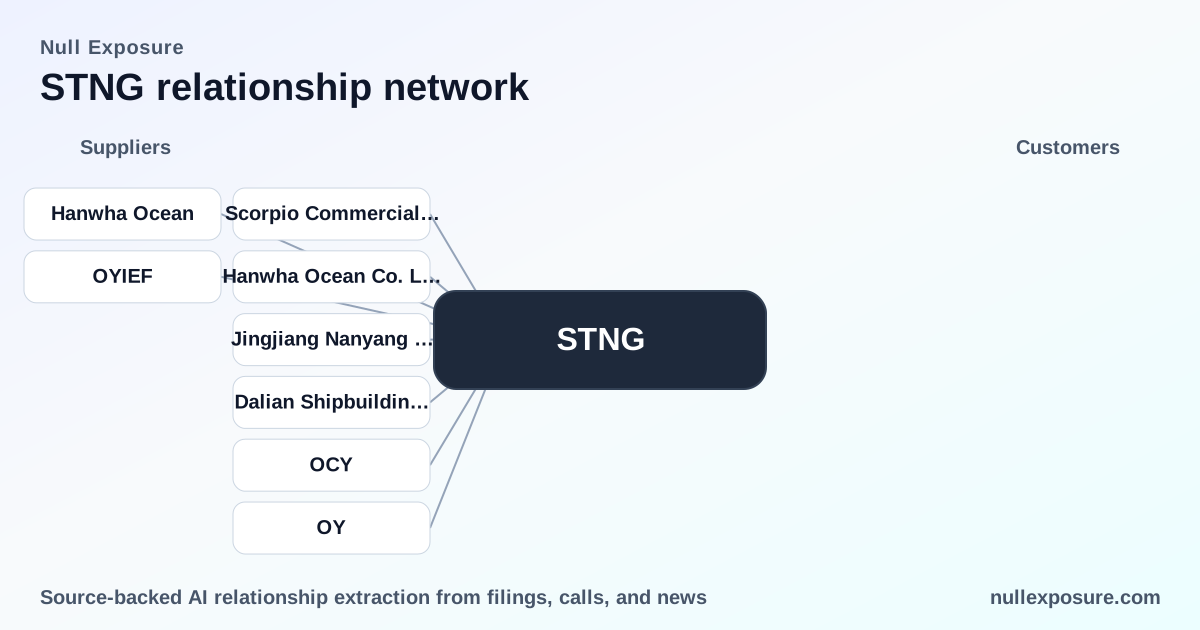
Scorpio Tankers (STNG): supplier map and what it means for investors
Scorpio Tankers operates a global fleet that transports refined petroleum products and crude; it monetizes through a mix of time and voyage charters, sale-and-leaseback and outright vessel ownership, and disciplined fleet renewal that converts capital expenditure into operating leverage and dividend capacity. Revenue derives from vessel utilization and charter rates, while strategic supplier commitments—newbuild contracts, shipyards and finance lessors—drive capital intensity and near-term cash flow volatility. For a detailed view of supplier exposures and implications for portfolio risk, visit https://nullexposure.com/.
How Scorpio’s supplier relationships translate into strategy and risk
Scorpio’s operating model is capital-intensive and relationship-driven. The company sources tonnage through three primary channels: internal commercial management and pools, direct newbuilding contracts with Asian shipyards, and third-party lessors/lease-finance providers. That mix creates a contracting posture that blends related-party operating control with external manufacturing and financing dependencies. Newbuild commitments lock in future capacity and technology choices (eg. scrubber retrofits), while lease financings determine liquidity and leverage flexibility.
At the company level, the supplier signals in public filings and press coverage show:
- Concentration across a handful of shipyards in South Korea and China for newbuilds, which centralizes delivery and schedule risk.
- Critical reliance on Scorpio Commercial Management S.A.M. for pool operations and commercial management, which keeps voyage economics and scheduling under related-party control.
- Material interactions with lease financiers such as Ocean Yield, where repayments and sale actions have meaningfully altered leverage and cash flow.
No supplier-level constraints were flagged in the supplier-scope results, so these operating characteristics are company-level signals rather than supplier-specific limitations.
Supplier relationships, one by one
Scorpio Commercial Management S.A.M.
Scorpio Commercial Management (SCM) operates the Scorpio Handymax Tanker Pool (SHTP) and is a related party that provides commercial management and pool services for certain vessels. According to Scorpio’s FY2026 earnings release, SHTP and SCM are explicitly disclosed as related parties operating vessels for the company (GlobeNewswire, Feb 12, 2026).
Hanwha Ocean Co. Ltd. / Hanwha Ocean
Scorpio signed agreements to construct two scrubber-fitted VLCCs at Hanwha Ocean in South Korea in December 2025, signaling a strategic move into larger crude tonnage and longer-term capital commitments with a major Korean yard (GlobeNewswire, Feb 12, 2026; gCaptain coverage, FY2026).
Jingjiang Nanyang Shipbuilding Co., Ltd.
In November 2025, Scorpio entered into contracts to build four scrubber-fitted MR newbuilding product tankers at Jingjiang Nanyang in China, reflecting continued product-tanker renewal sourced from Chinese yards (GlobeNewswire, Feb 12, 2026).
Dalian Shipbuilding Industry Co., Ltd.
Scorpio declared options in February 2026 to purchase two scrubber-fitted LR2 newbuildings at Dalian Shipbuilding for $68.5 million per vessel, confirming an active pipeline of medium-range product tankers under construction in China (GlobeNewswire, Feb 12, 2026).
Ocean Yield
Ocean Yield has been a financier and lease counterparty for several Scorpio vessels; Scorpio reported repayments and the last remaining Ocean Yield lease financing obligations were settled in December 2025, including earlier prepayments and a reduction of lease liabilities that funded deleveraging (The Globe and Mail press materials and Yahoo Finance coverage, FY2026). Scorpio’s earnings transcripts and related press also reference outstanding lease liabilities tied to Ocean Yield and the repayment of obligations on LR2 vessels formerly financed under Ocean Yield arrangements (InsiderMonkey and Globe and Mail, FY2026).
What this supplier map implies for investors
- Capital-commitment profile is front-loaded and directional. Multiple newbuild orders at Hanwha, Jingjiang Nanyang and Dalian signify multi-year capex outflows and scheduled deliveries that will materially affect fleet composition and depreciation schedules. That transforms future EBITDA mix as larger VLCCs and scrubber-equipped vessels enter service.
- Related-party commercial management concentrates operating control. SCM’s role in pool operations centralizes voyage optimization and chartering decisions, which is positive for operational alignment but increases governance scrutiny for minority investors.
- Financing counterparties have been actively unwound. The repayment of Ocean Yield lease obligations and vessel sales used to pay down debt have moved Scorpio toward net-cash positions and supported a dividend increase, changing the company’s leverage profile and capital allocation options (GlobeNewswire and Yahoo Finance, FY2026).
- Supply-side concentration creates delivery and technical risk. Relying on a small set of yards in South Korea and China means schedule delays, yard-capacity issues, or geopolitical trade frictions would transmit to Scorpio’s ability to grow or renew the fleet on schedule.
For an investor-ready supplier risk dashboard and deeper relationship maps, explore https://nullexposure.com/.
Practical investment takeaways and due diligence checklist
- Track newbuilding delivery schedules and capex funding sources for the Hanwha, Jingjiang Nanyang and Dalian contracts; delivery timing is the single largest near-term driver of fleet EBIT mix.
- Monitor related-party disclosures and pool economics for SCM to ensure commercial alignment and transparent transfer pricing. Related-party commercial managers can concentrate both upside and governance risk.
- Watch liquidity and lease-finance activity: further prepayments or vessel disposals will continue to affect net leverage and dividend policy. Recent repayments to Ocean Yield materially reshape balance-sheet optionality.
Next steps for operators and investors
- Use supplier exposure as a lens for scenario analysis: model delivery slippage, charter-rate stress and alternative financing outcomes.
- Prioritize counterparty diligence with shipyards and lessors when underwriting future orders or M&A.
- For more supplier intelligence and to benchmark STNG’s counterparties across your portfolio, visit https://nullexposure.com/.
Scorpio Tankers’ supplier footprint tells a clear strategic story: aggressive fleet renewal via concentrated shipyard relationships, retained commercial control through a related-party manager, and an active deleveraging effort with lease counterparties. Those three elements—capital commitments, commercial control, and financing evolution—define both the opportunity and the primary risk vectors investors must monitor.