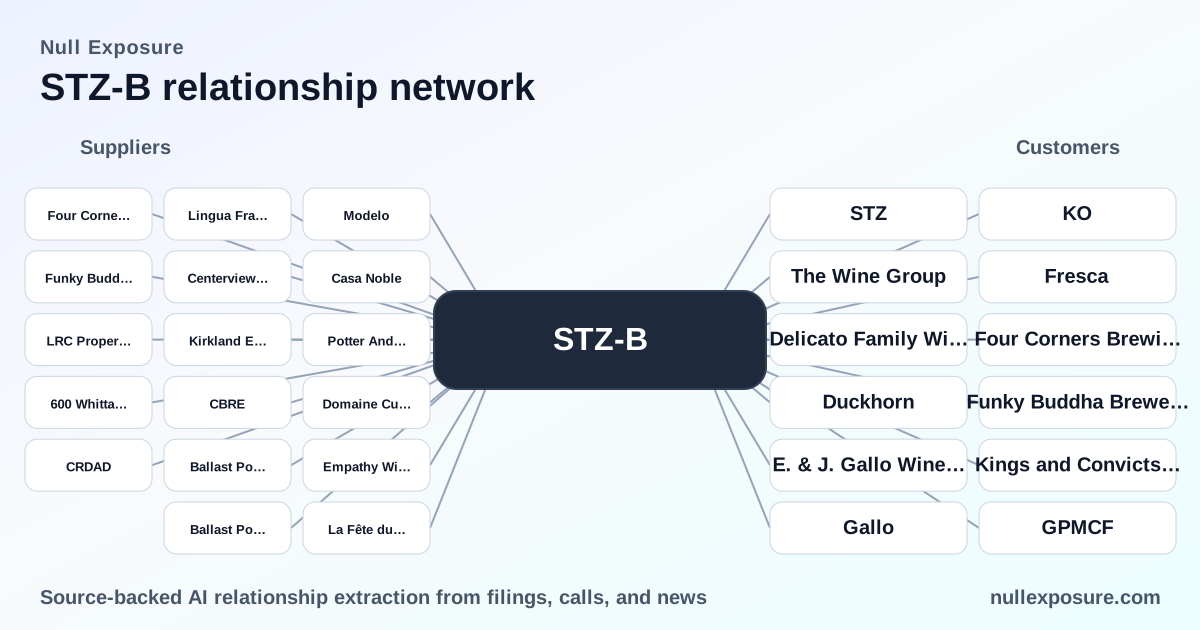
Constellation Brands (STZ-B) — supplier relationship map and investor implications
Constellation Brands operates as a branded beverage company that imports, markets, and distributes leading beer, wine and spirits while monetizing through wholesale margin, premium brand pricing, targeted direct‑to‑consumer channels, and strategic M&A to capture higher-margin luxury and craft segments. The firm’s supplier posture combines long‑standing import relationships for global labels, incremental brand acquisitions to climb the value curve, and an asset-light distribution footprint supplemented by real estate and third‑party advisors — a mix that drives stable cash conversion but concentrates exposure in a handful of high‑value supplier relationships. For a more detailed supplier view and risk feed, visit https://nullexposure.com/.
How to read Constellation’s supplier posture as an operator or investor
Constellation’s business model is defined by brand concentration and strategic outsourcing rather than large-scale owned manufacturing. That creates four operating signals investors should treat as structural company-level constraints:
- Contracting posture: Constellation relies on import agreements and acquisition targets rather than vertically integrated upstream manufacturing, increasing vendor and cross-border contract importance.
- Concentration: A small group of iconic labels underpins a large share of revenues, making supplier shocks (tariffs, ingredient availability) disproportionately impactful.
- Criticality: Imported megabrands are mission‑critical to topline stability; logistics, customs, and distributor relationships are operational priorities.
- Maturity and evolution: The company balances legacy high-volume beer with higher-margin wine and DTC experiments; acquisitions and later divestitures imply evolving portfolio maturity and integration risk.
These are company-level signals — useful for underwriting credit, covenant stress tests, or operational contingency planning. For an interactive breakdown of the full supplier graph, see https://nullexposure.com/.
Line-by-line partner and supplier notes investors should track
Modelo
Constellation imports Modelo beer and is sensitive to cross‑border cost shifts; Wells Fargo analysis cited in ABC7 estimated that a proposed tariff could increase Constellation’s costs by roughly 16% and necessitate a price increase near 4.5%, underscoring tariff exposure on Mexican imports (ABC7, coverage of FY2024 risk).
Casa Noble
Casa Noble tequila is part of Constellation’s imported Mexican spirits portfolio and carries the same tariff and supply‑chain exposure as Modelo, reinforcing the company's reliance on Mexican suppliers for core SKUs (ABC7, FY2024 reporting).
Corona
Corona is another high‑volume imported label under Constellation’s commercialization remit; tariff analysis published in the same ABC7 piece highlights material unit cost sensitivity for Corona as well (ABC7, FY2024).
Potter Anderson Corroon LLP
Potter Anderson Corroon served as legal counsel to the Special Committee of Constellation’s Board in a governance or transaction context, indicating use of external legal counsel for material corporate actions (SEC filing, Exhibit 99.3, June 30, 2022).
Centerview Partners LLC
Centerview Partners acted as financial advisor to Constellation’s Special Committee, reflecting the company’s reliance on top-tier investment banks for strategic review and deal execution (SEC filing, Exhibit 99.3, June 30, 2022).
Kirkland Ellis LLP
Kirkland Ellis provided legal counsel to Constellation itself, signaling engagement of elite law firms for transaction and corporate matters that affect shareholder value and regulatory compliance (SEC filing, Exhibit 99.3, June 30, 2022).
Domaine Curry
Domaine Curry was acquired as part of Constellation’s strategy to expand into luxury Napa Valley wine and boost higher-margin wine exposure, demonstrating the firm’s acquisition playbook for premiumization (BeverageDaily, Jan 11, 2024).
Empathy Wines
Empathy Wines is an example of Constellation’s investment in digitally native, DTC wine channels; BeverageDaily reported DTC net sales growth and noted the brand’s role in accelerating direct engagement with consumers (BeverageDaily, Jan 11, 2024).
La Fête du Rosé
La Fête du Rosé sits within the company’s curated wine portfolio of lifestyle and premium labels acquired to capture seasonal and premium consumption occasions (BeverageDaily, Jan 11, 2024).
Lingua Franca
Lingua Franca is a luxury wine acquisition that reflects Constellation’s broader strategy to push up the value chain through selective, high‑end brand purchases (BeverageDaily, Jan 11, 2024).
CBRE
CBRE arranged a lease for a 469,830‑square‑foot facility in North Jacksonville that Constellation occupies, illustrating the company’s use of third‑party commercial real estate brokers for distribution infrastructure (Jax Daily Record, Feb 28, 2022).
LRC Properties
LRC Properties served as the landlord in the Jacksonville lease transaction, showing Constellation’s propensity to use leased logistics assets rather than large permanent warehousing ownership (Jax Daily Record, Feb 28, 2022).
600 Whittaker LLC
600 Whittaker LLC (a subsidiary buyer) was the property vehicle in the sale tied to Constellation’s Jacksonville lease, a reminder that distribution real estate often sits with institutional landlords rather than the operator (Jax Daily Record, Feb 28, 2022).
Ballast Point Brewing / Ballast Point
Ballast Point represents Constellation’s past craft-beer acquisition strategy — purchased in 2015 for $1 billion and later cited as a poor fit — which highlights acquisition integration risk and the limits of scale benefits in craft beer (CraftBrewingBusiness; VinePair retrospective on FY2023).
Four Corners Brewing Co.
Four Corners Brewing Co. was another craft acquisition that eventually returned to founder control, underscoring the reversal of some craft roll-up bets and the complexity of absorbing founder‑led breweries (VinePair coverage of FY2023).
Funky Buddha Brewery
Funky Buddha’s reacquisition by its founders is further evidence that several craft investments were divested, signaling portfolio pruning where strategic fit and operational returns did not meet expectations (VinePair; CraftBrewingBusiness, FY2023 coverage).
What this network means for risk, margin and strategy
- Tariff and sourcing risk are tangible: The ABC7 tariff analysis makes supplier concentration in Mexico a quantifiable margin lever for STZ-B’s economics — that is a first‑order risk for investor stress tests.
- Acquisition-driven premiumization carries integration risk: Multiple craft and luxury wine deals improve margin potential but have a track record of mixed outcomes; past divestitures indicate portfolio correction and learning costs.
- Asset-light logistics plus third‑party advisors: Leasing distribution real estate and routinely hiring top legal and financial advisors reduce capital intensity but increase dependency on third parties for continuity and transaction execution.
For a structured supplier risk scorecard and ongoing alerts on counterparty changes, visit https://nullexposure.com/ to subscribe.
Bottom line and actions for investors
Constellation Brands runs a brand-heavy, import‑exposed operating model: profitable and cash generative when global trade is stable, vulnerable to tariff shocks and acquisition missteps. Investors should underwrite scenarios around Mexican import tariffs, monitor DTC growth against margin dilution, and watch counsel/advisor engagement as signals of strategic change.
For immediate access to the full supplier linkage map and to integrate these relationship signals into credit models, go to https://nullexposure.com/.