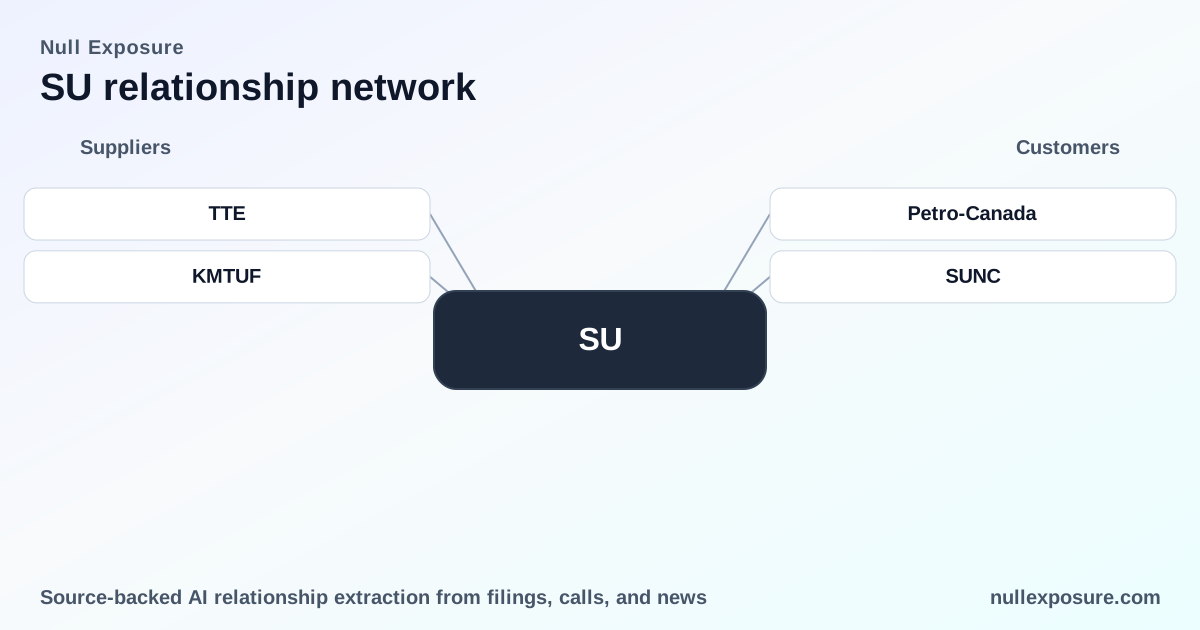
Suncor (SU) — Supplier relationships that shape an integrated energy operator
Suncor Energy is an integrated energy company that monetizes through upstream production (oil sands and conventional), downstream refining and marketing, plus merchant and commodity optimization. The company captures margin across the full hydrocarbon chain and supplements cash flow with disciplined capital allocation and a shareholder distribution policy. For investors evaluating supplier risk and operational leverage, Suncor’s supplier footprint combines strategic asset-level deals with tight operational OEM relationships — a mix that underwrites production scale while exposing the company to execution and commodity-sensitive counterparties. Learn more about supplier intelligence at https://nullexposure.com/.
How Suncor runs the business and gets paid
Suncor operates large-scale oil sands mining and in-situ operations, conventional wells, refineries and fuel retailing. Revenue streams are diversified across production, refining margins and retail fuel sales, and the company converts those revenues into free cash flow that supports dividends and capital projects. Financially, Suncor reports ~$48.9 billion in trailing revenue and roughly $14.9 billion EBITDA, with a market capitalization near $72.2 billion (latest available figures). These operating characteristics create a supplier profile that requires heavy equipment OEMs, refinery contractors, and occasional strategic counterpart transactions. If you want a structured supplier view tied to investment analysis, start here: https://nullexposure.com/.
The two supplier relationships flagged in public reporting
TotalEnergies — an asset acquisition and strategic consolidation
Suncor announced the acquisition of TotalEnergies’ Canadian operations for $5.5 billion plus contingent payments tied to Western Canadian Select pricing and production targets; this transaction positions Suncor to consolidate oil sands holdings and capture incremental production scale. According to a 247WallStreet report (May 2023), the deal includes up to an additional $600 million in contingent payments based on benchmark pricing and production milestones (https://247wallst.com/investing/2023/05/01/suncor-goes-all-in-on-oil-sands-with-buy-of-totals-canada-ops/). Key takeaway: this is a capital-intensive supplier/partner interaction executed as an acquisition to internalize production capacity and reduce reliance on third-party operated assets.
Komatsu — OEM collaboration at the operational level
Suncor referenced working closely with Komatsu on truck technology implementation during an earnings call, underlining direct OEM partnerships that support mine fleet modernization and productivity upgrades. The remark appears in the Q4 2025 earnings call transcript published by InsiderMonkey, where management described a base plan to implement Komatsu technology on haul trucks (InsiderMonkey Q4 2025 earnings call transcript; https://www.insidermonkey.com/blog/suncor-energy-inc-nysesu-q4-2025-earnings-call-transcript-1689385/). Key takeaway: Komatsu is a functional supplier supporting Suncor’s extraction and hauling operations rather than a financial counterparty — the relationship influences uptime, OPEX and operational productivity.
What these supplier signals tell investors about Suncor’s operating model
The combination of a large-scale acquisition (TotalEnergies assets) and close OEM engagement (Komatsu) yields several company-level operating signals:
- Contracting posture: Suncor executes both large, strategic M&A to internalize capacity and close, collaborative supplier contracts for equipment and technology. This hybrid posture reduces some external operational dependency by owning more upstream capacity while retaining specialized vendor relationships for fleet and equipment expertise.
- Concentration and criticality: The asset acquisition increases Suncor’s internal control over production-critical inputs (reserves and processing capacity), while OEM relationships like Komatsu are operationally critical to mine productivity and maintenance cycles.
- Maturity and integration: Relationships show a mature operating model that mixes capital deployment with supplier integration to drive scale and productivity. Management publicly frames these links as long-term operational partnerships rather than one-off vendor engagements.
- Company-level constraints signal: The constraints collection returned no supplier-specific contractual limits in the available records. That absence is itself a company-level signal: there are no disclosed supplier-side constraints in the curated feed, suggesting that significant long-term restrictive covenants or public supplier encumbrances were not present in the reviewed materials.
Investment implications — what to watch next
- Operational execution is decisive. The TotalEnergies asset integration raises execution risk through asset integration, regulatory approvals and production ramp; successful integration expands cash flow and lowers unit costs.
- Equipment and tech partnerships drive cost structure. Komatsu and similar OEM relationships materially affect mining OPEX and uptime; procurement and maintenance cadence will influence free cash flow volatility.
- Commodity sensitivity remains dominant. Supplier arrangements operate inside a commodity-price driven margin structure; hedge discipline and refinery capture will determine realized returns on these supplier investments.
- Counterparty and consolidation risk. Large acquisitions reduce reliance on third-party operated volumes but increase exposure to project execution and capital intensity.
Consider these factors as part of your thesis and scenario modeling. For a deeper supplier-level risk map and timeline-driven alerts, visit https://nullexposure.com/.
Practical readouts for operators and procurement teams
- Treat OEM relationships as strategic partnerships: incorporate technology rollouts and lifecycle costs into capital planning rather than pure CAPEX line items. The Komatsu collaboration signals an ongoing focus on fleet modernization.
- Integrate M&A diligence with supplier impact analysis: asset purchases like the TotalEnergies deal change procurement scale, supplier negotiation leverage and spare-parts inventories.
- Monitor production-linked contingent payments: transactions with contingent pricing or production clauses introduce performance-linked cash flows that affect near-term liquidity and long-term unit economics.
Final verdict and next steps
Suncor’s public supplier signals show a deliberate strategy: scale upstream through acquisitions while preserving deep operational OEM relationships to protect productivity. For investors, the combination increases upside from operational leverage but elevates integration and execution risk in a highly cyclical commodity environment. For procurement and operations leaders, supplier partnerships with OEMs deserve elevated focus as enablers of margin through uptime and efficiency gains.
If you are building an investment case or a supplier risk plan tied to Suncor, start with a tailored supplier intelligence package at https://nullexposure.com/ — we map relationships, timelines and impact to cash flow in investor-ready formats.