SUNation Energy (SUNE): Supplier relationships, financing partners, and operational constraints investors should price in
SUNation Energy operates as an installer and integrator of residential and commercial solar systems, monetizing through equipment sales, installation services, and recurring maintenance contracts while leveraging third‑party financing to broaden customer affordability. The company’s growth trajectory hinges on its ability to combine hardware sourcing with flexible financing partners that expand addressable demand, while managing concentrated supplier exposure and legacy financing commitments. For investors assessing supplier and financing counterparties, the following synthesis isolates the commercial relationships, contract posture, and material constraints that shape near‑term cash flow and execution risk.
Learn more about our supplier intelligence and monitoring at https://nullexposure.com/.
Why the Palmetto agreement changes the economics of SUNation's residential channel
In February 2026 SUNation disclosed a strategic financing agreement with Palmetto, using Palmetto’s consumer platform to provide lease and power purchase agreement (PPA) options that lower upfront costs for homeowners and improve project cash flow for SUNation. According to a GlobeNewswire release (Feb 11, 2026), Palmetto’s LightReach product will deliver lease and PPA structures intended to expand residential access to solar while improving near‑term project economics and company cash conversion. This arrangement shifts SUNation’s go‑to‑market posture toward asset light customer acquisition supported by third‑party capital.
Palmetto’s LightReach is presented specifically as the channel through which lease and PPA options will be offered to SUNation customers; reporting (Bitget and Benzinga coverage, Feb–Mar 2026) repeats that LightReach will provide the lease/PPA options to improve project economics, confirming the product‑level role within the strategic agreement.
Legacy credit lines and the MBB Energy facility: liquidity and termination events
SUNation used a secured revolving credit facility with MBB Energy to fund certain obligations, drawing a $1.0 million facility that carried an 8% rate to satisfy an immediate payment to a former shareholder. TradingView and company disclosures note the draw on the MBB Energy revolving line and the interest terms. Subsequent company filings and management disclosure show that, following an equity financing, SUNation repaid the aggregate MBB loan balance and terminated that facility, eliminating further principal or interest obligations associated with those notes.
Relationship directory: concise, source‑backed summaries
-
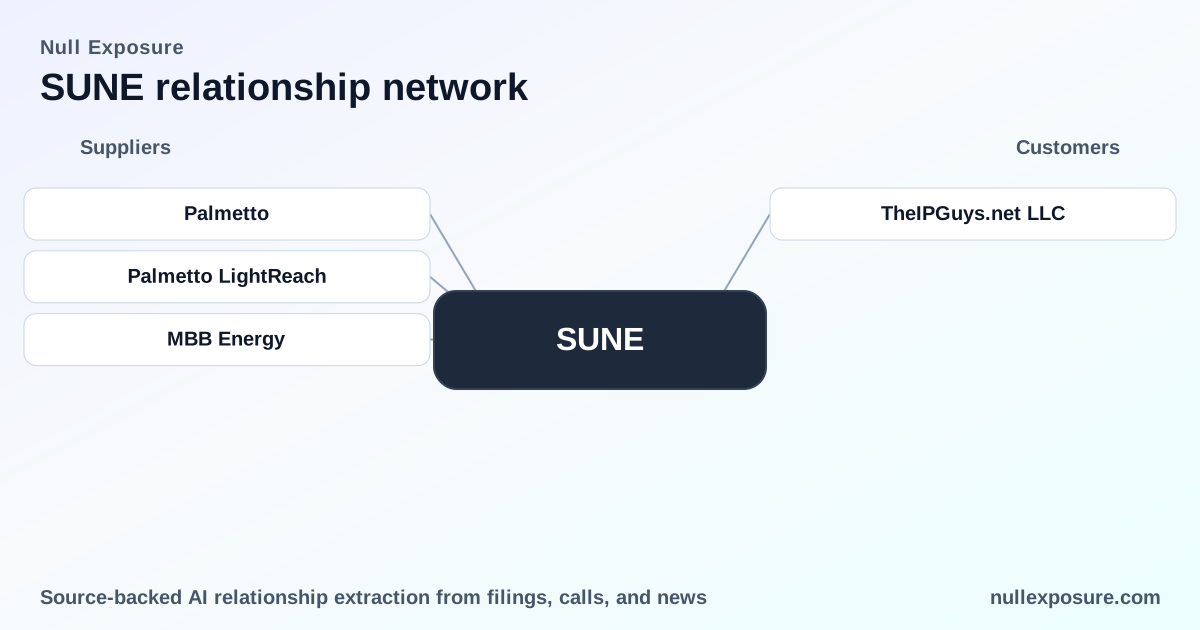
Palmetto — SUNation signed a strategic financing agreement to leverage Palmetto’s consumer energy platform to support residential solar growth in 2026, with the goal of expanding customer access and improving cash flow efficiency. Source: GlobeNewswire press release (Feb 11, 2026) and company news (Nov 2025–Feb 2026 coverage).
-
Palmetto LightReach — Palmetto’s LightReach product will supply lease and PPA options directly tied to SUNation projects, structured to improve project economics and support broader residential deployment. Source: GlobeNewswire (Feb 11, 2026) and Bitget/Benzinga reporting (Feb 2026).
-
MBB Energy — SUNation utilized a $1.0 million secured revolving credit facility with MBB Energy at 8% interest to fund a payment to a former shareholder; subsequent disclosures indicate that the MBB loan balance was repaid in full after an equity financing. Source: TradingView coverage (Mar 2026) and company filings summarizing repayment events (as of Feb 28, 2025).
What the constraints say about SUNation’s operating model and supplier risk
Company disclosures and note‑level evidence establish several structural characteristics investors must weigh:
-
Contracting posture — mixed maturity profile. The company has historically relied on a combination of long‑term financing instruments (term loans, revenue loan agreements, and long‑term promissory notes) and shorter‑term obligations tied to earnouts and working capital. Filing excerpts list term loans with amended maturities into 2027 and long‑term promissory notes recorded in connection with acquisitions, while earnout balances are captured in current liabilities. This creates a bifurcated maturity ladder that influences cash flow planning.
-
Concentration risk is material. The company depends on a limited number of suppliers for panels, inverters, and storage; the top five suppliers historically accounted for roughly 41% (2024) and 53% (2023) of accounts payable, indicating significant vendor concentration that increases vulnerability to supply disruption, price swings, and quality issues.
-
Hardware criticality and supplier role. SUNation functions as both installer and buyer of hardware; its supplier relationships are manufacturing‑critical because panels, inverters, and batteries are mission‑critical inputs that directly affect project timelines and warranty exposure.
-
Balance sheet tightening through repayment/termination. The company used proceeds from equity financings to repay and terminate several legacy loan agreements (including Conduit, MBB and Decathlon balances and a Hercules term loan), shifting away from those creditor relationships and reducing recurring financing burdens. Those termination events materially change counterparty exposure and lower servicing requirements on legacy debt.
Where the risk-reward lines draw for investors
SUNation’s model blends upstream hardware exposure with downstream financing partnerships. The Palmetto LightReach agreement is a positive commercial lever: it lowers customer acquisition friction and improves cash conversion on residential projects. At the same time, supplier concentration and hardware dependency create execution risk if component availability or price volatility tightens.
Key signals for monitoring:
- Track the volume and terms of projects placed through Palmetto/LightReach and the cadence of cash receipts under lease/PPA structures.
- Monitor accounts payable concentration trends and vendor diversification efforts in subsequent quarterly filings.
- Watch working capital and liquidity metrics post‑equity financing, given the prior repayment of legacy loans and the residual obligation profile.
For detailed monitoring and supplier tracking tools, visit https://nullexposure.com/ to see how we aggregate and surface counterparty risk.
Bottom line and investor actions
SUNation has strategically moved to offload some financing friction by partnering with Palmetto while also shrinking legacy creditor obligations through equity‑funded repayments. Those moves improve short‑term cash flow flexibility and expand residential sales options, but they do not remove supplier concentration risk tied to hardware procurement. Investors should price in both the upside from improved financing channels and the downside from persistent hardware concentration and volatile margins in solar equipment markets.
If you evaluate supplier relationships or underwrite financing for SUNation, prioritize monitoring Palmetto LightReach sales flow, supplier diversification disclosures, and quarterly cash conversion metrics. For ongoing coverage and supplier risk dashboards, go to https://nullexposure.com/.