Surface Oncology (SURF) — what the supplier list reveals about the exit and operating posture
Surface Oncology operated as a therapeutics developer in oncology and realized value through strategic M&A rather than a sustained independent commercial rollout; the company's most consequential supplier relationships are transactional advisors hired to execute that exit. Surface monetized intellectual property and R&D progress through a corporate sale completed in September 2023, with financial and legal advisors retained to structure and close the transaction. For commercial counterparties and investors, the supplier roster around that exit communicates a short, high-intensity contracting posture, concentrated external dependency during critical events, and engagement of mature advisor brands. Learn more about how supplier intelligence informs deal and counterparty risk at https://nullexposure.com/.
The advisor roster tells a compact story about SURF’s operating posture
Surface’s supplier footprint in the public record is dominated by advisers engaged for an M&A outcome, not by long-term manufacturing, distribution, or strategic-platform vendors. That concentration of supplier roles around transactional counsel and financial advice indicates a company posture optimized for exit execution rather than ongoing scale-up. From a contracting standpoint this implies short-duration, high-importance contracts that are critical to deal timing and regulatory clearance but low recurring operational spend.
- Contracting posture: transaction-focused — advisors engaged to execute a specific corporate milestone rather than multi-year service delivery.
- Concentration: high around a small set of professional service firms, limiting surface-area for vendor ops risk but elevating single-event dependency.
- Criticality: very high for those advisors during the acquisition process; loss or underperformance would directly affect deal economics and timing.
- Maturity: established counterparties (national law firm and established boutique investment bank) signal professionalized execution and access to financing channels.
If you want a concise supplier-risk briefing tied to deals and exits, see how our research frames counterparty exposures: https://nullexposure.com/.
Who Surface hired — the public relationships
Below are the supplier relationships found in the public record tied to Surface’s acquisition, with one-line practical summaries and source context.
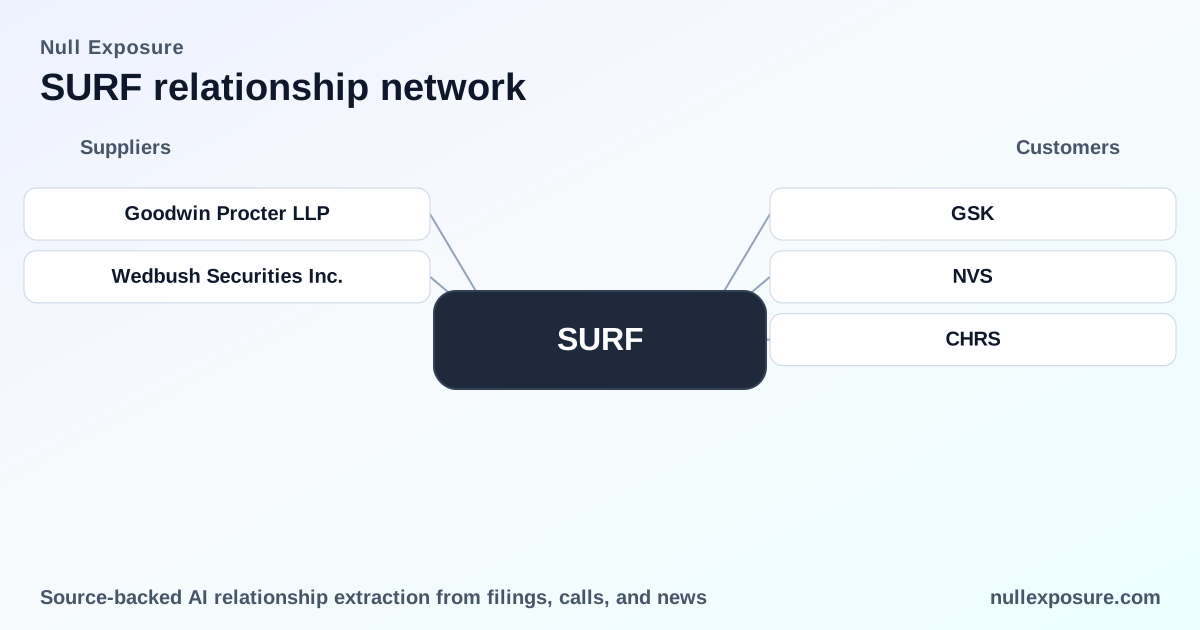
- Goodwin Procter LLP — Goodwin served as legal advisor to Surface in the Coherus acquisition process, providing transaction legal counsel and documentation support. According to a GlobeNewswire press release announcing the completion of the deal on September 8, 2023, Goodwin Procter LLP acted as legal advisor to Surface. (GlobeNewswire, Sept 8, 2023).
- Wedbush Securities Inc. — Wedbush acted as Surface’s exclusive strategic financial advisor for the transaction, responsible for financial structuring, buyer engagement, and deal execution. The same GlobeNewswire release notes Wedbush Securities Inc. as exclusive strategic financial advisor to Surface in the September 8, 2023 announcement. (GlobeNewswire, Sept 8, 2023).
These entries capture the universe of supplier relationships surfaced in the available results; both entries are transactional advisors tied to the announced acquisition.
What this supplier profile means for investors and counterparties
The advisor-only supplier list carries several implications for valuation, counterparty diligence, and post-close integration:
- Event-driven supplier dependency: Surface’s primary external spend and operational focus, in public records, was concentrated on completing the transaction. For investors, that means vendor risk is concentrated in a narrow time window with outsized impact on exit value.
- Low vendor diversification risk in ongoing operations: The absence of long-term manufacturing, CRO, or commercialization suppliers in the disclosed relationships reduces concerns about complex supplier networks, but also signals the company had not yet fully diversified operational partners prior to the sale.
- M&A execution quality is a leading driver of realized value: With established advisors engaged, execution quality was likely prioritized; investors should treat advisor selection and their track record as an input to deal-risk assessments.
- Integration and contingent liabilities remain the primary post-close focus: Legal counsel and financial advisors manage deal terms, but integration risk and contingent obligations (e.g., milestones, IP warranties) become the governance items investors need to monitor after close.
Practical takeaways for business development and vendor managers
For managers evaluating partnerships with companies in similar exit-focused stages, apply these operational filters:
- Contract for outcome, not duration: Use performance- and milestone-based terms for short, high-stakes engagements; advisors in this case were retained specifically to execute a sale.
- Assess concentration as a feature, not a bug: A tight supplier roster simplifies management but concentrates execution risk; require demonstrable contingency planning for critical suppliers.
- Validate advisor track records: The selection of a national law firm and a recognized investment advisory firm is a deliberate signal—verify comparable transaction experience and timeline delivery.
If you need supplier-level due diligence tailored to M&A pathways, our product maps advisor exposure and deal outcomes — start here: https://nullexposure.com/.
Risks and monitoring priorities after an exit
Even with a clean, advisor-centric supplier list, investors should maintain focus on the following risk vectors:
- Contingent liabilities embedded in the purchase agreement: Warranties, indemnities, and milestone-based payments survive closing and require active monitoring.
- Intellectual property and license continuation: Ensure any third-party IP licenses or collaborations are aligned under new ownership to avoid interruption.
- Reputation and regulatory follow-through: Legal advisors negotiate the terms, but compliance and regulators determine ultimate regulatory risk exposure post-close.
Priority action: secure transparency on post-closing covenants and milestone schedules — these are the only supplier-like obligations that persist after an advisor-led exit.
Bottom line — how to use this insight in investment decisions
The supplier footprint around Surface Oncology is a classic exit playbook: a compact, high-intensity advisory cohort used to realize corporate value through acquisition. For investors and operators, that profile translates into focused due diligence on deal execution, contingency clauses, and post-close obligations rather than an extended supplier resilience program. Where counterparties or acquirers need comfort, the most material documents will be the purchase agreement and the schedules that govern post-closing payments and IP assignments.
For a concise briefing and supplier-risk scoring built for M&A and counterparty evaluation, visit https://nullexposure.com/ and request a tailored report.
Key takeaway: Surface’s public supplier relationships are purposeful and transactional — treat advisor selection, contractual milestones, and contingent liabilities as the prime drivers of realized value and post-close risk.