SWVLW: Auditor Swap Raises Supplier Governance Questions for Investors
Swvl operates an on-demand bus and mass-transit platform focused on emerging markets and monetizes through ride fares, contracted B2B services and platform fees tied to route management and corporate partnerships. The company is still generating meaningful top-line revenue but operates with structural losses and low market liquidity in its warrant class; these factors make supplier relationships—particularly professional service providers such as auditors—material to short‑ and medium‑term valuation.
If you are evaluating counterparty risk or supplier dependencies for Swvl, start with a focused supplier-mapping exercise that prioritizes governance providers and financial counterparties. Learn more about practical supplier intelligence at https://nullexposure.com/.
What the recent auditor change tells investors about supplier risk
Swvl’s public supplier signals in our feed are concentrated in the auditor function. An auditor replacement during a going‑concern dialogue elevates the criticality of that supplier relationship: audit firms have direct visibility into solvency issues and influence financing options. For investors and operators, this is not a routine vendor swap—this is a governance event with immediate implications for financial reporting credibility, lender comfort, and capital access.
Key company-level signals drawn from the public profile:
- Negative operating and EBITDA margins and an EBITDA loss around $125.99M indicate persistent cash burn that increases dependency on external capital and advisory suppliers. (Company filings through 2025 Q2.)
- Revenue of $80.18M TTM confirms scale in operations but not profitability; suppliers that manage financial, regulatory, or fleet services therefore become high‑impact partners.
- Very limited trading metrics for the warrant class (low 52‑week price and no market capitalization listed) signal acute liquidity risk for holders of SWVLW and suggest professional services providers may be assessing going‑concern implications more aggressively. (Company data through latest quarter 2025‑06‑30.)
- The supplier universe surfaced in public news is narrowly focused on audit providers, implying concentration in visible professional services exposure rather than a broad supplier roster disclosed in the public feed.
Supplier relationships reported (complete coverage)
-
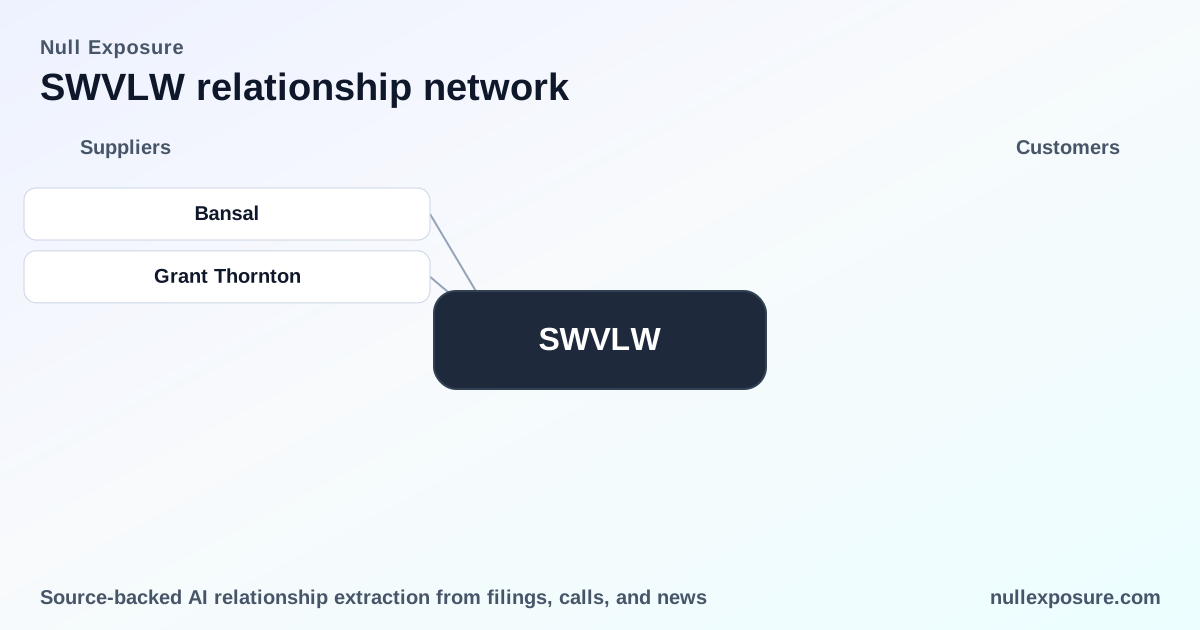
Bansal — Swvl engaged Bansal as its new independent auditor in a replacement move tied to a going‑concern flag. This replacement positions Bansal as the immediate auditor of record and the firm responsible for shaping the next set of audited financials and any going‑concern language. According to TipRanks reporting on February 17, 2026 (reported on CNBC), Swvl replaced Grant Thornton with Bansal amid the going‑concern discussion. Source: TipRanks / CNBC (Feb 17, 2026).
-
Grant Thornton — Grant Thornton was the outgoing independent auditor for Swvl and was replaced during the going‑concern episode; the change signals either a governance decision by management/board or a professional disengagement linked to solvency concerns. TipRanks reported the replacement on February 17, 2026 with coverage available on the CNBC quotes page. Source: TipRanks / CNBC (Feb 17, 2026).
How these supplier moves constrain the business model
Treat the absence of broader supplier disclosures in the public feed as a company-level signal: public supplier visibility is concentrated and sparse, which raises two operational constraints:
- Contracting posture: Swvl’s immediate supplier contracting posture is defensive—auditor turnover under a going‑concern flag suggests suppliers are recalibrating engagement terms or withdrawing where risk/reward is misaligned.
- Concentration and criticality: The only surfaced suppliers are auditors, and auditors are critical for access to capital and credible financial statements; concentrated exposure to a small set of governance vendors increases systemic supplier risk.
- Maturity profile: Financial metrics (ongoing negative margins and substantial EBITDA loss) indicate Swvl is operating in a cash‑constrained, transitional stage rather than a mature, free‑cash‑flow positive phase. This elevates the importance of supplier relationships that influence liquidity, restructuring, and refinancing outcomes. No explicit contractual constraints were tagged in the available public records; the absence of such constraints is itself a signal to prioritize primary diligence on governance and financing counterparties.
Practical implications for investors and operators
- Governance services are now mission‑critical. The auditor swap is a red flag that changes the priority ranking of supplier due diligence: auditors, lenders, and restructuring advisors should be treated as first‑order counterparties.
- Liquidity and valuation risk are elevated. The warrant class shows minimal trading range and no market cap listed, which reduces optionality for warrant holders and increases downside sensitivity to operational stress.
- Concentration elevates single‑point failures. With visible relationships limited to auditors in public reporting, a negative change from one provider can cascade into financing/credit access problems.
If you want a concise supplier risk brief that maps these governance relationships to financing timelines and counterparty risk, start here: https://nullexposure.com/.
Actionable next steps for supply-side and buy-side stakeholders
- Request the full list of service providers and current engagement letters from management; prioritize audit, tax, and refinancing advisers.
- Model runway sensitivities that assume limited access to incremental capital and test scenarios where the auditor’s going‑concern wording tightens lender covenants.
- For counterparties considering contracts, insist on contractual protections (payment priority, escrow, or performance milestones) given Swvl’s negative margins and limited warrant liquidity.
For a tailored report that aligns supplier concentration and criticality to investment horizons, visit https://nullexposure.com/ and request supplier-driven intelligence.
Closing takeaway
The auditor replacement from Grant Thornton to Bansal, reported February 17, 2026, is a governance-level supplier event that materially raises investor focus on financial transparency and liquidity pathways. For investors and operators evaluating SWVLW exposure, the primary question is not whether Swvl operates an on‑demand transit platform—that is established—but whether its current supplier relationships and financial footing support the next financing or restructuring step. Prioritize governance suppliers and capital providers in any diligence or operational contingency plan.
Explore supplier risk profiles and governance impact assessments for public and private companies at https://nullexposure.com/.