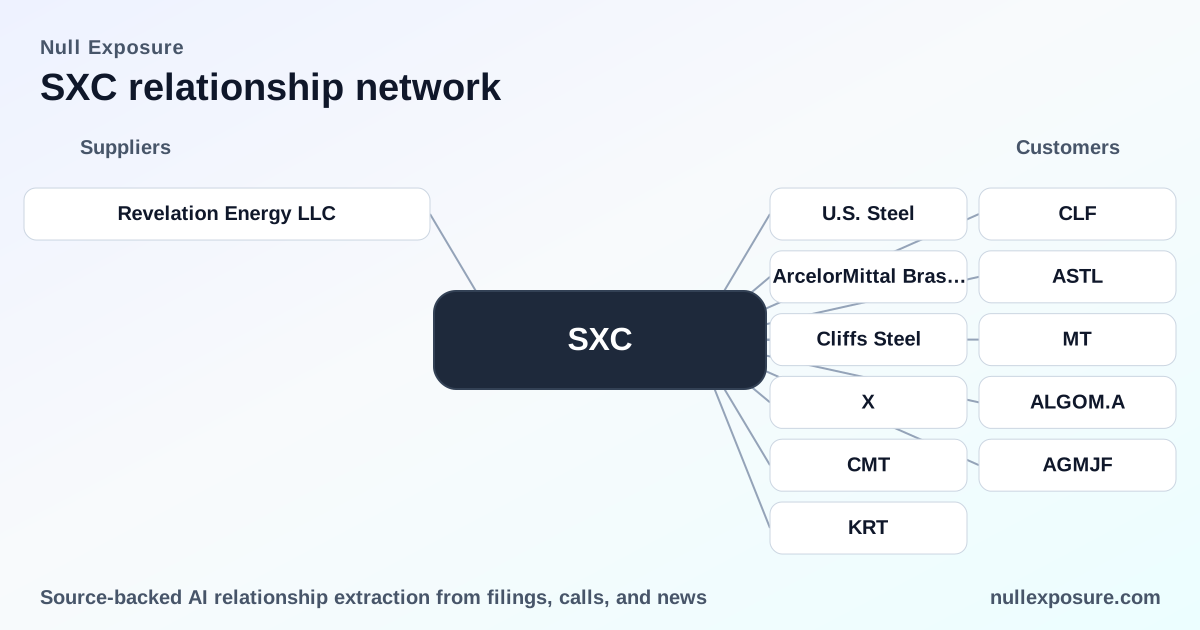
SunCoke Energy (SXC): Supplier Relationships, Procurement Risk, and Strategic Implications
SunCoke Energy is an independent coke producer operating in the United States and Brazil that monetizes by converting metallurgical coal into coke and selling that coke under long‑term customer contracts that generally pass through coal costs. The company’s scale (Revenue TTM $1.84bn; EBITDA $213.3m) and capital structure leave procurement and feedstock contracts as operational levers that directly determine margin volatility and working capital. Investors and operating partners should evaluate SunCoke through the lens of procurement concentration, contract tenor, and pass‑through mechanics. For further firm-level intelligence see https://nullexposure.com/.
How SunCoke runs the business and where the economics come from
SunCoke’s operating model converts metallurgical coal into coke and sells that coke into the steel value chain, frequently under long‑running, take‑or‑pay coke sales agreements that include mechanisms to pass coal cost changes through to customers. This contractual posture gives SunCoke predictable throughput but also creates large, explicit upstream obligations: SunCoke reported $876.6 million of contractual obligations tied to metallurgical coal procurement that extend through 2025, and it buys a substantial portion of coal on an annual basis via one‑year contracts with costs largely passed through to customers, per its public disclosures as of December 31, 2024. Those procurement obligations are material relative to the company’s market capitalization (~$493m) and operating cash flows.
SunCoke’s financial profile accentuates the procurement story: negative trailing profitability (Profit Margin -2.41%; Operating Margin -1.33%) coupled with positive EBITDA and a substantial dividend yield (7.97%) create a structure in which procurement cost control and contract stability are central to sustaining distributions and serviceability. Institutional ownership is high (94.16%), signaling that large investors are focused on these structural exposures. For a deeper company view visit https://nullexposure.com/.
Procurement posture and what the constraints tell investors
The filings and disclosures that document SunCoke’s procurement obligations signal a dual contract strategy with meaningful size:
- Long‑term commitments: Evidence shows significant contractual obligations linked to fixed coal prices and annual coke production requirements, indicating multi‑period exposure and take‑or‑pay characteristics. The $876.6m figure reported as of December 31, 2024 demonstrates that a sizeable portion of feedstock spend is locked into formal contracts.
- Short‑term purchasing on an annual cadence: SunCoke also purchases metallurgical coal generally on a one‑year basis, consistent with a market‑responsive topping of its feedstock portfolio, with costs largely passed through to customers under its coke sales agreements.
- Materiality and spend concentration: The company classifies these procurement obligations as significant; this is a major cash‑flow item (spend band > $100m) and a core operational dependency.
- Active supplier relationships: The firm operates with active, mature supplier arrangements rather than purely spot exposure, which implies negotiation leverage but also contractual carry‑over and counterparty reliance.
These characteristics collectively mean SunCoke’s working capital cycles and gross margins are structurally exposed to coal markets and to supplier counterparty performance, albeit tempered by sales pass‑through clauses.
Every supplier relationship identified (complete coverage)
Revelation Energy LLC
SunCoke contracted out a portion of its mine production in FY2015, with 200,000 tons produced under contract to Revelation Energy LLC, according to contemporaneous reporting, while the company operated the balance of its mines directly; this is a historical, supplier arrangement evidencing SunCoke’s use of contracted mining capacity to meet feedstock needs. (MarketRealist, 2015). Source: MarketRealist coverage of SunCoke’s U.S. operations, 2015; see the company’s historical disclosures.
What this means for investors and counterparties
- Credit and counterparty risk are consequential. Large, multi‑hundred‑million dollar procurement obligations create counterparty concentration risk for SunCoke if a supplier fails to perform, and conversely create counterparty exposure for suppliers when SunCoke operates under take‑or‑pay sales terms.
- Pass‑through clauses blunt commodity volatility but shift timing risk. SunCoke’s contracts largely permit passing coal cost changes to customers, improving margin stability over commodity cycles, but the company still bears timing and basis risk between purchase and pass‑through settlements.
- Near‑term covenant and liquidity considerations matter. The procurement obligations that extend through 2025 are front‑loaded and material to near‑term liquidity planning, given the company’s modest market cap and negative trailing margins.
- Operational maturity but limited diversification. The mix of long‑term and annual contracts indicates an experienced procurement function, but the reported spend magnitude suggests constrained diversification unless management executes active supplier strategy to expand sources.
Financial context is critical: SunCoke’s EV/EBITDA sits at ~10.2 and forward P/E around 12.25, while trailing operating margins are compressed; procurement risk is therefore a lever with direct valuation sensitivity.
What operators should prioritize when engaging SunCoke
- Conduct contract diligence that focuses on take‑or‑pay obligations, pass‑through triggers, and price reconciliation mechanics.
- Stress test working capital under coal price shocks and delayed pass‑through recoveries.
- Quantify counterparty performance risk and create mitigation plans for supplier disruption given the material spend profile.
- Maintain a clear view of contract tenors and renewal windows, especially those that expire or roll through 2025.
Key operational priorities: robust cash‑flow forecasting, supplier performance monitoring, and legal review of pass‑through and force majeure clauses.
For a concise evaluation framework and supplier intelligence, visit https://nullexposure.com/.
Bottom line and investor action points
SunCoke’s value to investors and partners is tied to its ability to lock in reliable coke production through a mix of long‑term and annual coal procurement arrangements while preserving pass‑through economics. The firm’s sizeable procurement obligations ($876.6m as of Dec 31, 2024) and documented use of contracted mining (e.g., Revelation Energy LLC in 2015) make procurement strategy a central investment thesis and a primary risk vector. Active monitoring of supplier contracts, counterparty credit, and pass‑through mechanics is essential to assessing SunCoke’s near‑term liquidity and medium‑term free cash flow prospects.
If you evaluate supplier exposure or manage counterparty risk in energy‑intensive value chains, start with a focused supplier review and contract inventory; more resources and structured intelligence are available at https://nullexposure.com/.