China SXT Pharmaceuticals (SXTC): Capital-market suppliers and what investors should know
China SXT Pharmaceuticals produces and sells Traditional Chinese Medicine tablets in China and monetizes through product sales alongside episodic capital raises; the most material near-term revenue driver is still product sales, while recent financing activity indicates reliance on external capital to fund operations and support NASDAQ listing costs and restructuring. For investors evaluating supplier risk, the immediate supplier relationships to monitor are capital markets intermediaries and the exchange/transfer-agent services that preserve tradability and shareholder records. Learn more at https://nullexposure.com/.
Why these supplier relationships matter for a microcap healthcare issuer
SXTC is a small-cap, loss-making pharmaceutical company with negative EBITDA, thin revenue, and very low institutional ownership. For entities in this profile, relationships with placement agents, the exchange, and the transfer agent are not peripheral—they are critical infrastructure that determine a company’s access to capital, market liquidity, and shareholder communications. The company’s ability to execute registered offerings, maintain NASDAQ listing continuity, and process transfers directly affects runway and valuation.
Who SXTC works with in the market (complete list)
Below are every supplier relationship surfaced in public notices and filings; each entry includes a short plain-English summary and a source.
-
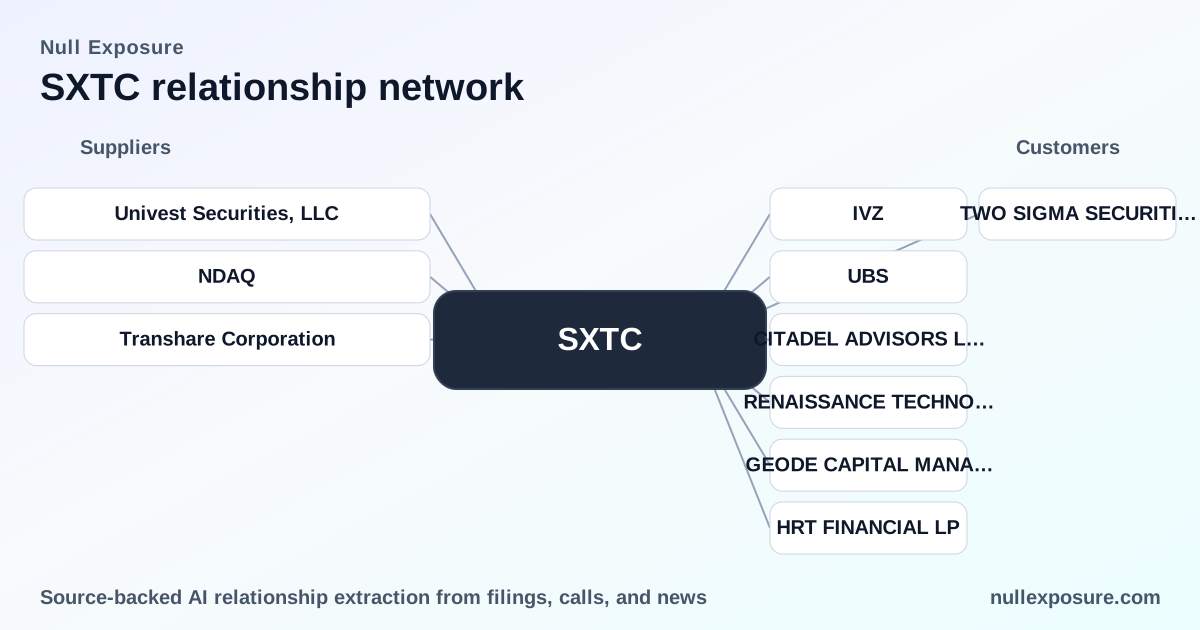
Univest Securities, LLC — Univest acted as sole placement agent in a registered direct offering that raised approximately $10 million for China SXT Pharmaceuticals in FY2026, indicating a transactional capital markets advisory and execution role. According to a GlobeNewswire announcement dated January 9, 2026, Univest was engaged as the sole placement agent for the $10 million offering.
Source: GlobeNewswire press release, January 9, 2026. -
The Nasdaq Stock Market — Nasdaq continues to host SXTC’s Class A ordinary shares under the ticker SXTC, including a share consolidation that took effect at market open on February 3, 2026; the exchange’s ongoing listing rules and trading infrastructure directly affect the company’s market access and liquidity. The company’s share consolidation and continued trading on Nasdaq with a new CUSIP were disclosed in a GlobeNewswire release on January 30, 2026.
Source: GlobeNewswire press release, January 30, 2026. -
Transhare Corporation — Transhare is serving as the company’s transfer agent, handling shareholder inquiries and administrative transfer functions; investor communications and record-keeping route through this provider. The GlobeNewswire share-consolidation notice (January 30, 2026) instructs shareholders to contact Transhare Corporation for transfer-agent matters.
Source: GlobeNewswire press release, January 30, 2026.
What the relationship set tells investors about SXTC’s operating posture
-
Contracting posture: SXTC engages external capital-markets specialists on a transactional basis (registered direct offering via a sole placement agent). This indicates a contracting posture oriented toward one-off fundraising engagements rather than long-term retainer relationships. The company is using market intermediaries to access liquidity quickly.
-
Concentration: The supplier set is highly concentrated and functionally narrow—placement agent, exchange, and transfer agent. For a small issuer, this is efficient but increases single-point-of-failure risk: if capital markets access is interrupted or listing status is threatened, the company has few alternative, ready-made channels.
-
Criticality: Each relationship is mission-critical. The placement agent enables capital inflows; Nasdaq ensures continued trading and visible valuation; the transfer agent maintains shareholder records and communications. Together these providers determine whether the company can raise funds, remain listed, and maintain investor confidence.
-
Maturity: These relationships reflect a company at an early liquidity and governance maturity stage—the need for a registered direct offering, a share consolidation, and active transfer-agent communications are hallmarks of a microcap working to stabilize its equity structure and financing base.
Financial context that shapes supplier risk
SXTC’s public financials show negative EBITDA, substantial per-share losses, and low institutional ownership: the company reported EBITDA of -$8.3M and diluted EPS around -57.15 (TTM), with institutions owning roughly 0.23% of shares outstanding. Market capitalization is small and insider ownership is meaningful (about 28.5%). Those facts convert supplier relationships into leverage points: placement agents control access to liquidity; exchange compliance dictates continued market visibility; transfer-agent responsiveness affects retail shareholder trust.
What investors should watch next
- Monitor follow-up disclosures about the use of proceeds from the $10M offering and any additional placement agent activity; capital allocation will determine runway and the probability of future dilutive raises.
- Track Nasdaq correspondence and 10b5/SEC filings for any listing compliance notices after the share consolidation; delisting risk materially increases investor downside.
- Confirm the transfer-agent contact and processing timelines if you are evaluating shareholder-level execution risk for any secondary transactions.
Explore deeper relationship intelligence and supplier risk profiles at https://nullexposure.com/ — the homepage hosts tools to map these capital-market dependencies.
Investment implications and a short risk checklist
- Funding dependency: The registered direct offering demonstrates reliance on episodic external financing rather than internal cash generation; that increases dilution risk.
- Concentration of market access providers: A small set of capital-market suppliers creates operational leverage—positive if functioning, but a vulnerability if disrupted.
- Liquidity & governance signals: Share consolidation and active placement-agent engagement are corporate actions consistent with microcaps attempting to restore tradability and improve per-share metrics, but they do not replace the need for improving underlying cash flow.
- Insider concentration: High insider ownership aligns management incentives with long-term recovery but also restricts free-float and can amplify price moves.
If you require a vendor-level due diligence pack or ongoing monitoring of SXTC’s supplier network, start with an overview at https://nullexposure.com/.
Bottom line: placement agents and exchange services are the short-term drivers
For investors and operators, the supplier landscape around SXTC is small but decisive: Univest’s placement role, Nasdaq’s listing function, and Transhare’s transfer services are the operational levers that will most directly influence liquidity, fundraising capacity, and shareholder mechanics in FY2026. Given the company’s weak profitability and small market cap, these relationships are not administrative niceties—they are strategic dependencies. Evaluate fundraising cadence, Nasdaq compliance updates, and transfer-agent responsiveness as part of any investment thesis.